Day three in the Carnarvon Ranges, and the reality of the Little Sandy Desert's harshness is balanced only by moments of breathtaking discovery. Steve T and I have been following another of Peter Muir's meticulously marked trails, and it's brought us to something truly special.
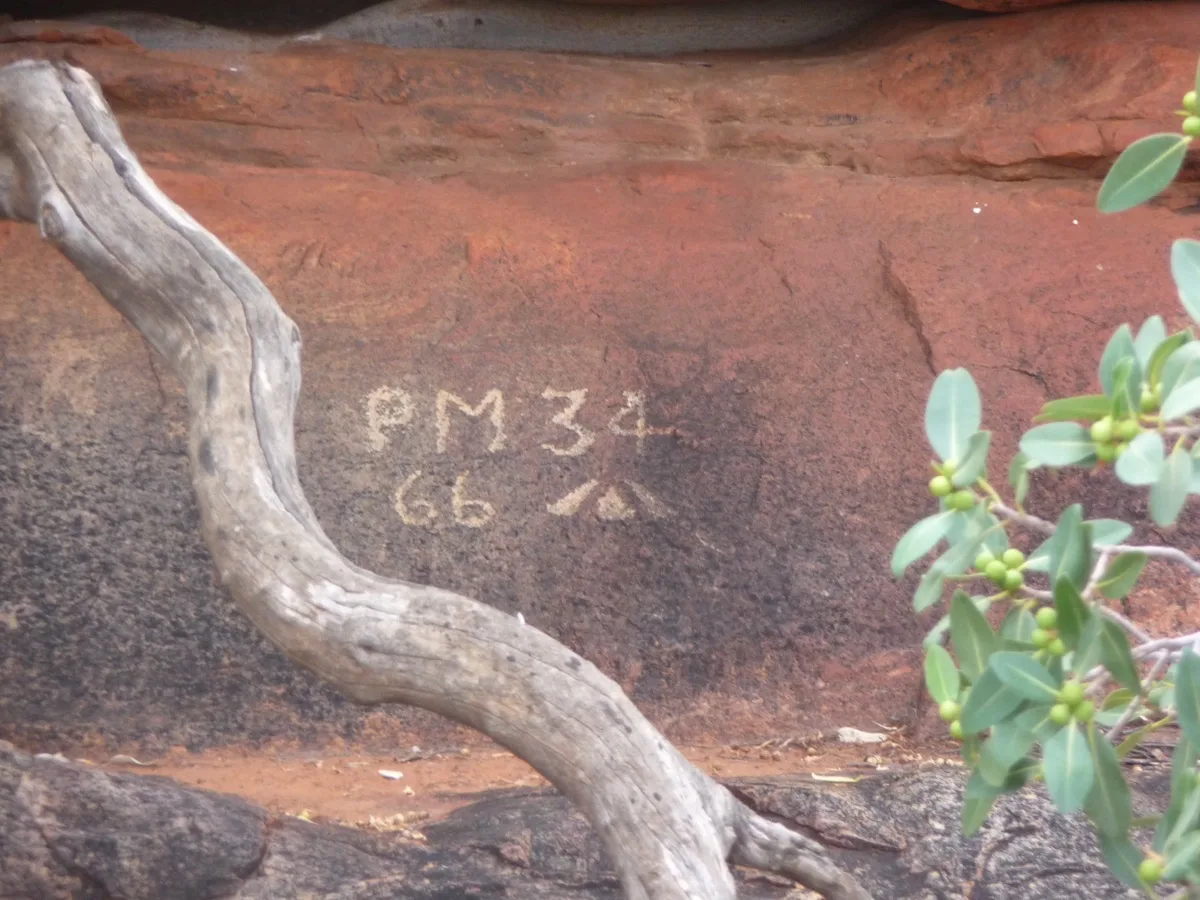
The ancient rock art we'd been photographing earlier in the morning was still fresh in my mind—those weathered etchings telling stories thousands of years old, marked with the now-familiar 'PM34 66' notation that Muir used to document these sites. There's something humbling about standing before Aboriginal art that's survived for millennia in these harsh conditions, surrounded by sculptural driftwood and hardy succulents that seem to guard these cultural treasures.
But it's what we found after lunch that really drove home the significance of Muir's work, and why he went to such lengths to document these remote locations. Tucked between towering red sandstone cliffs, we discovered a hidden waterhole—a genuine desert oasis that would be nearly impossible to find without knowing exactly where to look.
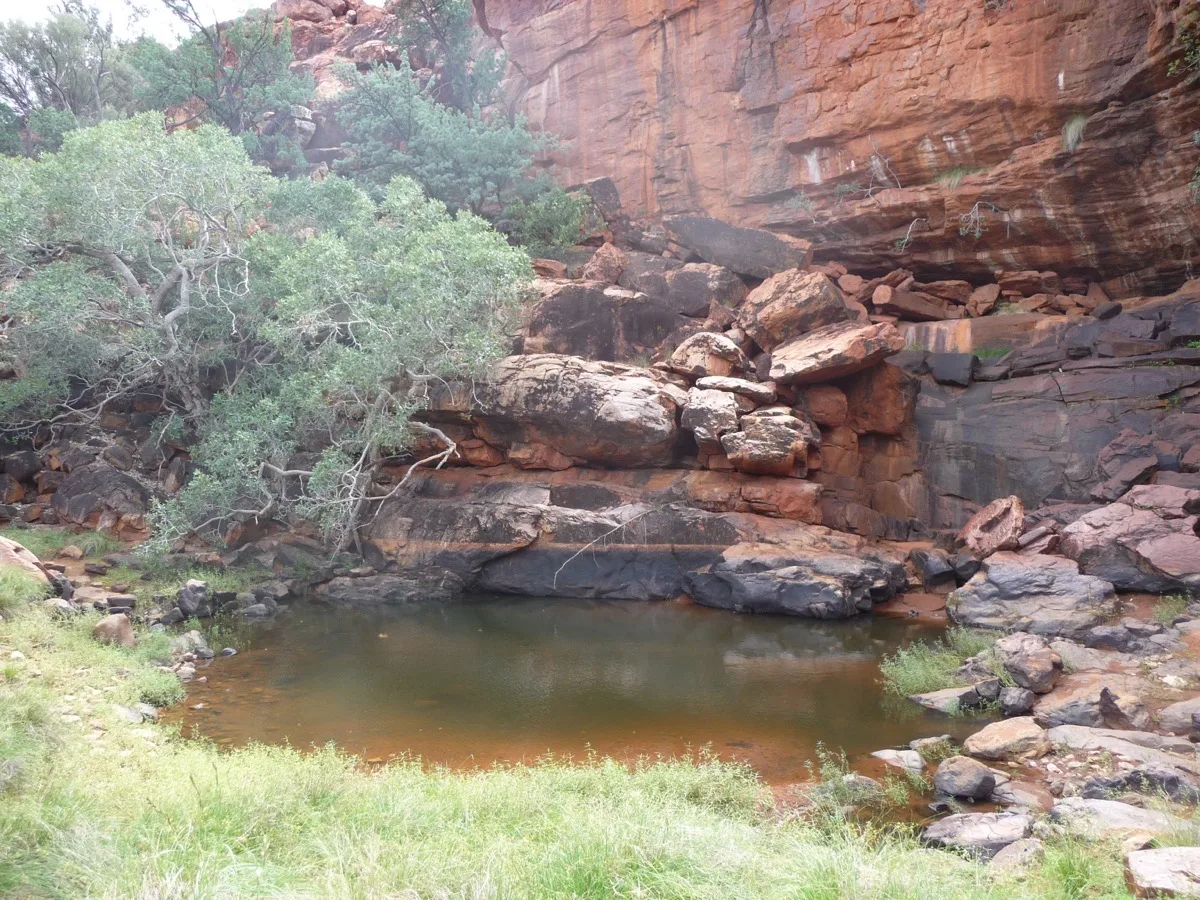
Out here, water isn't just important—it's everything. The difference between life and death. This particular pool, surrounded by stratified cliff walls that tell their own story of millions of years, was absolutely pristine. The amber-tinted water sat perfectly still, reflecting those magnificent layered formations above. Green vegetation thrived around the edges—a startling contrast to the rust-colored rocks and the endless spinifex we'd been driving through all morning.
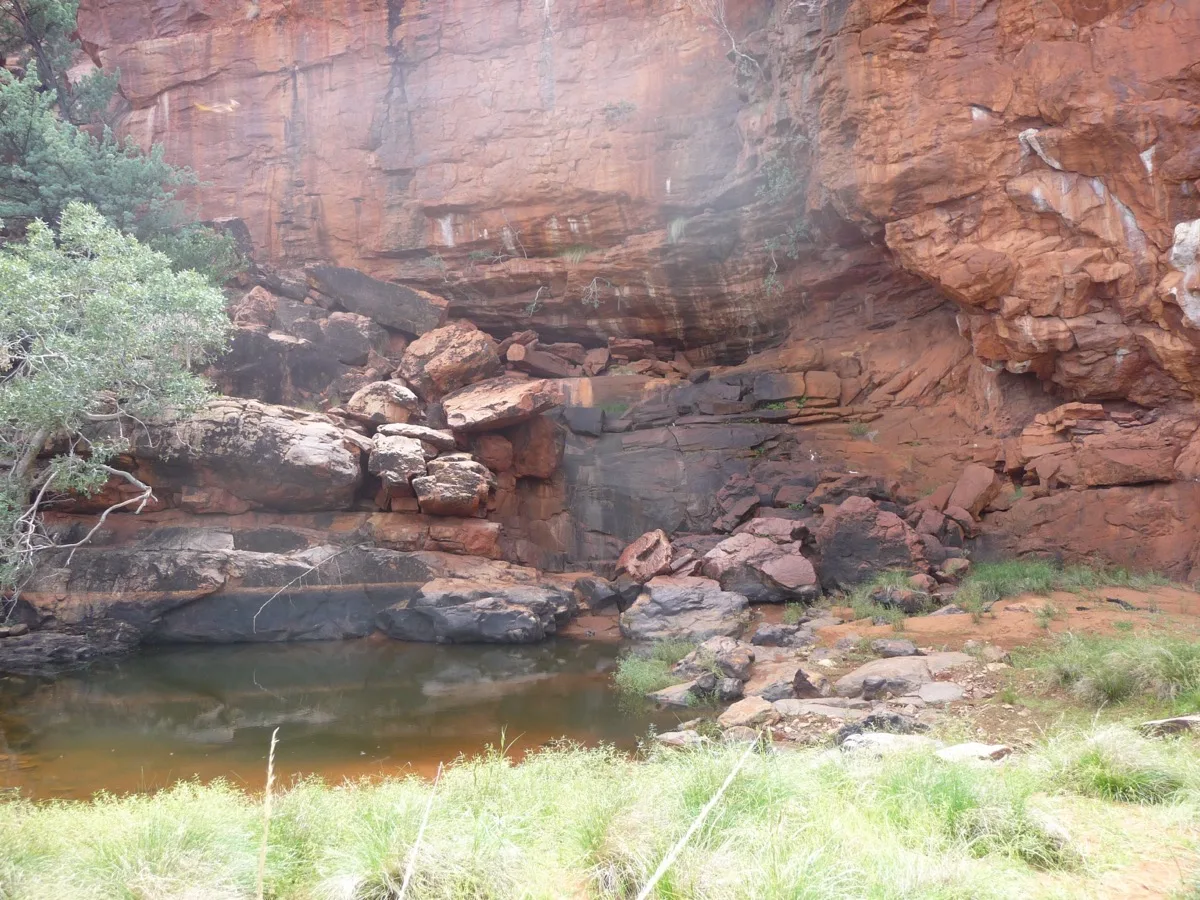
The natural amphitheatre created by the sandstone formations around the waterhole made it feel like a sacred space, and I suppose that's exactly what it is. For Aboriginal people who called this country home for tens of thousands of years, and for early explorers like Muir who mapped these life-saving water sources, these permanent springs made crossing this unforgiving landscape possible.
Standing there with my camera, trying to capture the serenity of this hidden refuge, I felt an enormous respect for anyone who travelled through this country without the modern conveniences we take for granted. Our 4WD has plenty of water tanks, GPS, and satellite communication. They had knowledge, passed down through generations, and incredible courage.
Tomorrow's our last day out here, but tonight we're camped with full water tanks and a renewed appreciation for every drop.