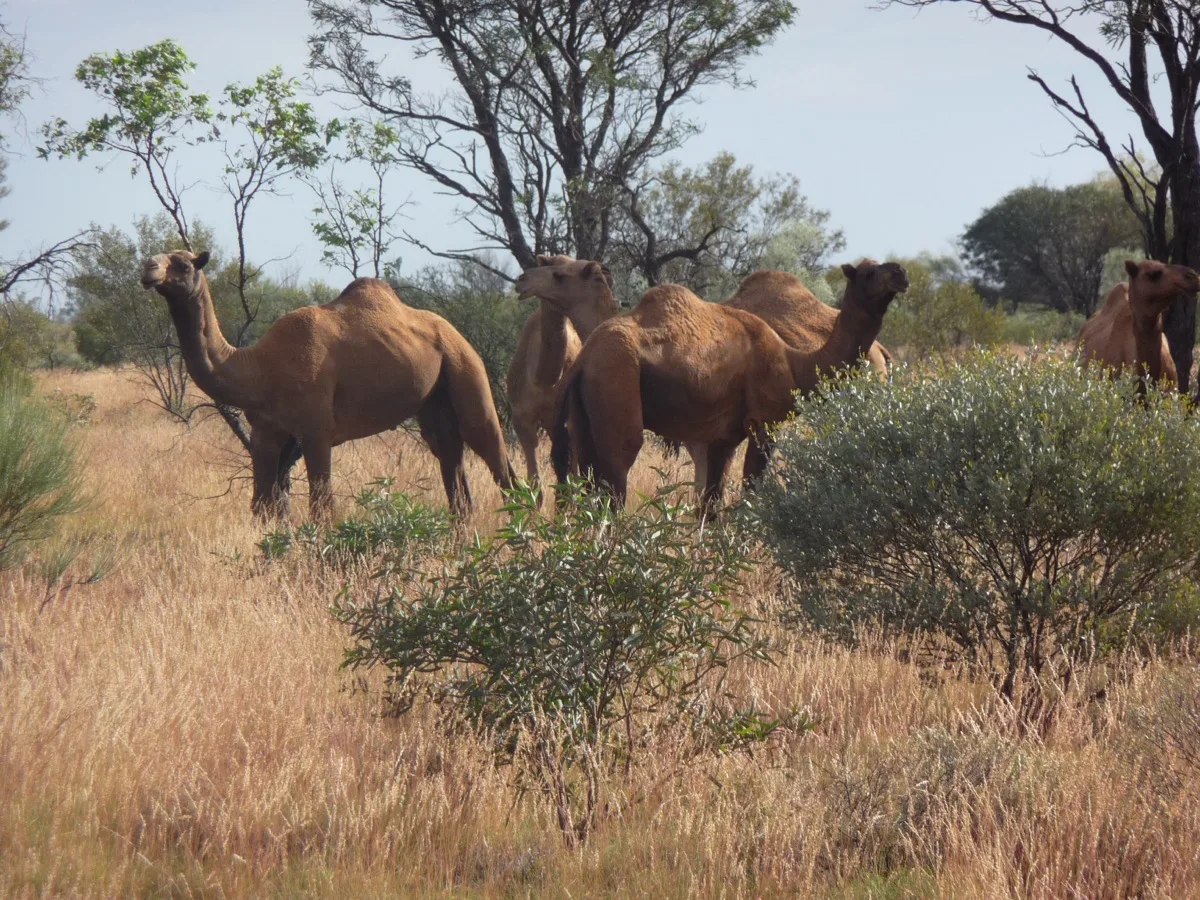
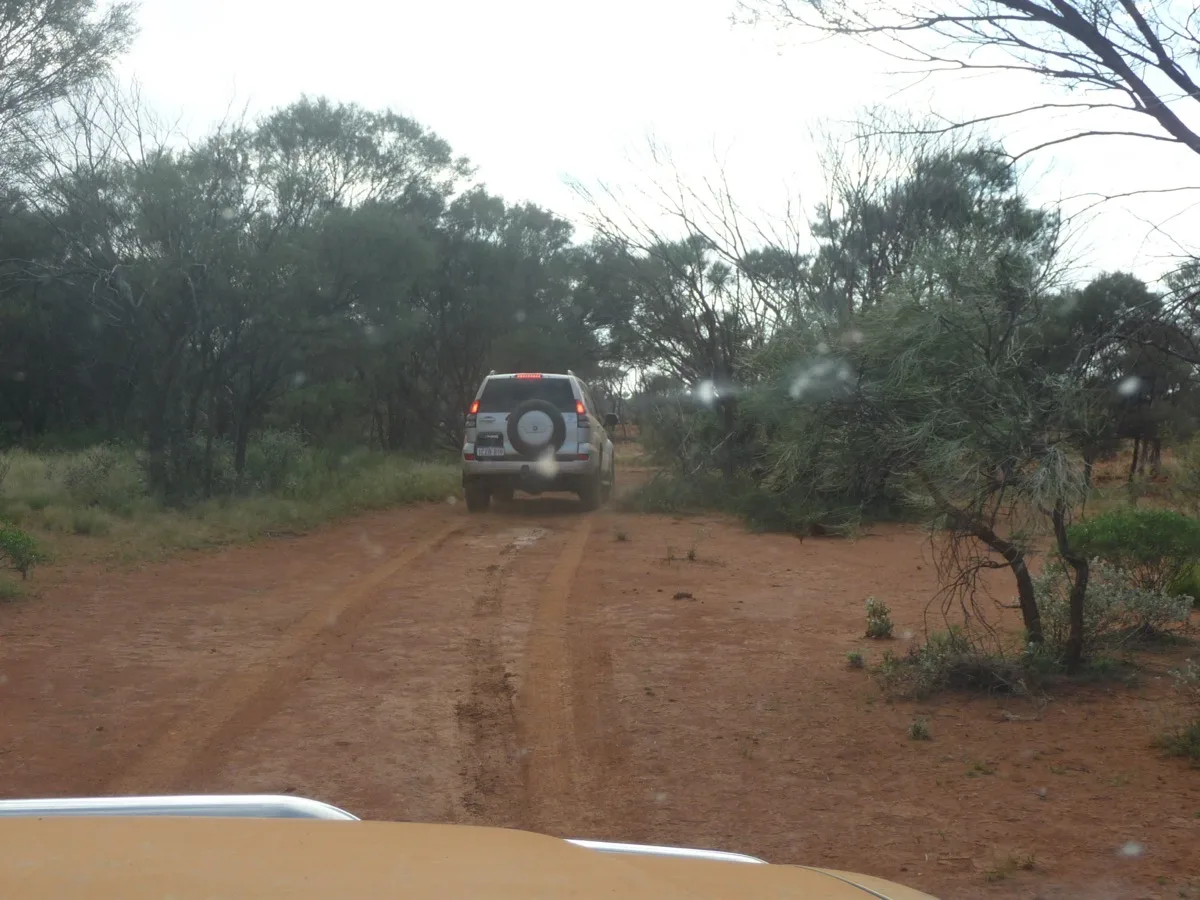
Day three in the Carnarvon Ranges brought a welcome change of terrain. As we pushed further into the Little Sandy Desert, the rocky outcrops that had been testing our driving skills finally gave way to flatter country. Steve T was visibly relieved – he's never been one for technical rock climbing in a 4WD, much preferring the give and take of sandy beach driving. Can't say I blame him. The track opened up and we made excellent time through this section, the tyres finding better purchase on the firmer ground.
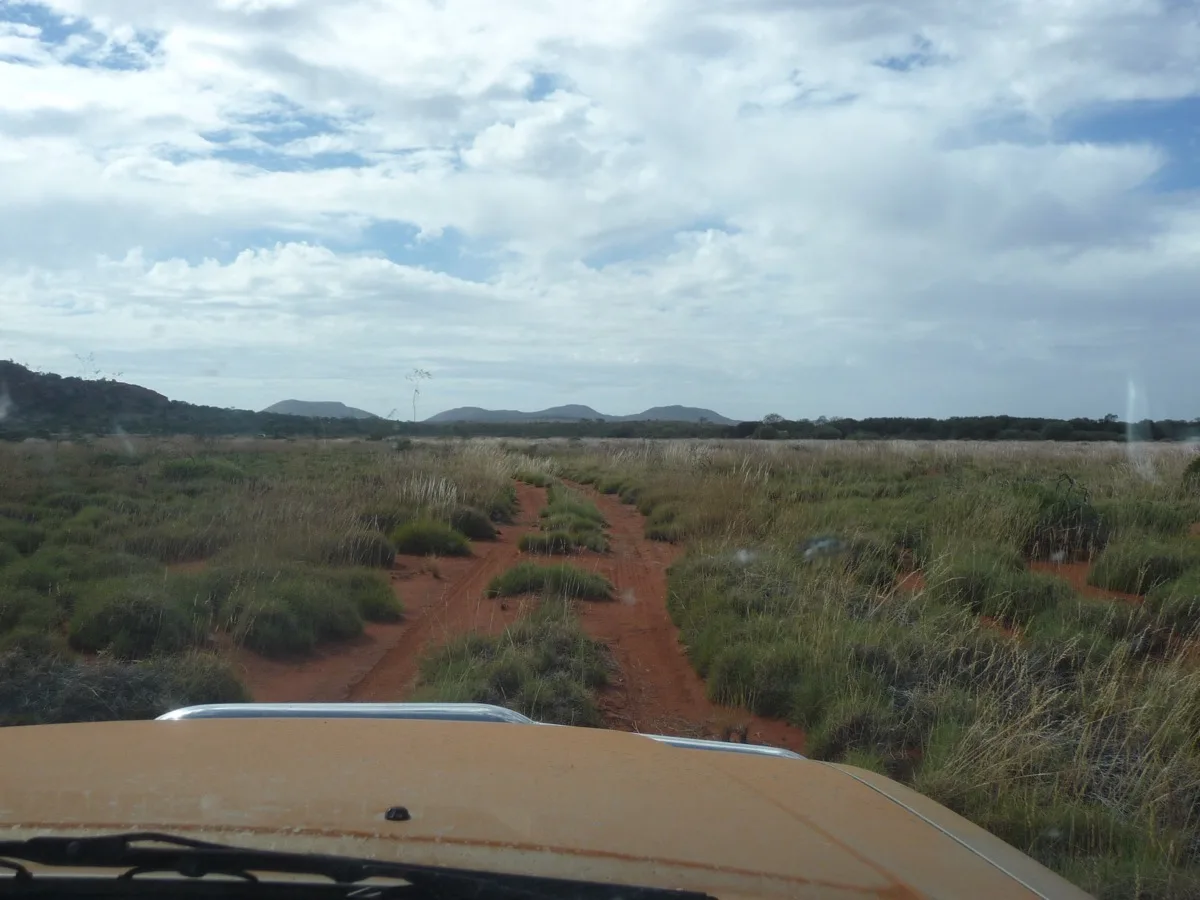
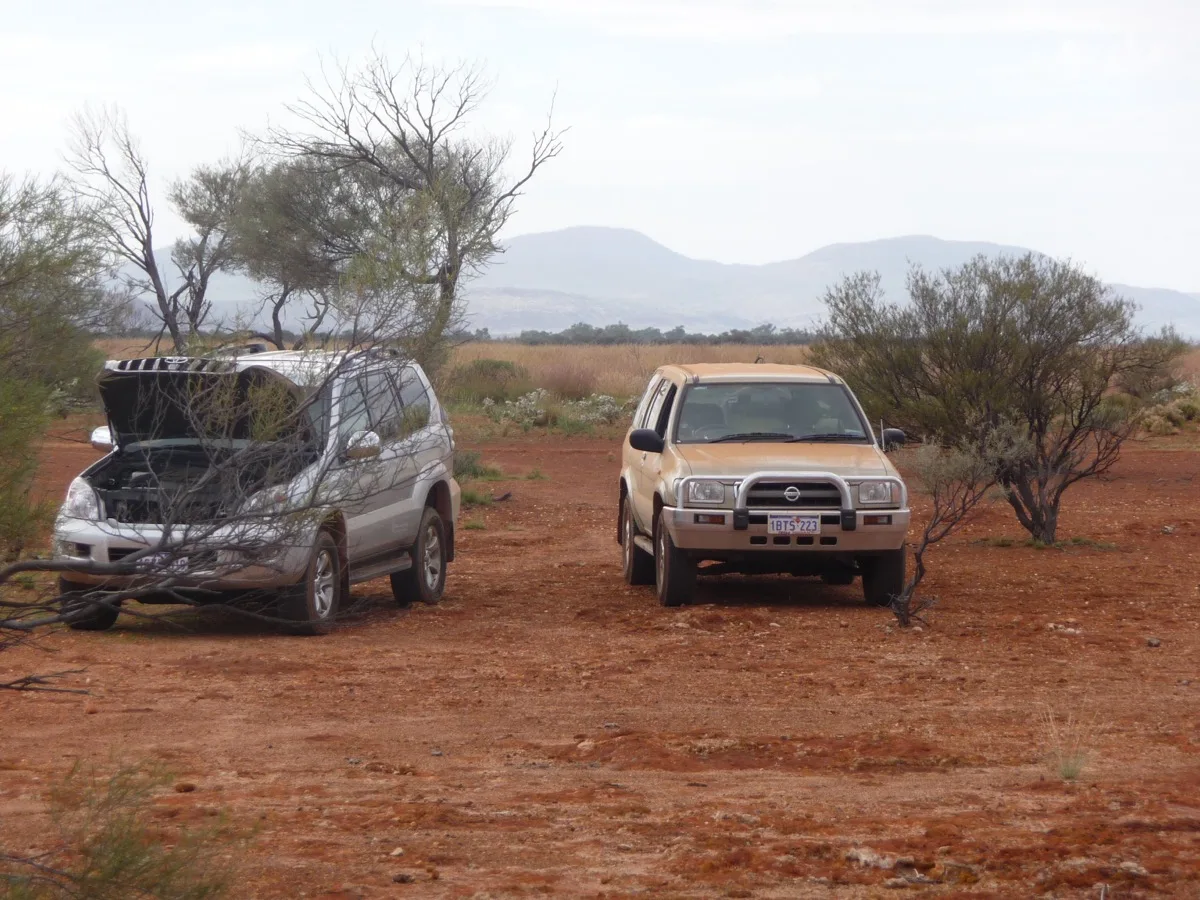
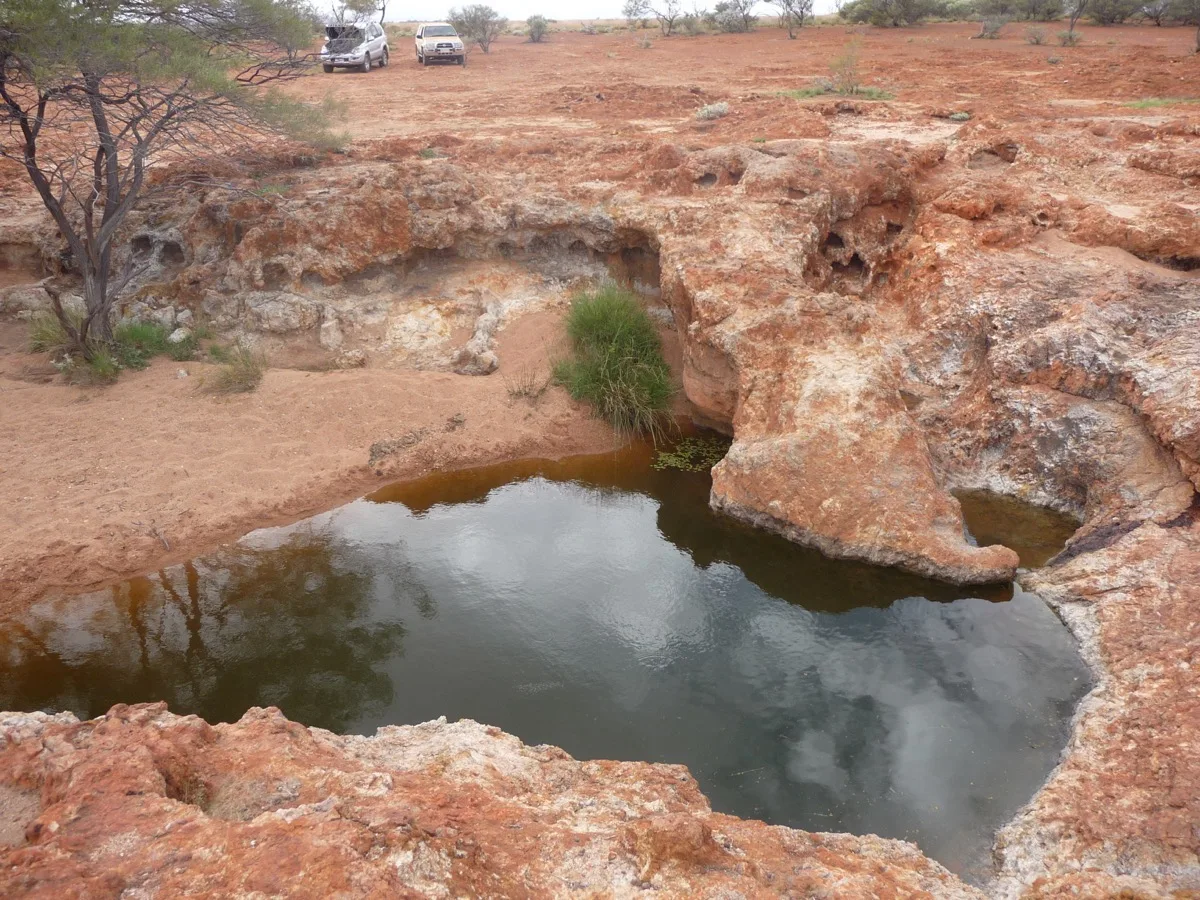
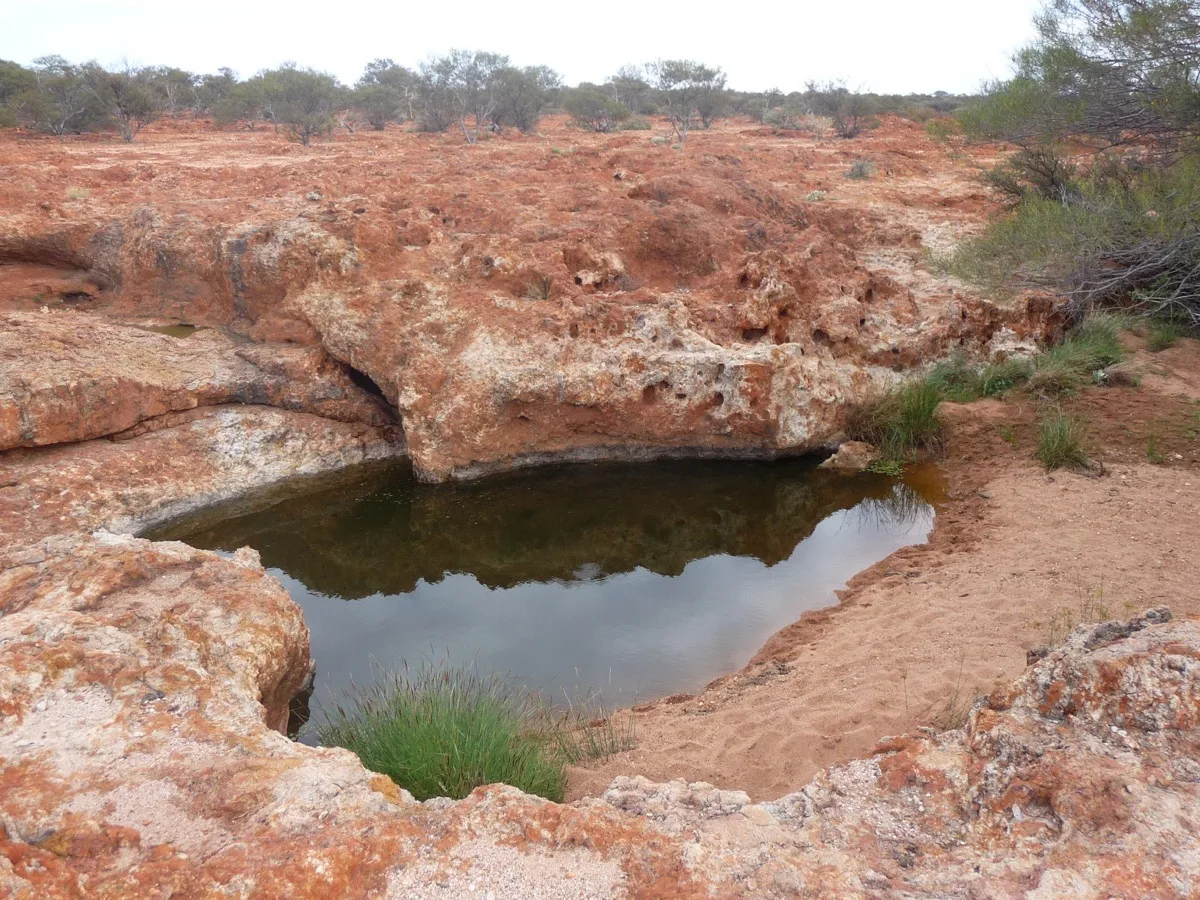
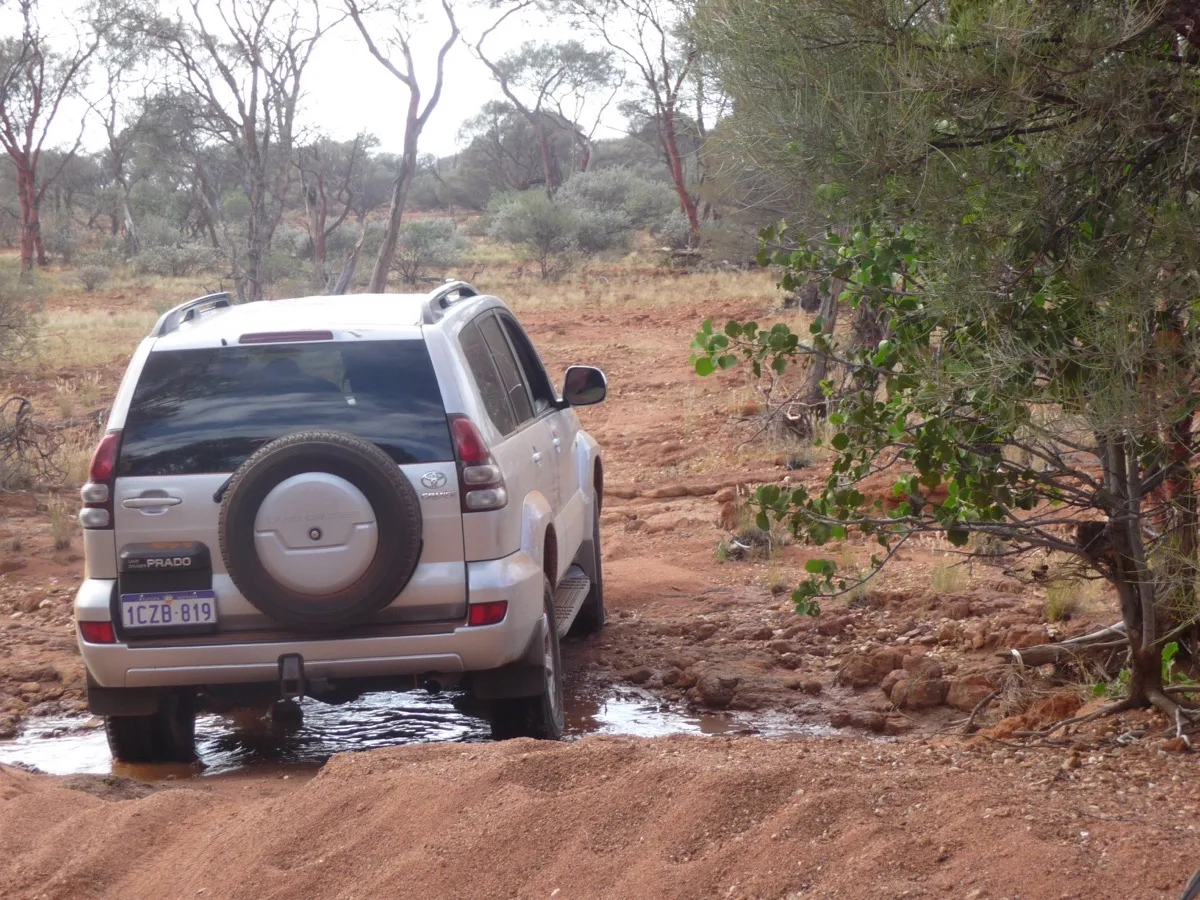
We pulled up for a quick vehicle check. Both rigs were looking properly bushwhacked now – layers of red dust coating everything, a few new scratches adding character to the duco. Found another waterhole tucked among the rocks, though I couldn't tell if this was another of Peter Muir's marked spots or just a natural feature we'd stumbled across. Either way, it was a beautiful sight in this parched country.
As we continued through the scrub, I'm not sure who got the bigger surprise – us or the mob of camels that appeared through the mulga. There must have been twenty of them, standing there watching us with those long-lashed eyes, completely at home in the Australian outback. Seemed incongruous at first, but these dromedaries have quite a history here.
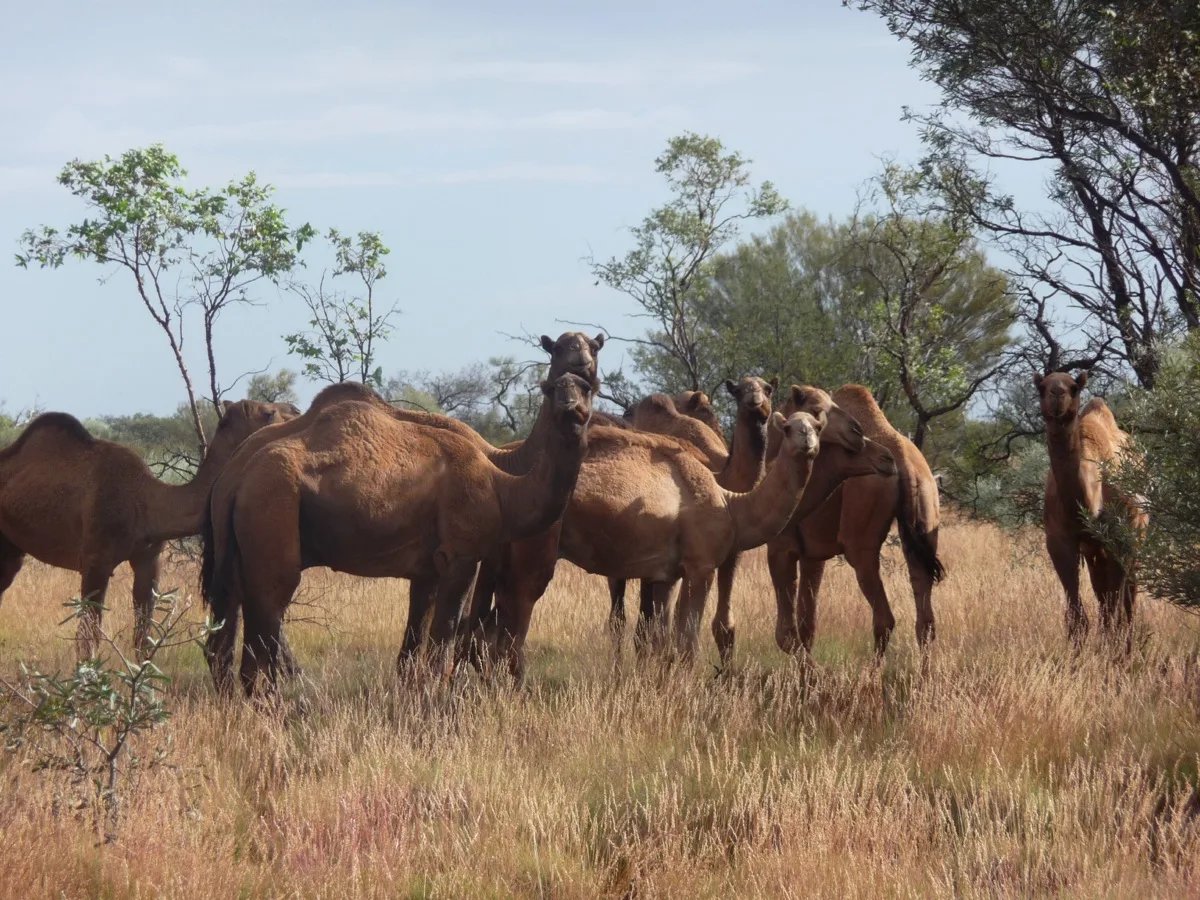
They were originally imported in the 1840s through to early 1900s, brought over with their Afghan handlers to help explore and settle Australia's interior. They were perfectly suited to the work – could carry massive loads, go days without water, and handled the heat better than horses or bullocks ever could. They helped build the Overland Telegraph Line, carted supplies to remote stations, and opened up country that would have been near impossible to access otherwise.
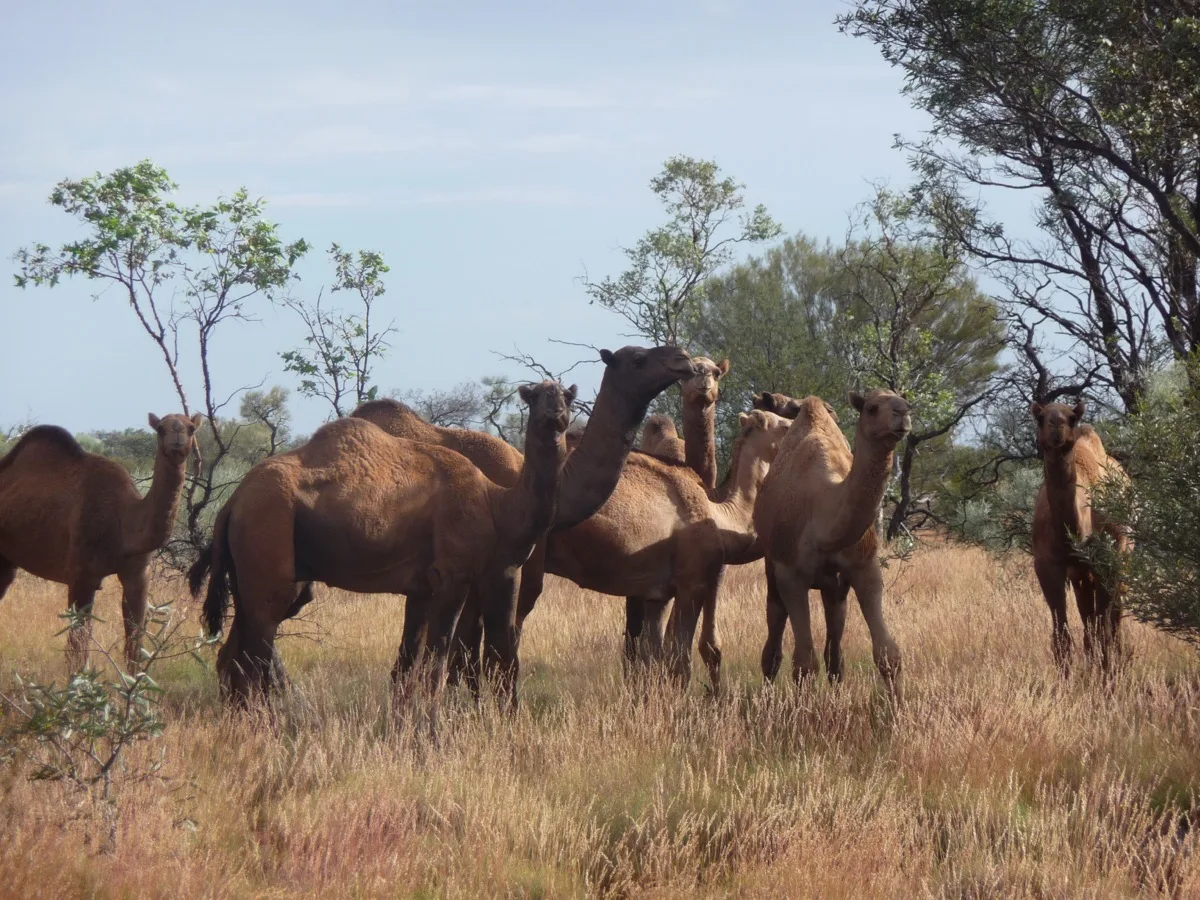
But when motor vehicles arrived, the camels were turned loose. No longer needed, they were simply released into the bush. Now Australia has the world's largest population of wild camels – somewhere around 300,000 of them roaming the outback. They've become a significant environmental problem. They damage waterholes, overgraze native vegetation, and compete with native wildlife for food and water. In drought years, they can devastate fragile desert ecosystems. There's even a commercial export industry now, shipping them back to the Middle East.
Still, there's something magnificent about seeing them out here, moving through the spinifex like they own the place. Which, I suppose, they do now.