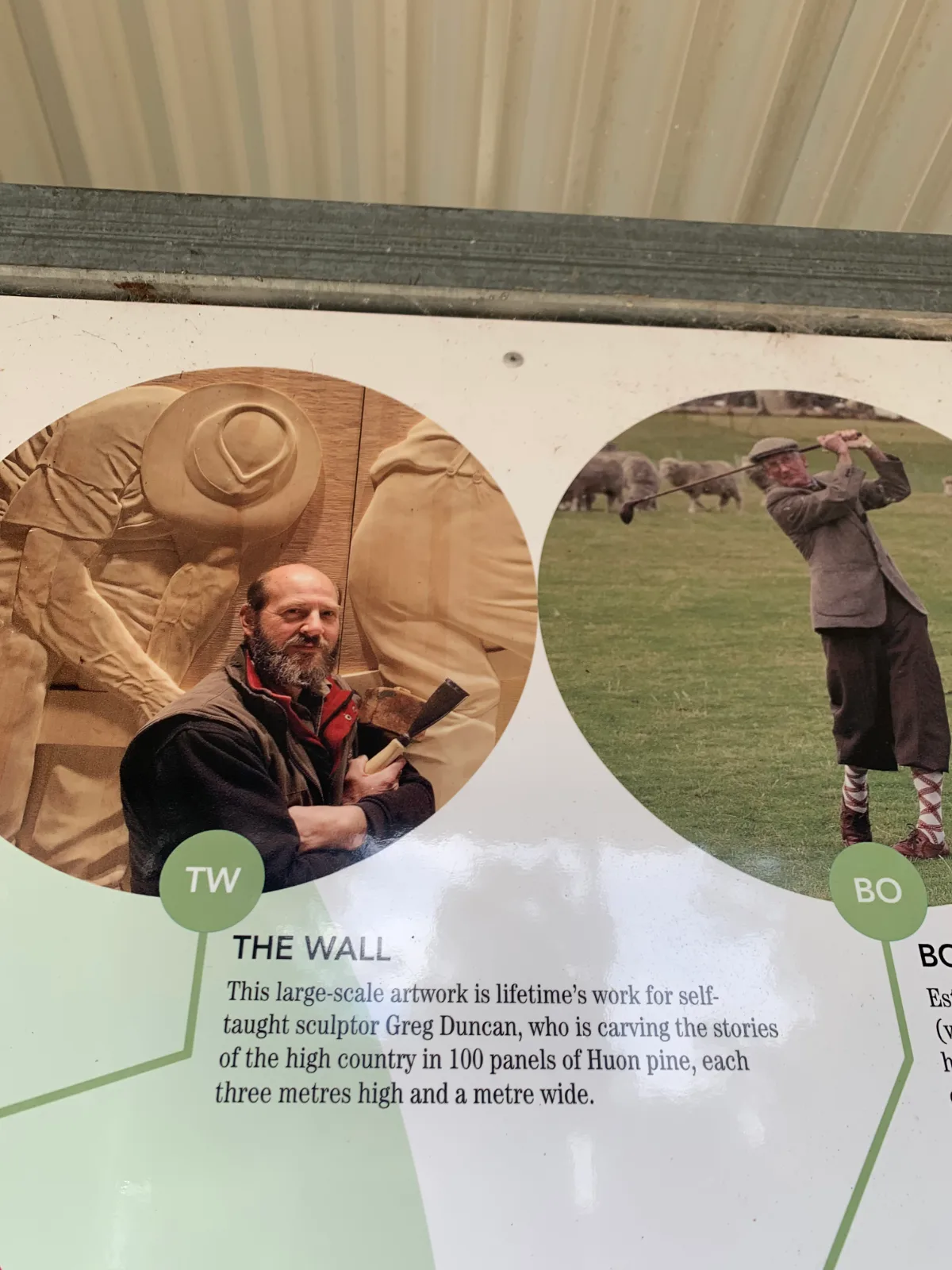
We were sorry to leave our little spot by the lake, but the road was calling. Our first stop was just down the track at Derwent Bridge to see "The Wall". Now, we’ve seen a lot of woodcarvings in our time, but nothing prepares you for this. It’s a 100-metre-long masterpiece carved into solid panels of Huon pine.
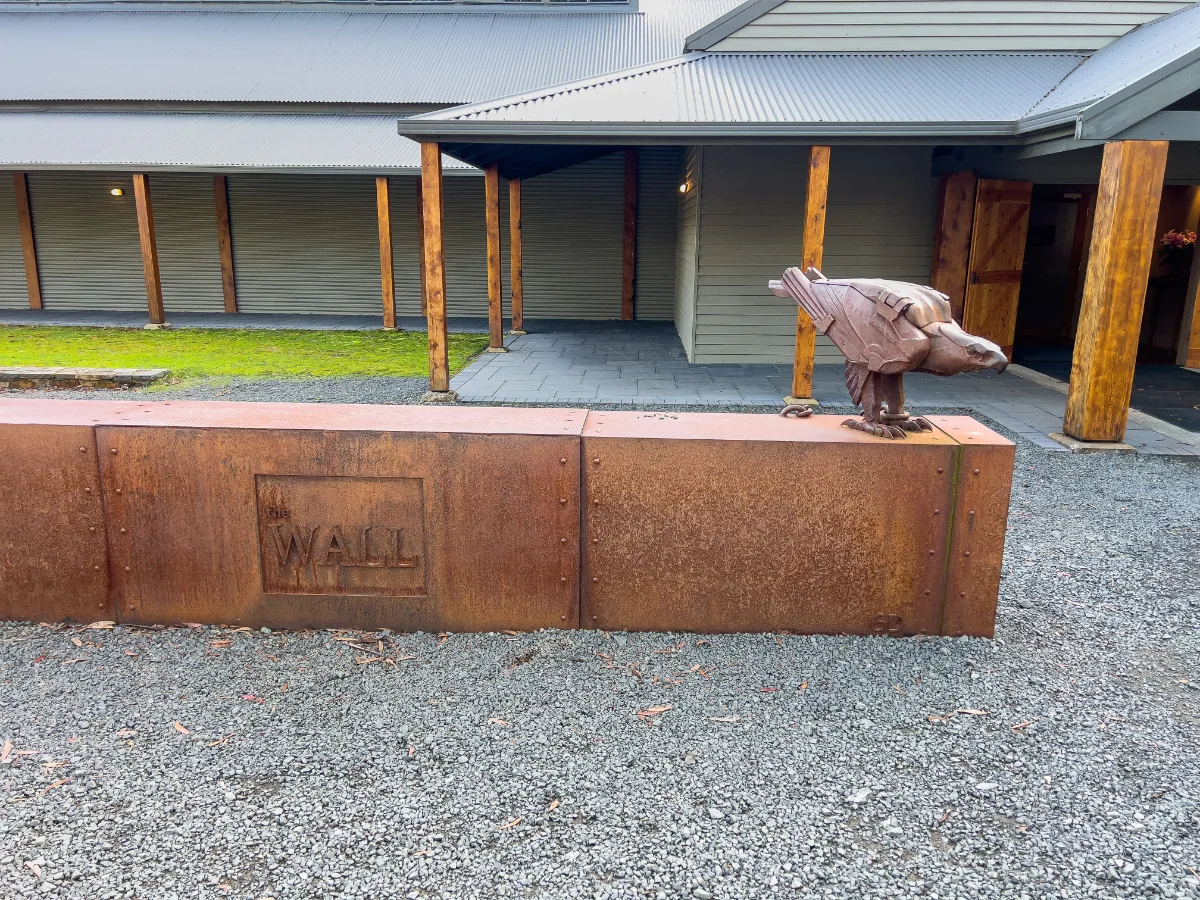
Lisa was absolutely mesmerised by the fine detail—you can actually see the texture of the pioneers' clothing and the exhaustion in the faces of the horses. Steve was more floored by the sheer grit of the artist, Greg Duncan, who spent over a decade chipping away at this. They don’t allow photos inside the gallery to protect the work, but we managed to grab a couple of shots of the entrance and the information boards to give you an idea of the scale.
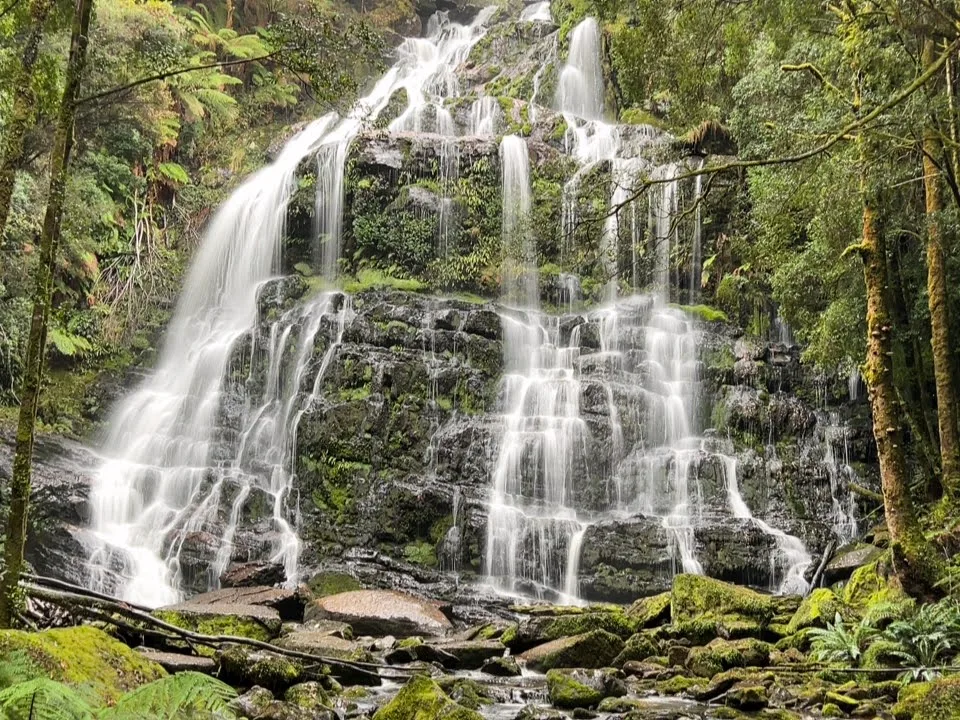
As we pushed further west into the Franklin-Gordon Wild Rivers National Park, the landscape started to get seriously moody. We decided to stretch our legs at Nelson Falls, and we are so glad we did. It’s only a short walk through the most vibrant, mossy forest we’ve ever seen. The air was so fresh it practically felt like a tonic.
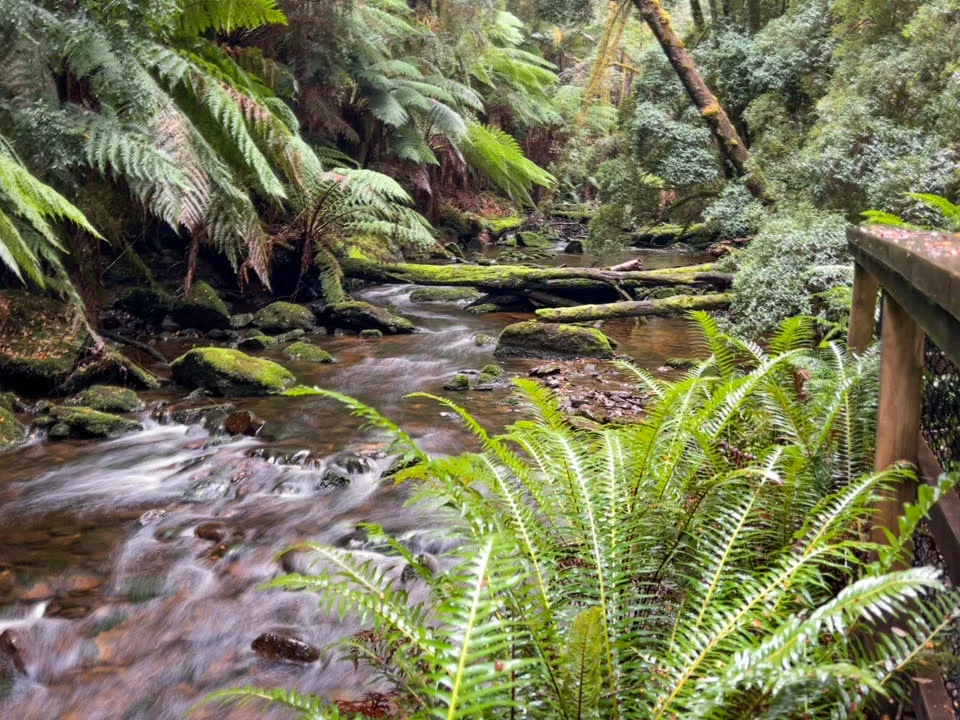
The falls themselves were spectacular, white water tumbling down over dark, rain-slicked rocks. The grandkids would have loved scrambling around here, though Lisa was a bit worried about Steve slipping on the wet boardwalks!
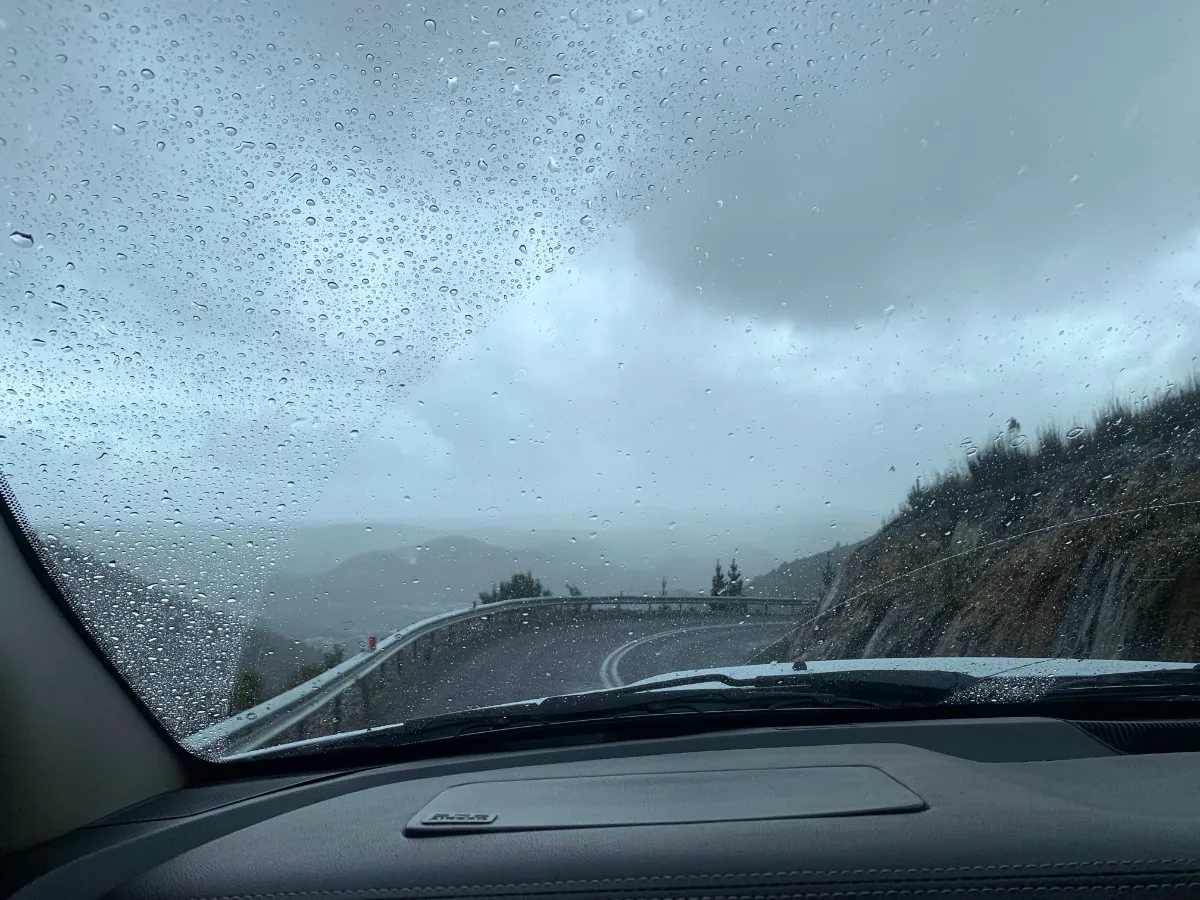
Then came the "fun" part of the day. The Lyell Highway toward Queenstown is famous for having about 100 loops and curves, and let us tell you, they aren't exaggerating. The rain started coming down in sheets, making the road look like a silver ribbon winding through the mountains. Steve had his hands full navigating the bends while Lisa kept a sharp eye on the misty drop-offs.
Just as we reached the top of the pass, right when we were expecting to be engulfed in cloud, the sky did something miraculous. The clouds parted like a curtain, and Queenstown appeared below us, bathed in a sudden burst of golden sunlight. It felt like a reward for surviving the drive.
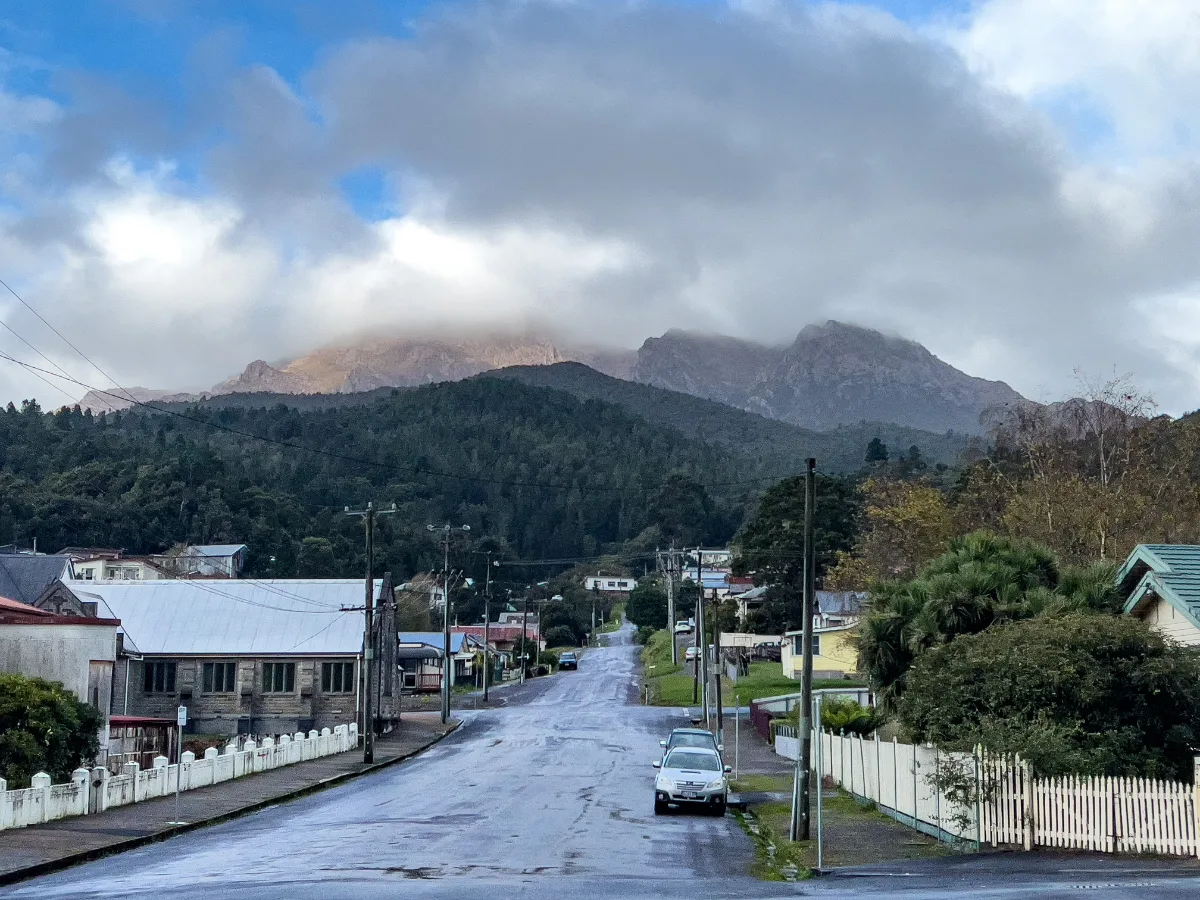
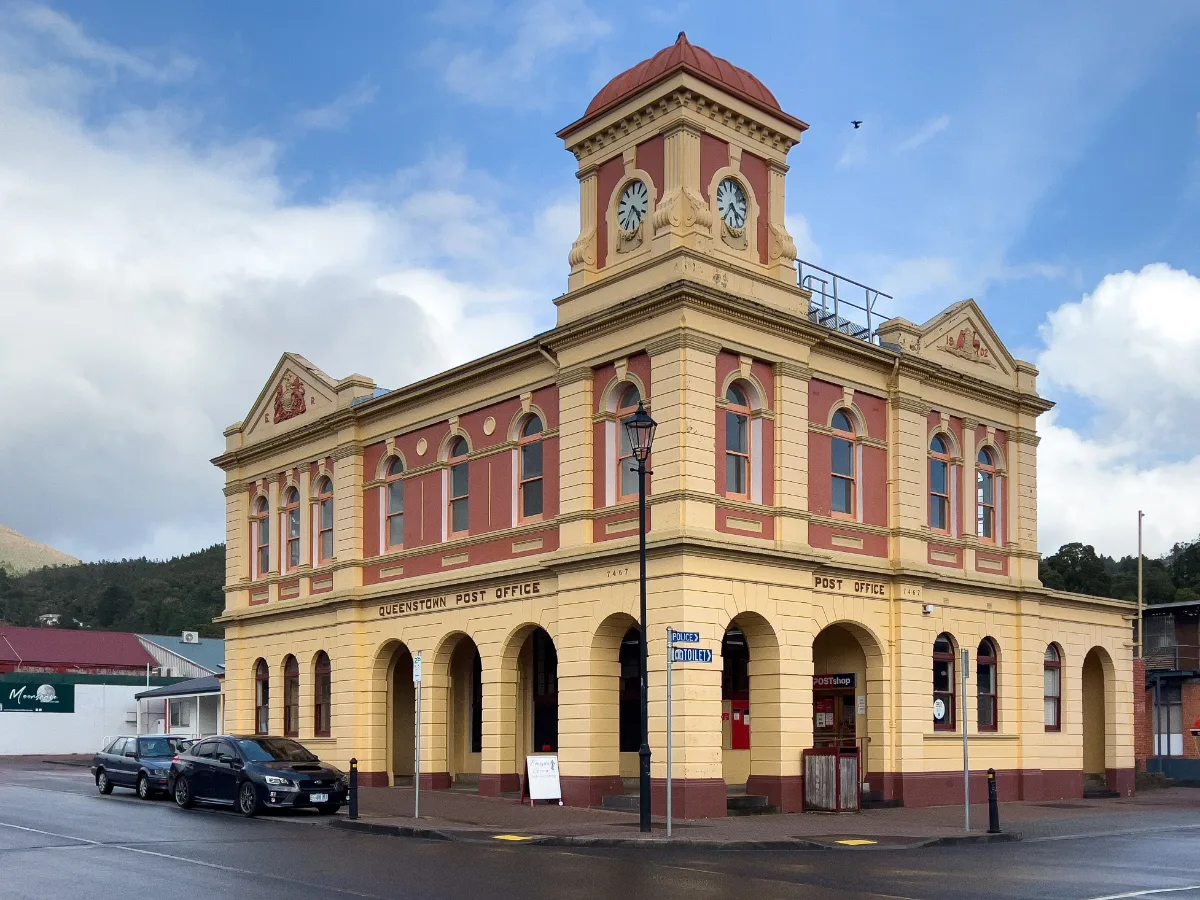
Queenstown is unlike anywhere else we’ve been. Because of the old copper mining, the hills surrounding the town are completely stripped of trees, leaving this orange, rocky landscape that looks like something from another planet. It’s a bit jarring at first, but there is a rugged beauty to it. We spent some time walking through the streets, admiring the grand old buildings that look like they haven't changed in a century. The Post Office is a real standout with its bright yellow and red facade.
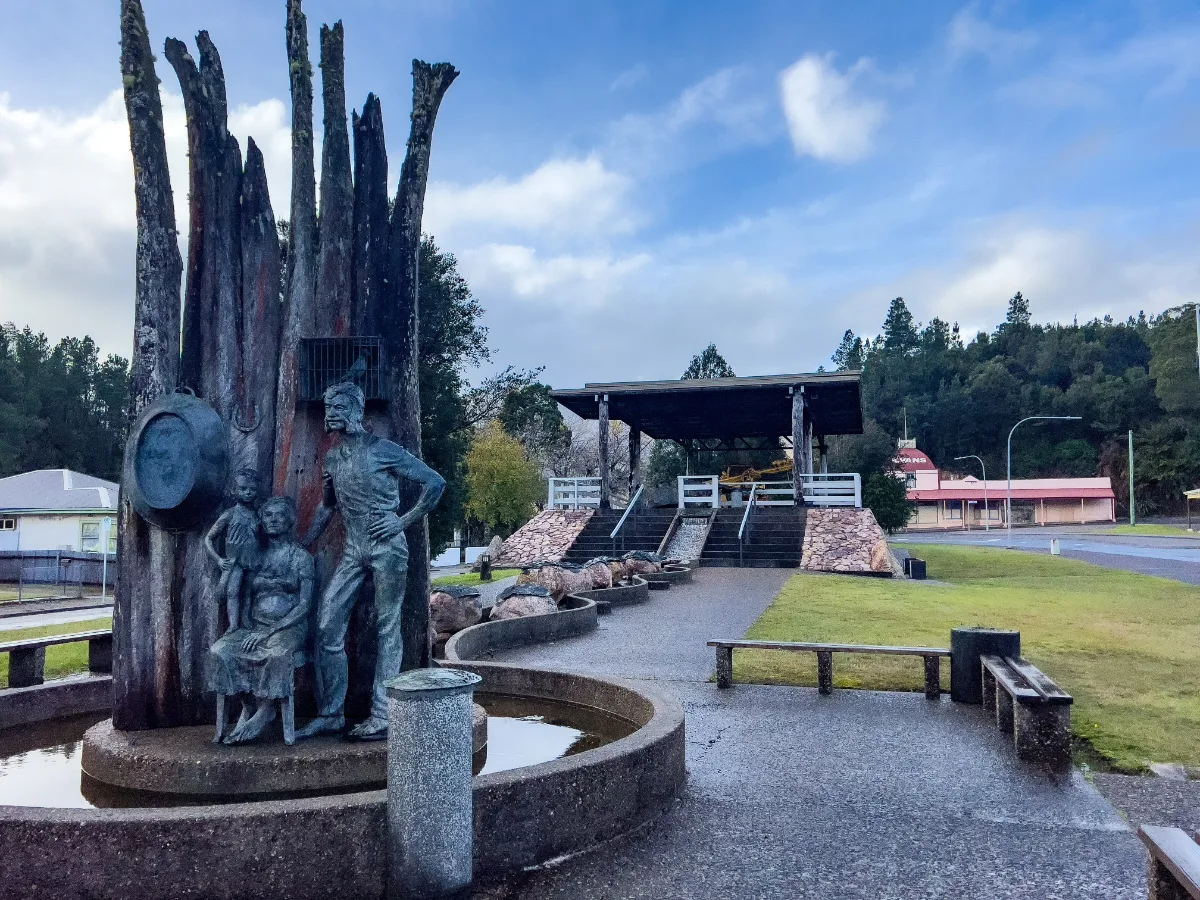
We also came across a moving bronze sculpture of a mining family. It really makes you stop and think about the hardships the early pioneers faced out here in the middle of nowhere. Lisa stood there for a good while, just imagining what life must have been like for the mothers and children in such a harsh environment.
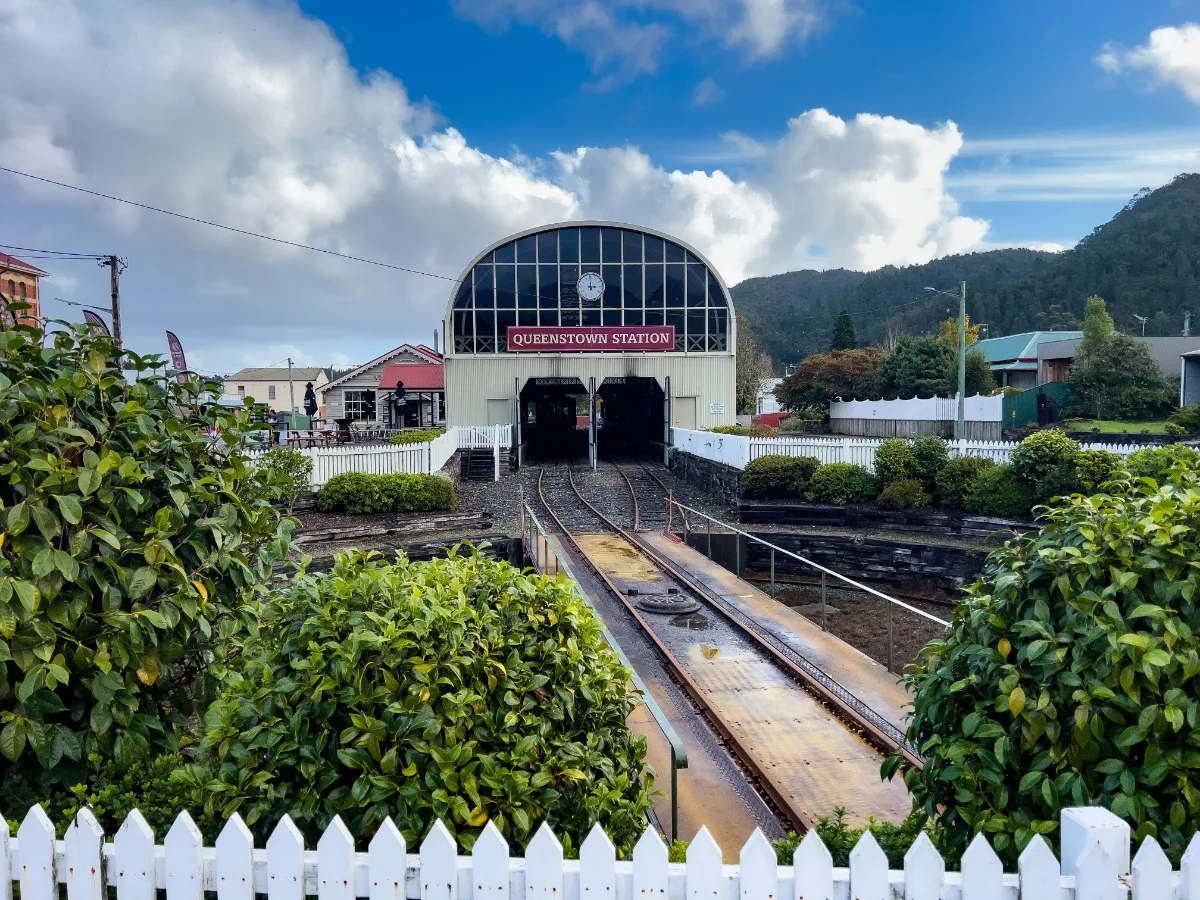
Before settling in for the night, we poked our heads into the railway station. It’s the home of the West Coast Wilderness Railway, and even though the trains weren't running right then, the old station building and the tracks heading off into the hills looked like a scene from a movie. It’s a town that wears its history on its sleeve, and we’re looking forward to seeing what else it has in store for us.