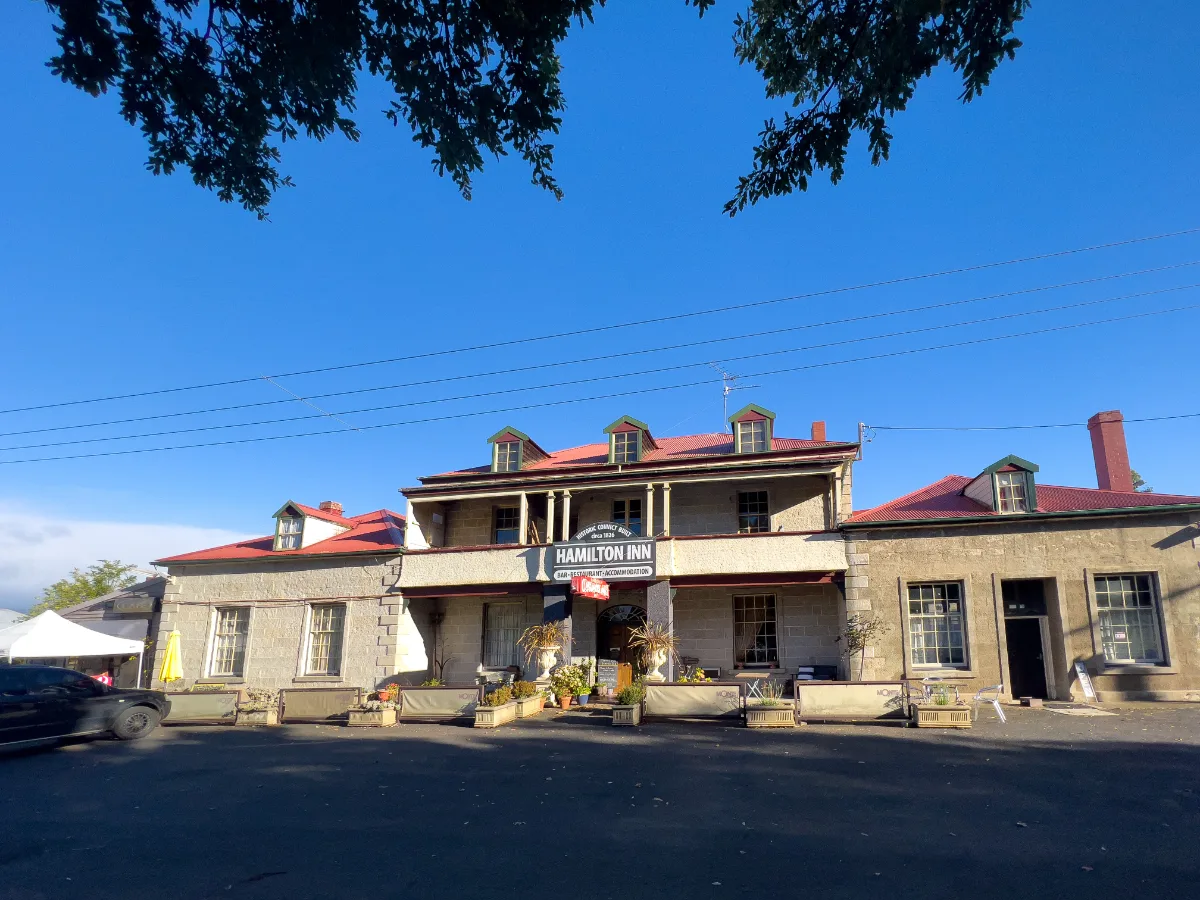
We started our morning in Hamilton, where we were treated to a beautiful rainbow stretching right over the old stone pub. The Hamilton Inn is a grand old building, and seeing it framed by those colours in the fresh morning air was a real treat. Lisa wanted to linger a moment just to take in the quiet of the town before we got moving.
We spent the rest of our day exploring the wonders of Mount Field National Park. It is a place of such constant change; we decided to head up the mountain first to tackle the Pandani Grove Walk. It was about a 20-kilometre drive up a winding gravel track, and as we climbed, the landscape shifted right before our eyes. We moved from the lower woodlands into a thick, lush rainforest filled with enormous ferns, before finally emerging into the light, wooded alpine areas near the top.
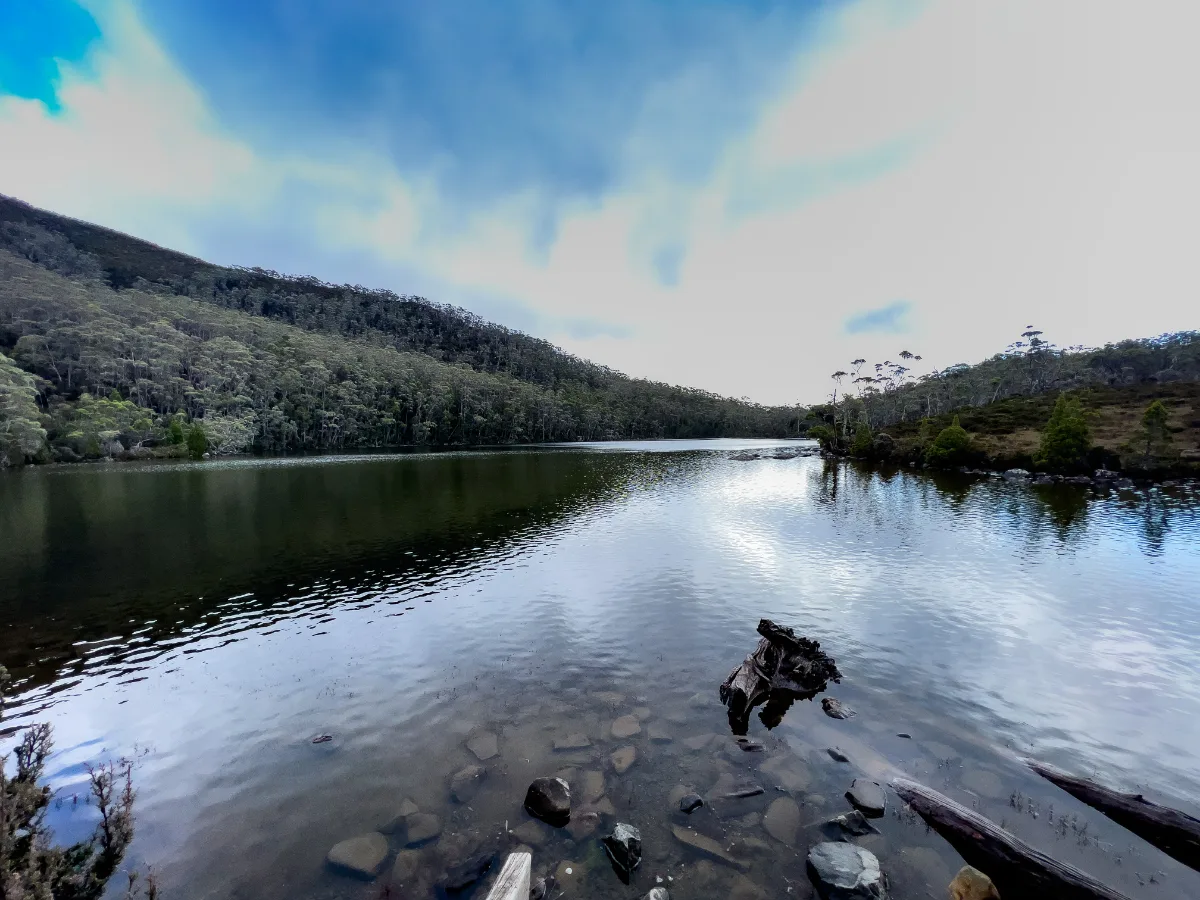
We were certainly glad we’d tucked our gloves and heavy coats into our packs. The moment the wind picked up at that altitude, the temperature dropped significantly. We reached a beautiful, still lake where the clouds hung low over the dark water and the alpine trees clung to the shoreline.
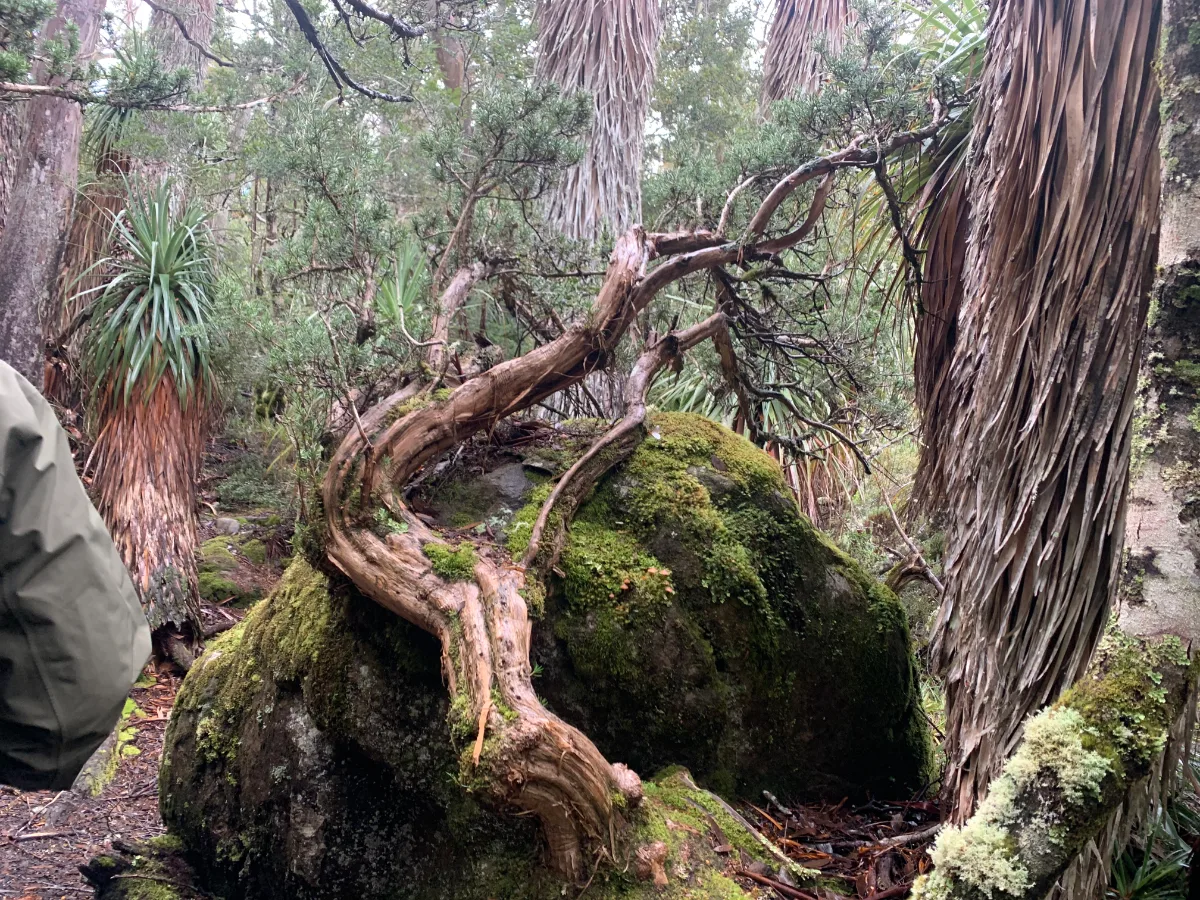
The resilience of the plants up there is something else. We found one ancient, twisted tree that had wound its roots completely around a massive, moss-covered boulder. It’s a rugged kind of beauty that you only find in these high places.
After wandering through the Pandani, we took a stroll along the Moorland Mosaic. It’s a very different feel there, walking on wooden boardwalks through low alpine scrub and open grasslands. We took our time reading the information plaques about the hardy plants that call this freezing environment home—the grandkids would have loved learning about how these tiny shrubs survive the winter snow.
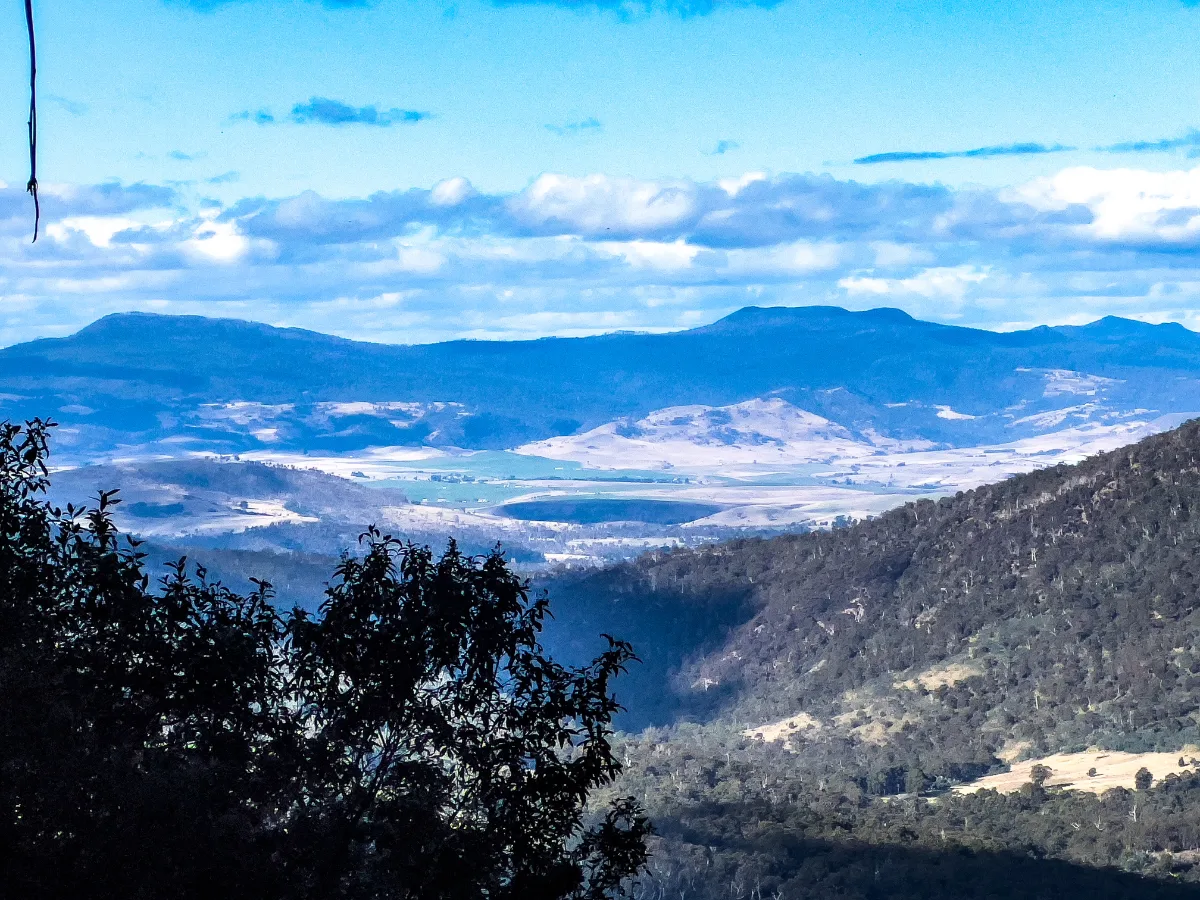
On the way back down the mountain, we couldn’t resist pulling over at the lookout. The view across the valley is truly spectacular, with the mountains rolling away into the distance under a big Tasmanian sky. Even the roadside is beautiful here, lined with those incredibly tall ferns that seem to thrive in the damp mountain air.
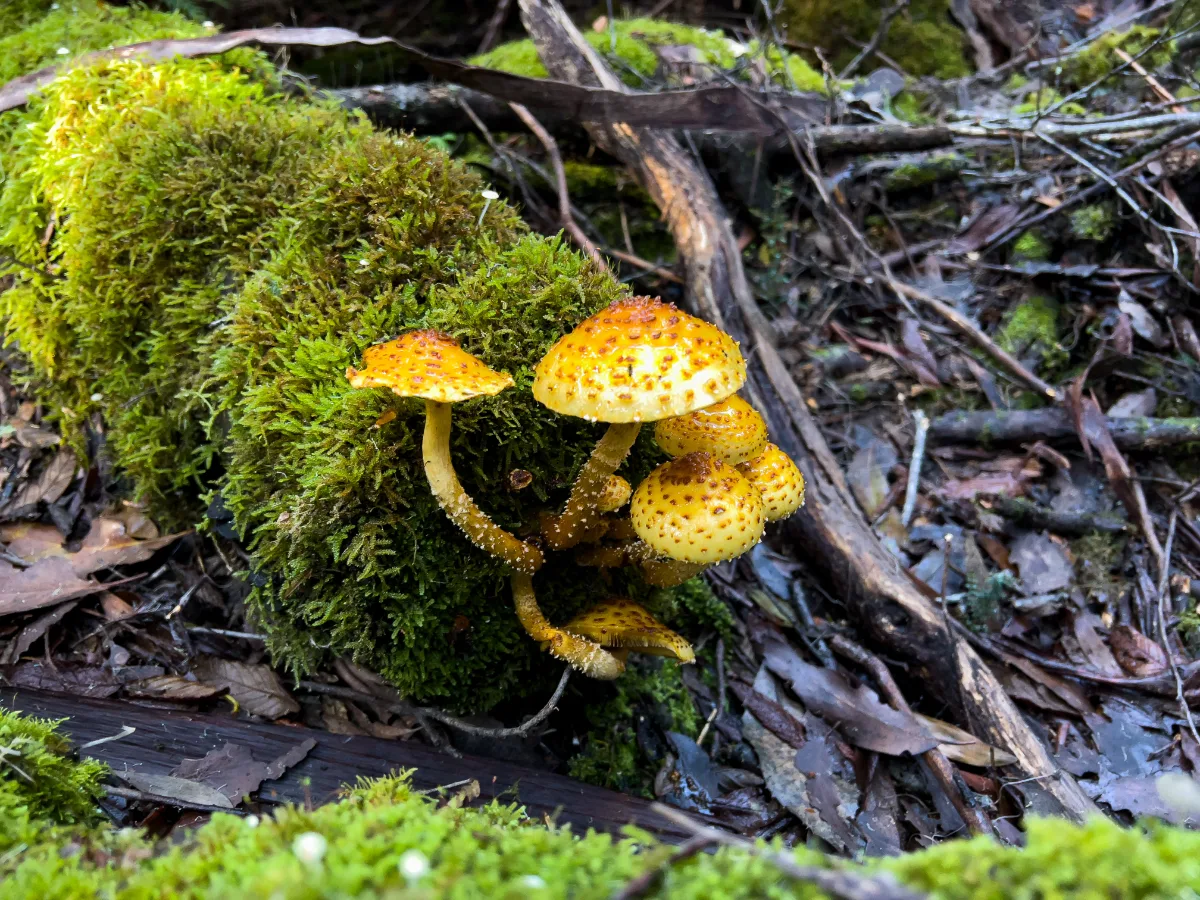
Our final adventure for the day was the Tall Trees walk. These swamp gums are famous for being some of the tallest flowering plants in the world, and standing at the base of one really puts things into perspective. It’s a very quiet, majestic place. While Steve was busy looking up at the canopy, Lisa was busy looking down at the forest floor. It’s a miniature world of its own down there, covered in thick moss and bright bursts of life. We spotted some brilliant yellow fungi growing in a cluster on a mossy log, looking quite cheerful in the damp shade.
By the time we made it back to camp, we were well and truly ready for a sit-down. We had to have a bit of a chuckle at the state of "Shaun" after our 40-kilometre trek up and down the mountain road. He’s certainly looking a bit more "distressed" than when we started the morning, wearing a thick coat of Tasmanian mountain dust as a badge of honour.


