We rolled into Hobart with one thing on our minds—well, one thing on Steve’s mind, anyway: food. After six years of having these blood tests four times a year, this was the very first time they required a fast. Steve wasn't exactly the most patient patient while waiting for his turn, but we got the needlework out of the way and headed straight for the nearest spot that smelled like toasted bread and coffee.
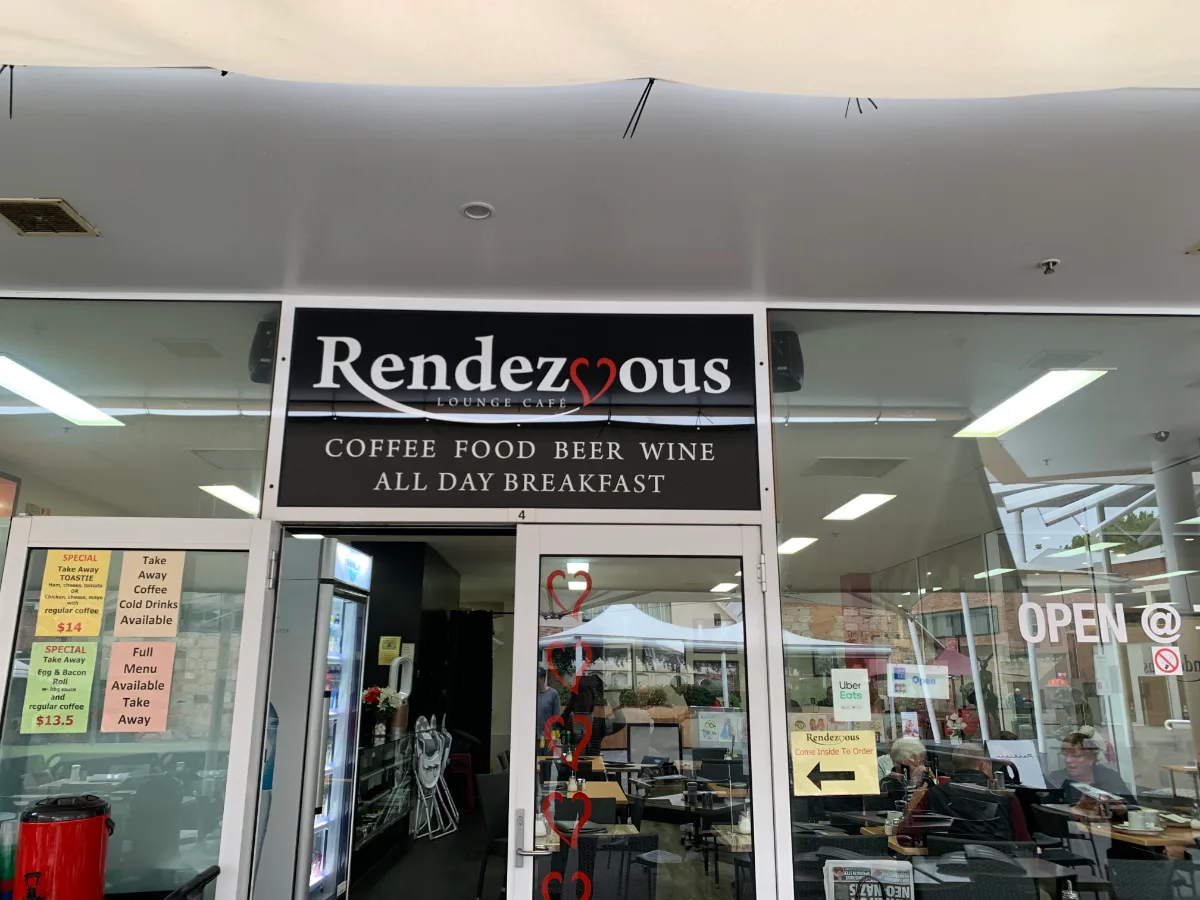
We found a great little place called Rendezvous that did an all-day breakfast, which was exactly what the doctor ordered (or at least, what Steve ordered). There’s nothing like that first sip of a hot flat white after a morning of drinking nothing but water.
Once the hunger was sorted, we spent a lovely hour or two wandering the streets of Battery Point. It’s such a beautiful corner of the world, with those narrow lanes and gardens that make us feel like we’ve stepped back in time. Lisa loved peering over the fences at the flower beds, while Steve was busy trying to figure out how many kilometres we’d clocked up on foot already.
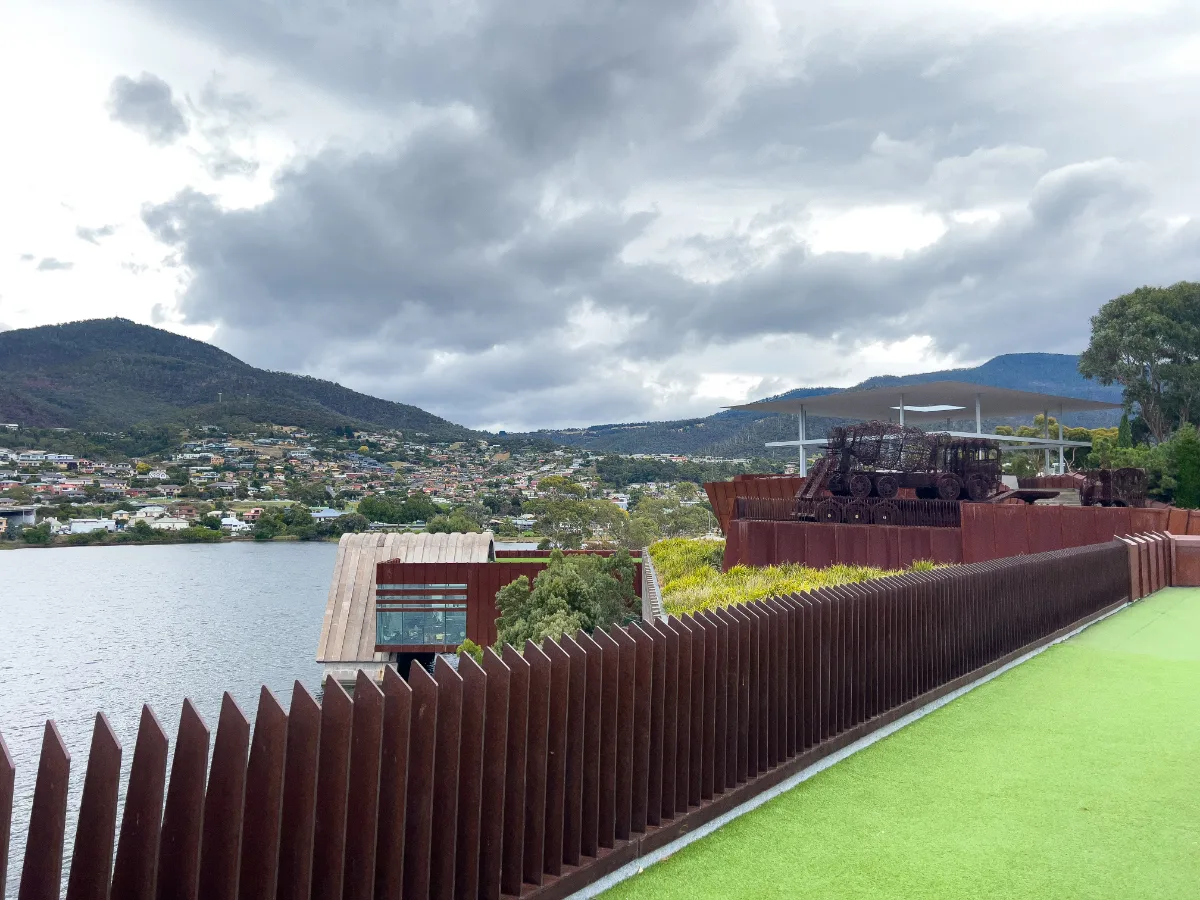
On a total whim, we decided to head over to MONA. We’d heard people talking about it the whole way down the coast—some said it was brilliant, others said it was just plain weird. We figured we had to see it for ourselves. The setting itself is enough to take your breath away, perched right on the edge of the water with those deep rusty colours of the architecture clashing against the green grass.
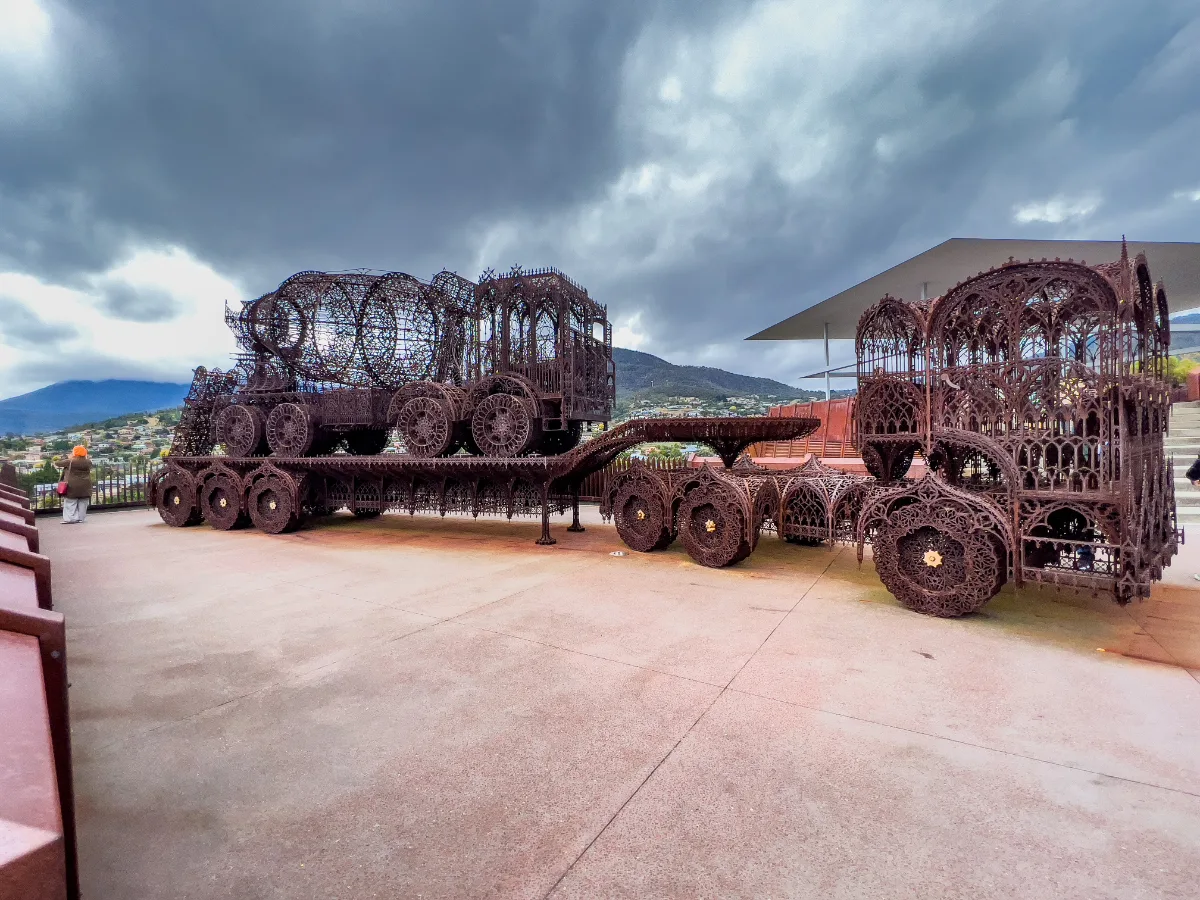
Before we even got inside, we ran into a massive truck and cement mixer parked out on the deck. It’s the most incredible thing, made entirely of intricate, rusty steel that resembles fine lace or a gothic cathedral. It’s hard to imagine the hours of work that went into welding every little swirl and gap in the metal.
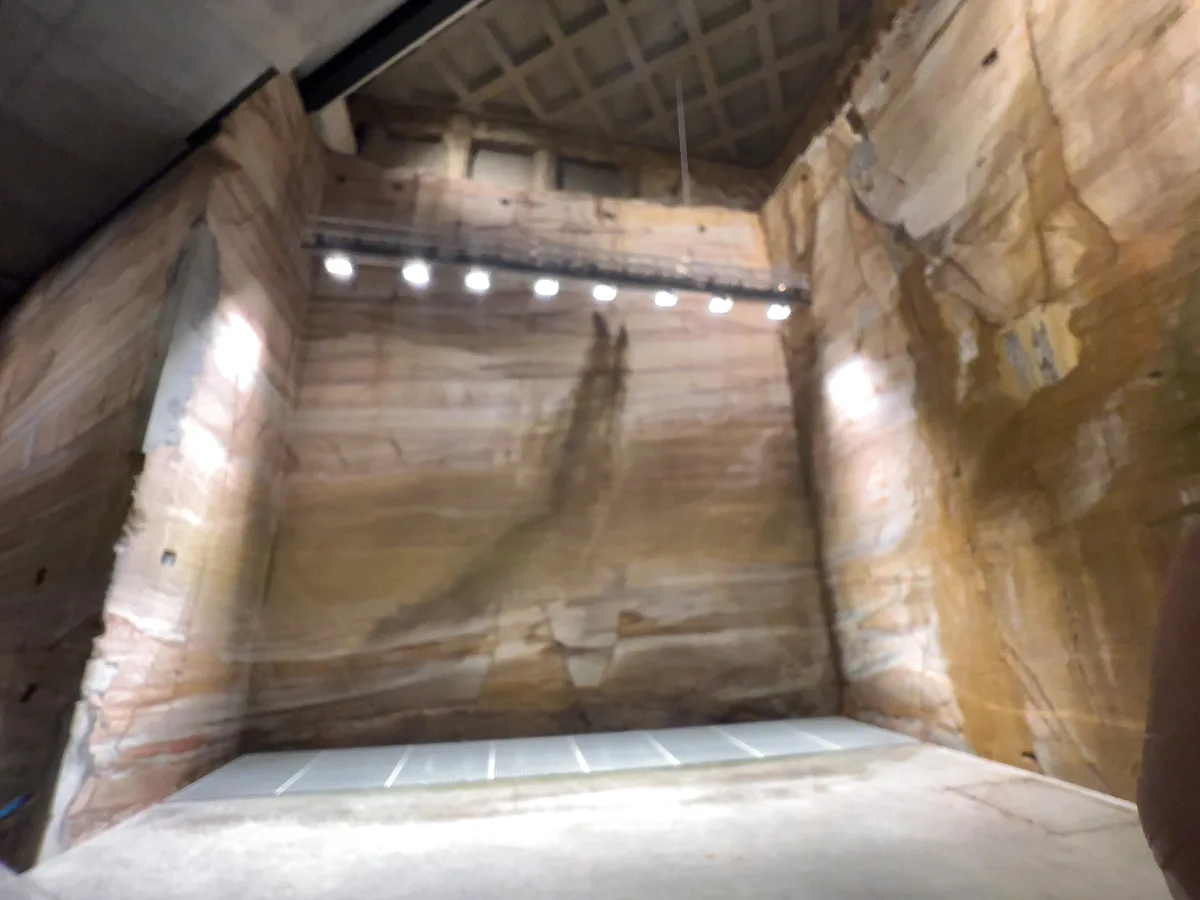
The whole museum is built downwards into the earth. We descended deep into the ground, and the first thing that struck us was the scale of the place. The walls are solid, towering sandstone, carved right out of the cliff. Standing at the bottom and looking up at the light filtering down, you really feel the weight of the hill above you.
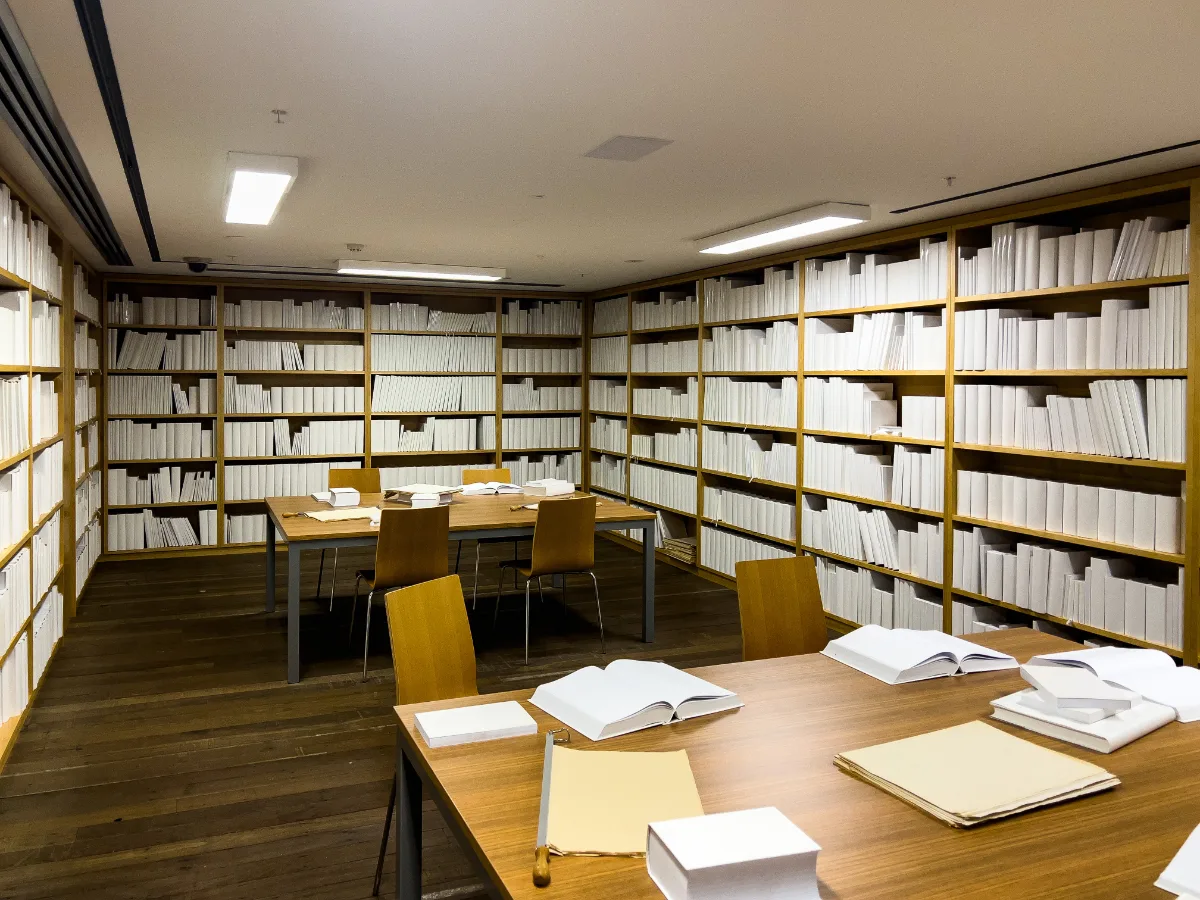
One of the rooms that really stopped us in our tracks was a massive library. But it’s not like the library back home; every single book on the shelves is bound in plain white. There’s no titles, no authors, just a sea of white. We sat at the big wooden tables and just soaked in the silence of it. It’s a very strange feeling to be surrounded by so much information that you can't actually read.
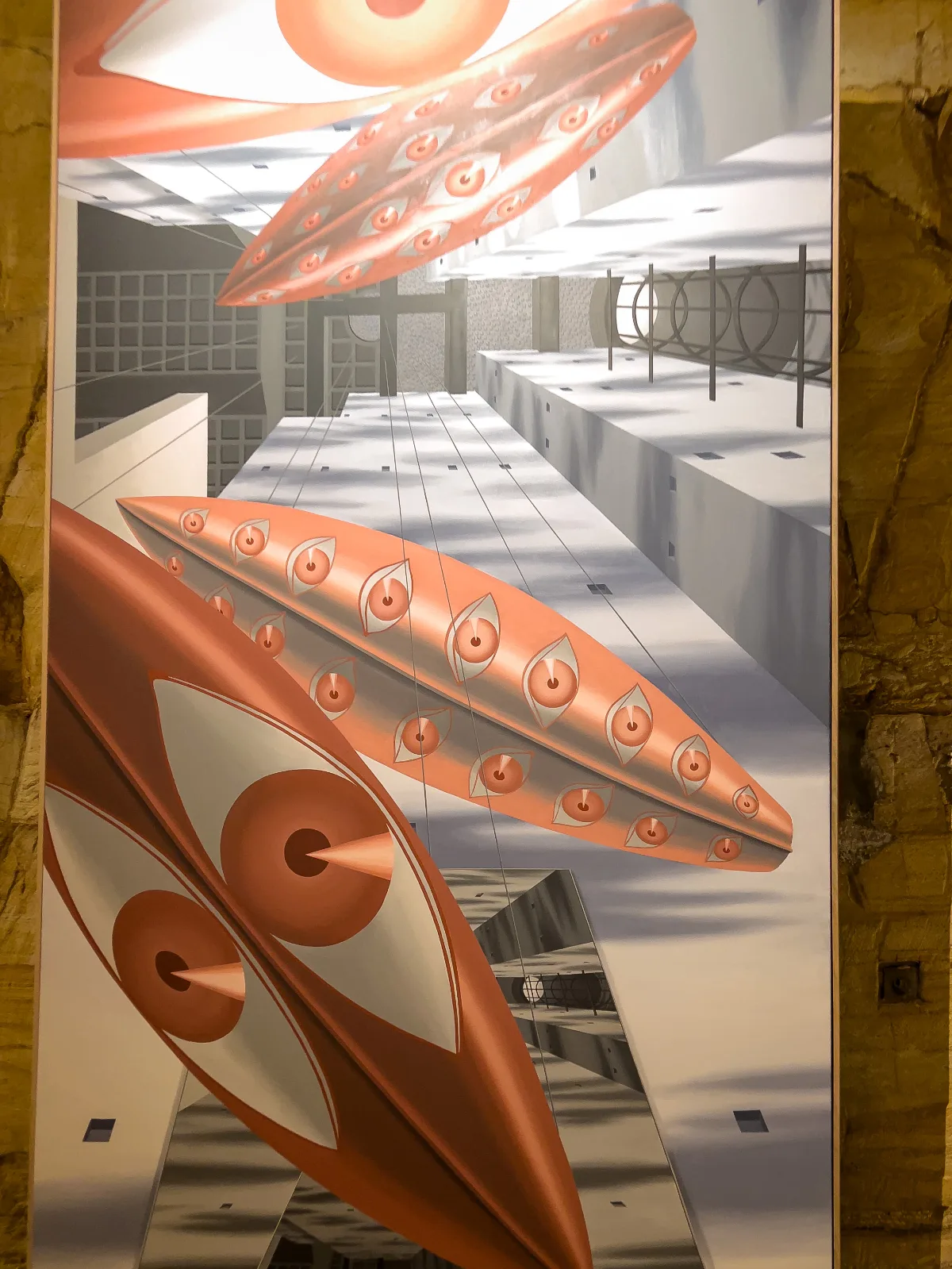
The art kept getting more "unique" as we went. We found ourselves standing in front of a giant panel covered in dozens of orange eyes, all staring back at us from different angles. It’s the kind of thing that makes you feel like you’re being watched, no matter where you stand in the gallery. Lisa thought it was fascinating, though Steve reckoned it was a bit like being back in the headmaster's office.
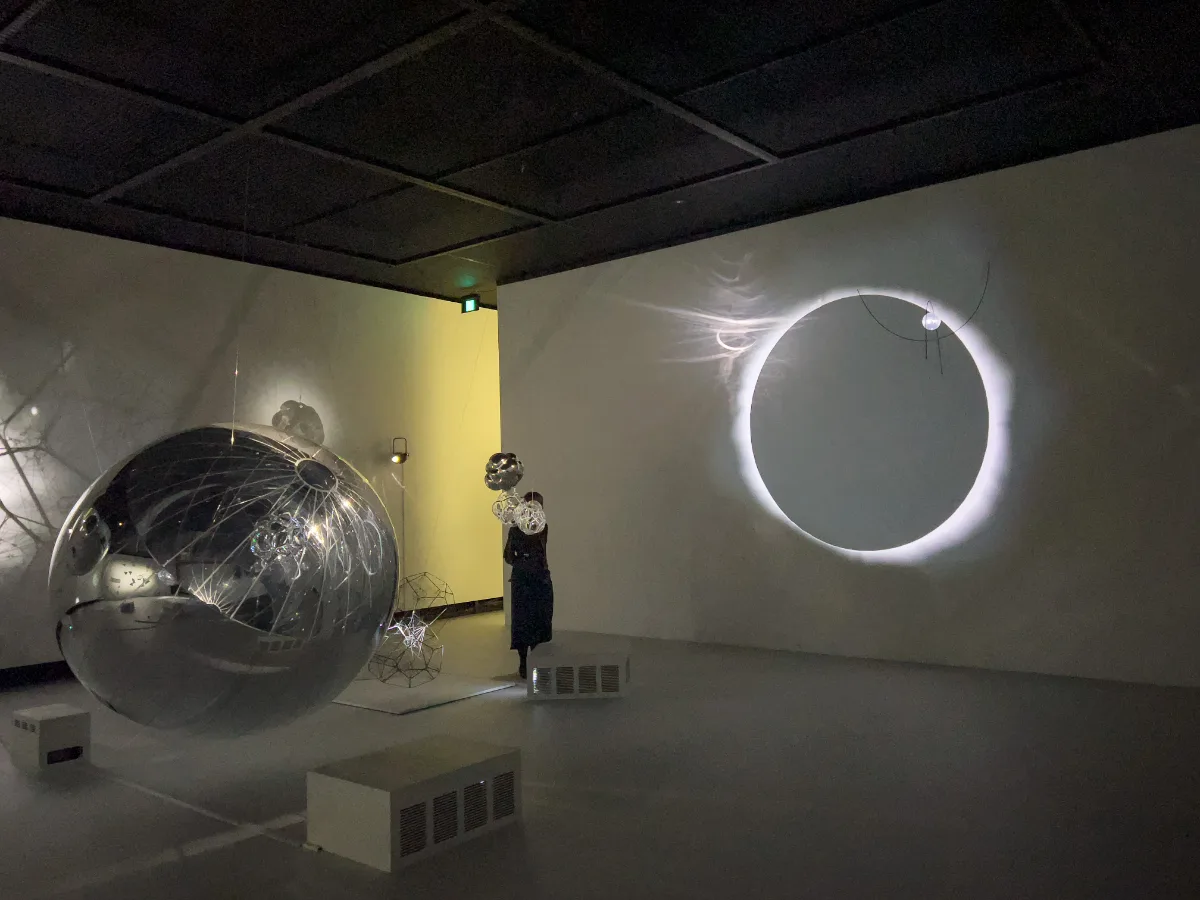
We also wandered into a dark room where a giant silver sphere was suspended in the air. It reflected everything around it, while a bright circular light was projected onto the far wall, looking exactly like a solar eclipse. It was very peaceful, just watching the light play across the dark space.
By the time we finished, our brains were a bit fried from trying to make sense of it all. It’s certainly not your typical museum, but we are so glad we went. We ended the day sitting out by the water, watching the clouds roll over the hills and reflecting on how lucky we are to be seeing these corners of the country. It’s a long way from the red dirt of WA, but Tasmania is certainly starting to feel like a second home.


