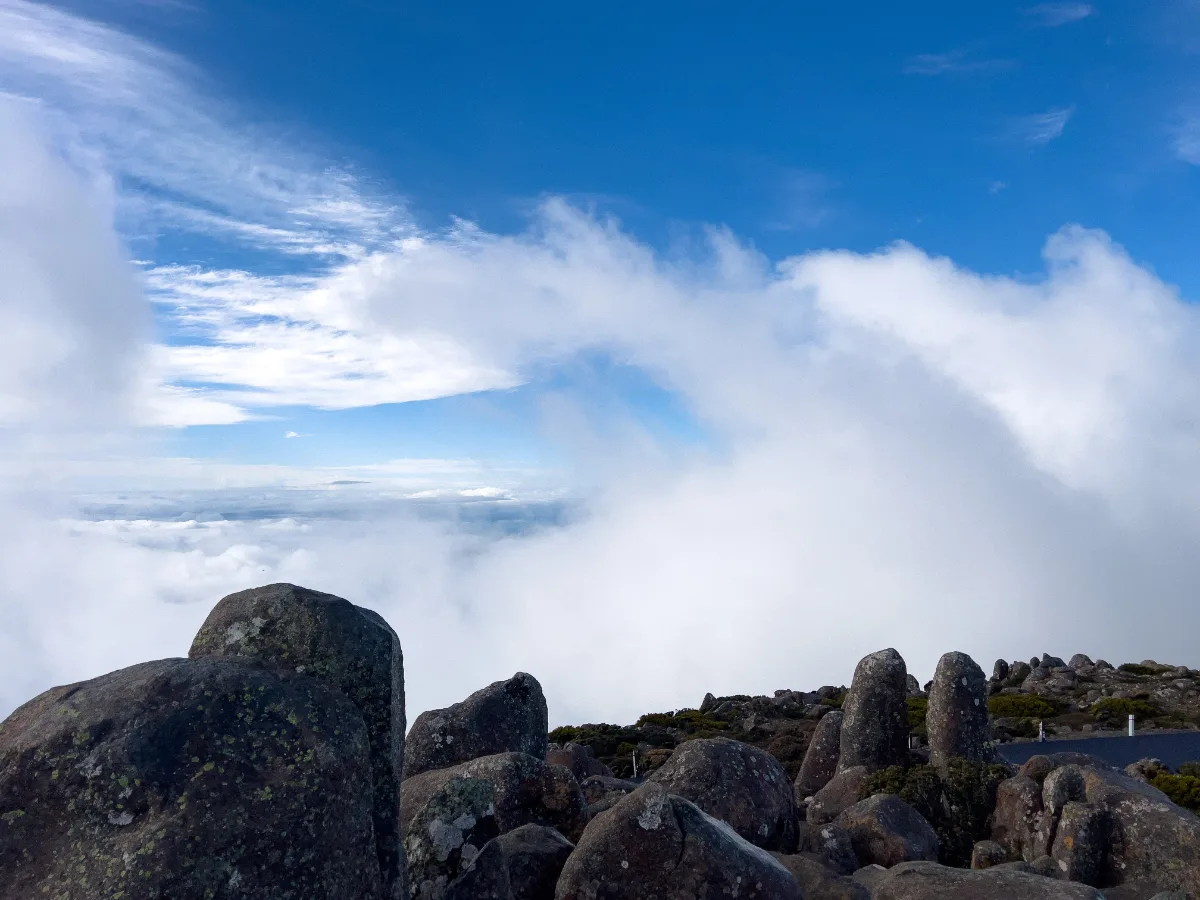
We decided to see Hobart from the very top first, so we made our way up to the summit of Mount Wellington. At 1,271 metres above sea level, it’s a fair climb, and we certainly felt the change in temperature as we got higher. We were hoping for a clear view over the bay, but the mountain had other plans for us. A thick blanket of cloud decided to settle right on the peak, turning the whole place into a misty, chilly wonderland.
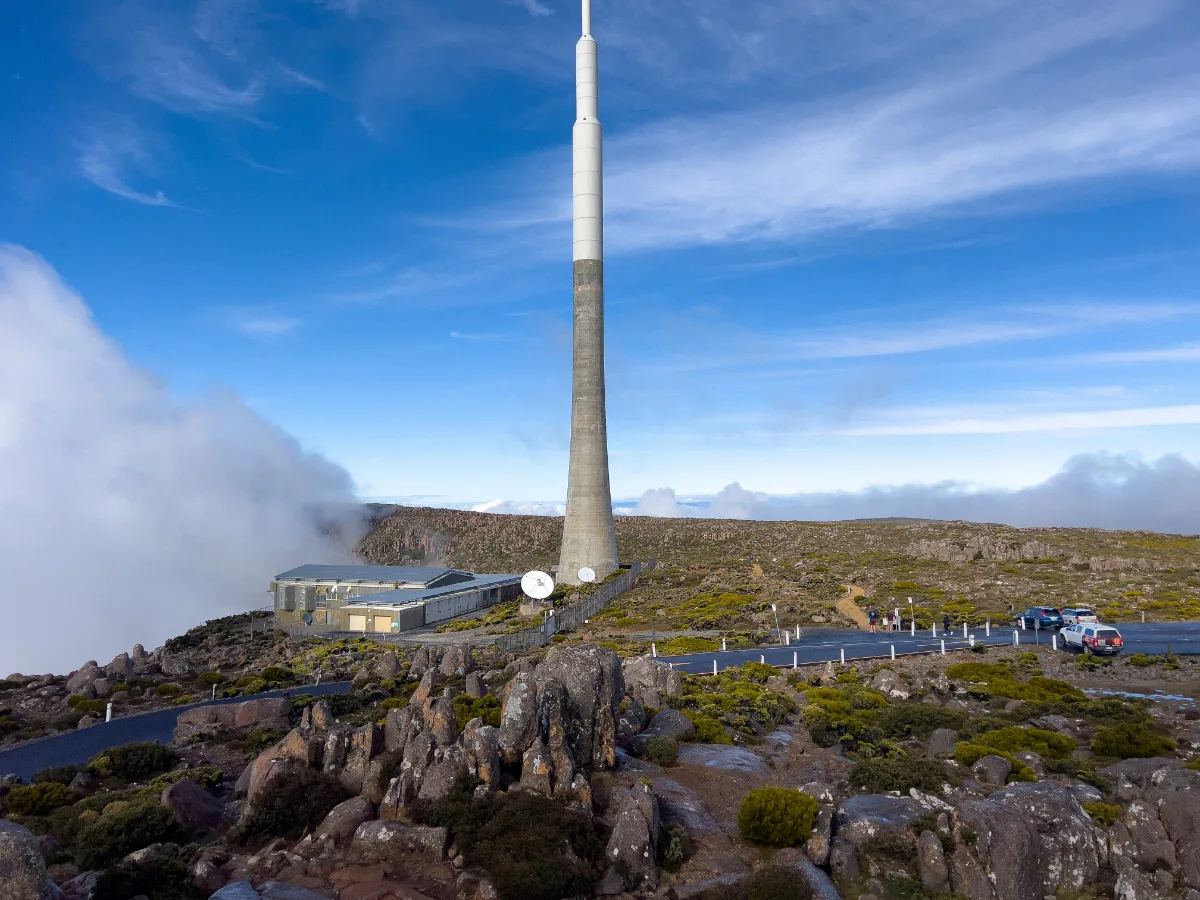
Standing up there, we felt completely tucked away from the rest of the world. The wind has a real bite to it at that altitude, and Lisa was glad she’d grabbed an extra jumper before we left. Even with the clouds obscuring the distant horizon, the sight of the massive transmission tower poking through the white mist was quite something. It felt a bit like being on a film set for a sci-fi movie.
One of the funniest things happened when we tried to get back into the car. The electronics completely gave up! Apparently, all the radio and television signals coming off those towers play havoc with modern car remotes. Steve had to go back to basics and use the actual metal key to get us inside. There’s even a sign on the lookout wall explaining exactly what to do when your "high-tech" car decides to stop talking to you. We had a good chuckle about that—sometimes the old ways really are the best.
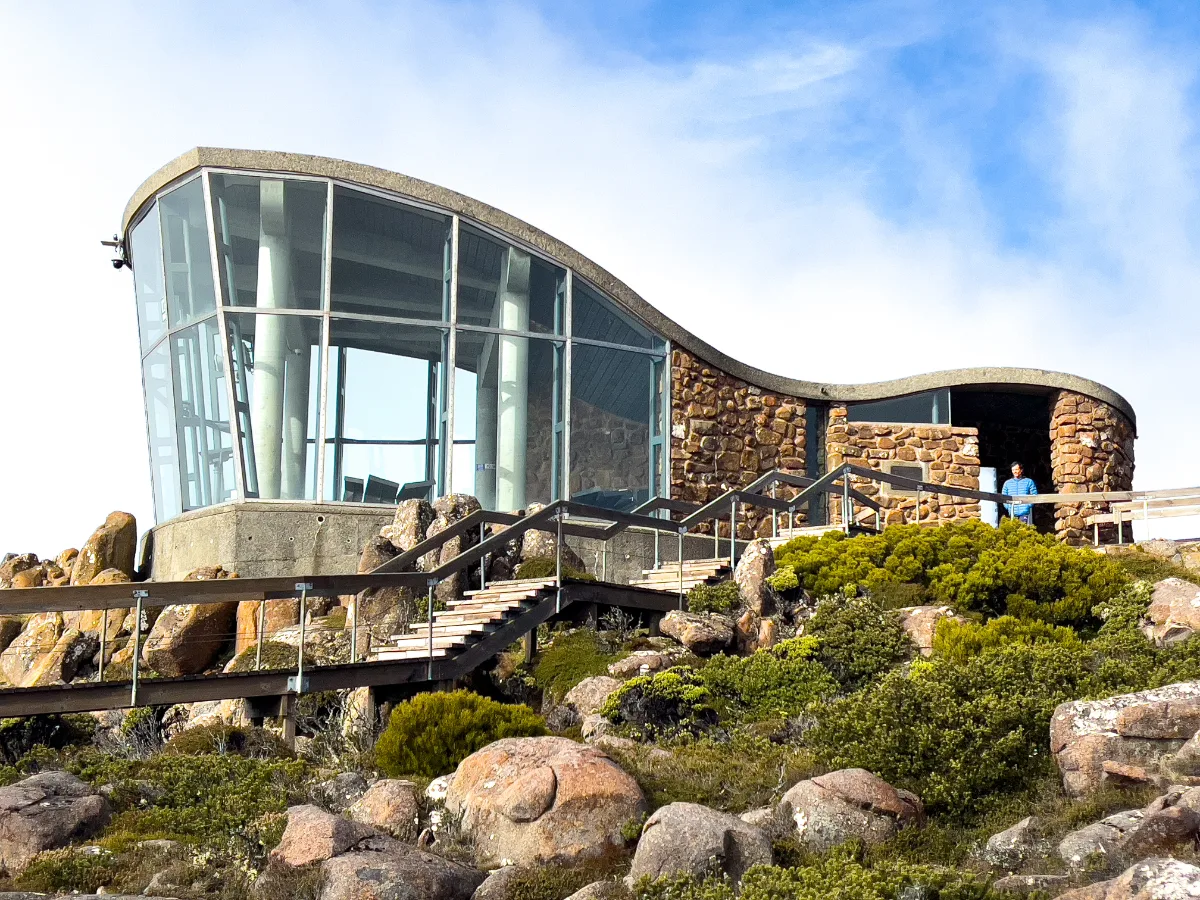
We spent a bit of time in the lookout shelter, which is a clever bit of design. Its big glass windows and curvy stone walls let us look out at the swirling clouds without losing our hats to the gale outside. Once we’d had our fill of the "white-out" views and the freezing air, we headed back down the winding road toward the sea level warmth of Hobart.
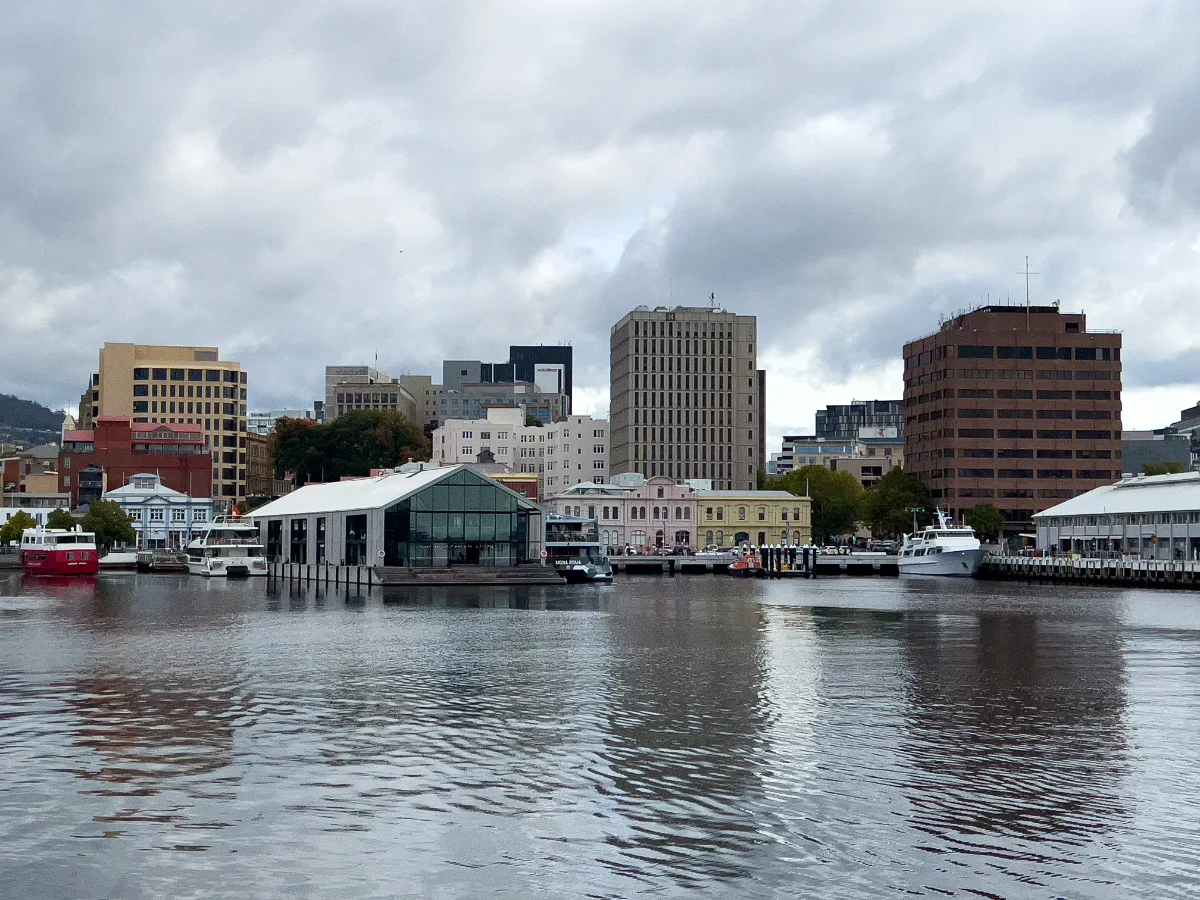
The change in scenery was absolute. We spent the rest of our day wandering around the port, Salamanca Place, and Battery Point. After the wildness of the mountain, the city felt very compact and manageable. To be honest, we both thought the port would be much larger than it actually is, but its smaller scale gives it a lovely, intimate feel. We just walked and soaked up the atmosphere, getting a real sense of the place.
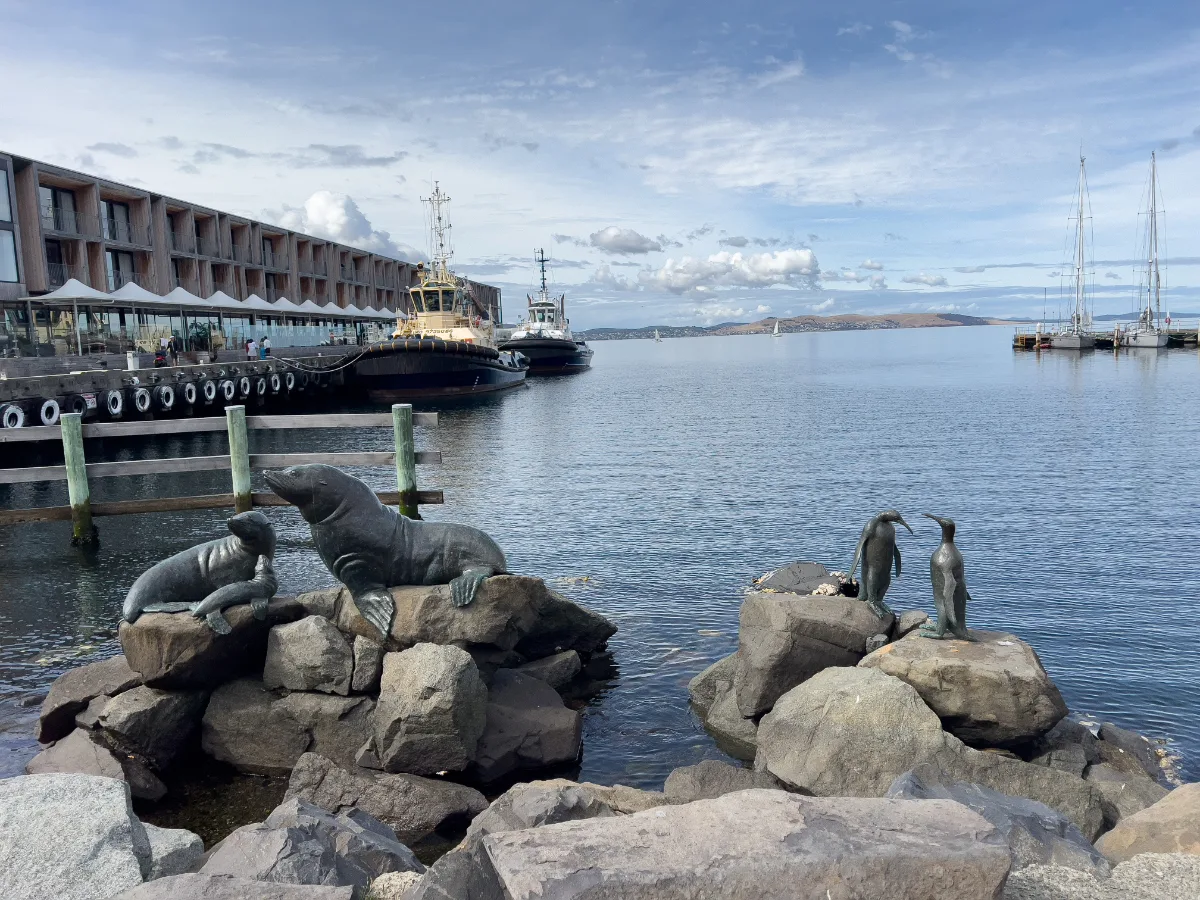
The grandkids would have absolutely loved the sculptures scattered along the waterfront. We came across these wonderful bronze seals and penguins perched on the rocks right by the water. They look so real that you almost expect them to slide back into the harbour for a swim. Lisa spent ages admiring the detail on them while Steve scouted out the best spot for a coffee.
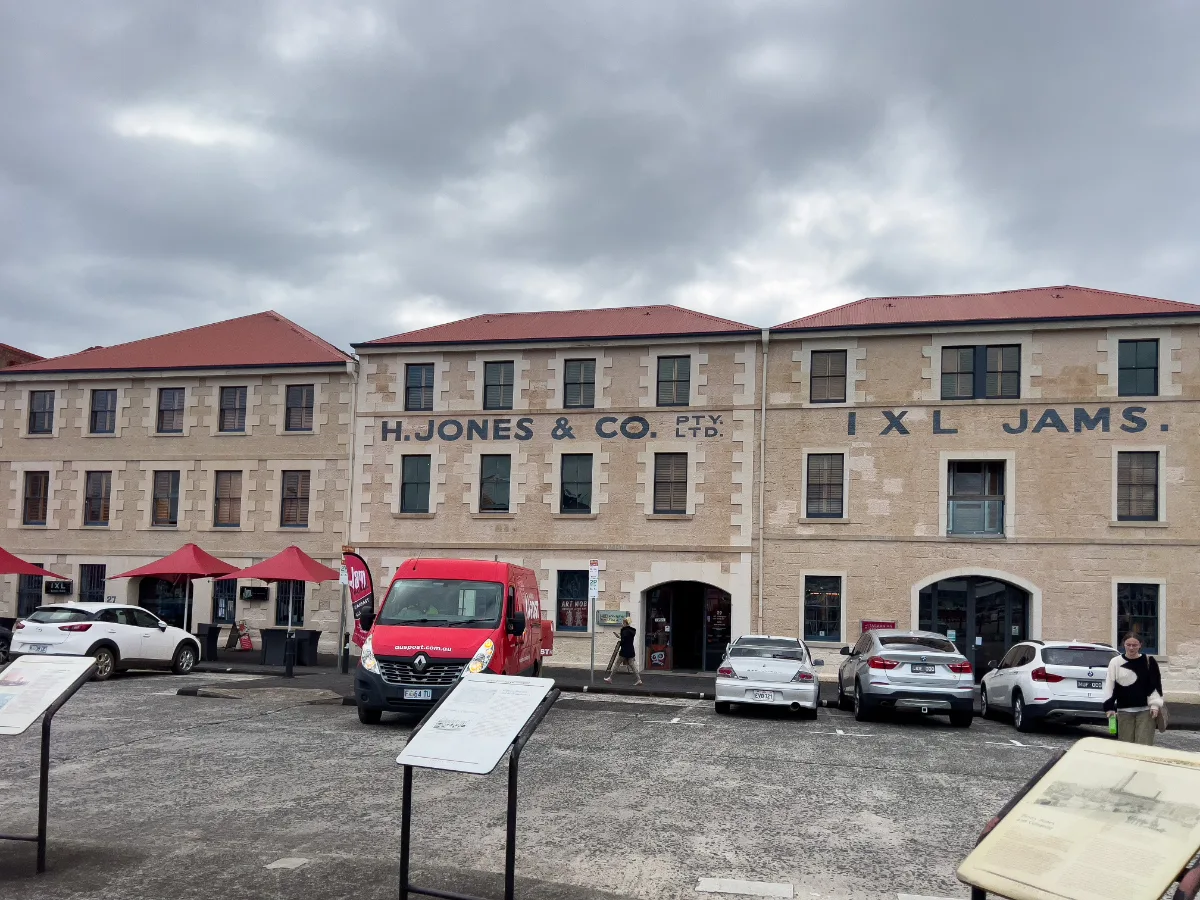
We wandered past the old H. Jones & Co. building, which many people would recognise by the "IXL Jams" sign painted on the stone. It’s a massive, sturdy place that reminds you just how much history is packed into these Hobart streets. It’s not just about industry, though; there’s a real sense of the people who lived and worked here in every corner.
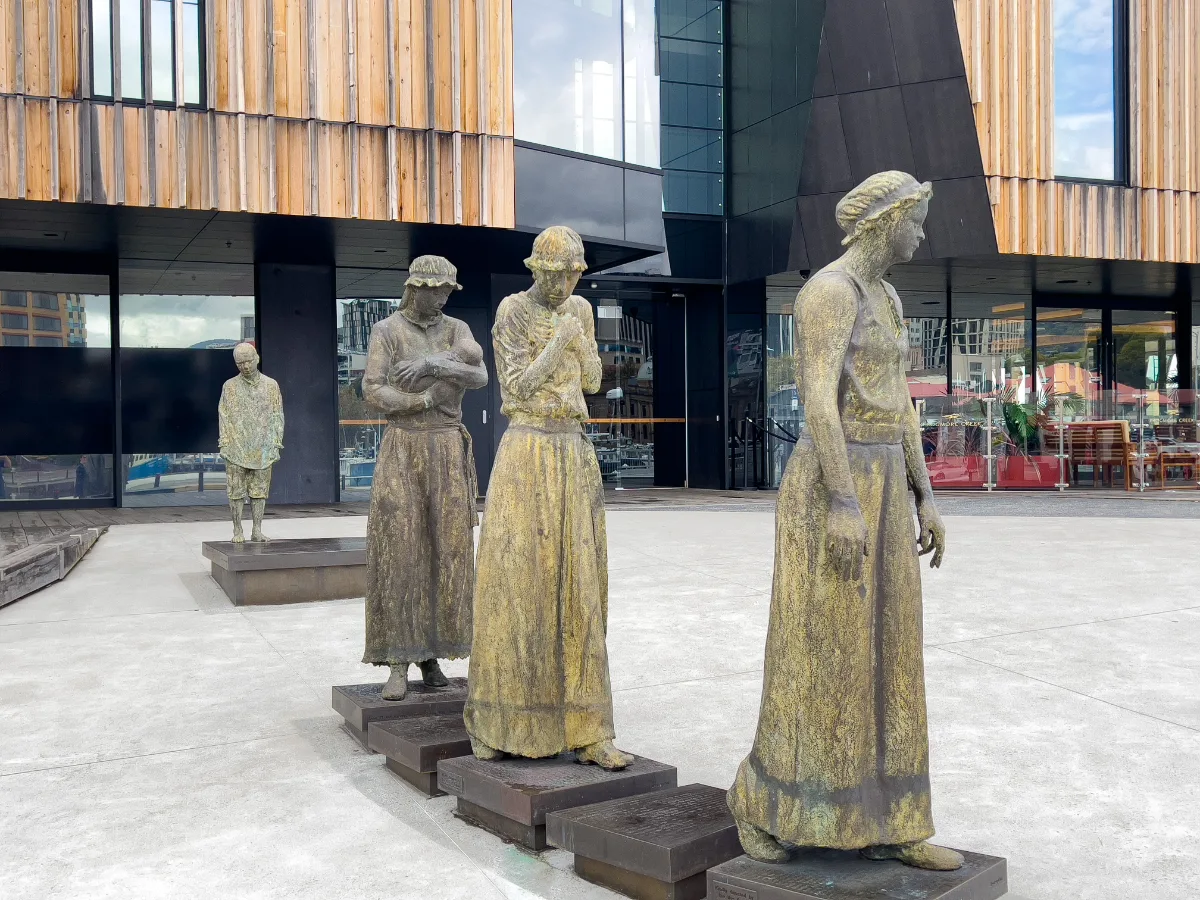
Further along, we stopped at a moving tribute to the women who arrived here in the early days. These bronze statues of women and children standing on the pavement are quite haunting. They have such a quiet, somber presence amidst the modern buildings. It really made us stop and reflect on the different lives people have led on these very shores. By the time we finished our loop of the harbour, we felt like we’d seen two completely different worlds in one day—from the freezing, misty heights of the mountain to the warm, stories-filled streets of the port.


