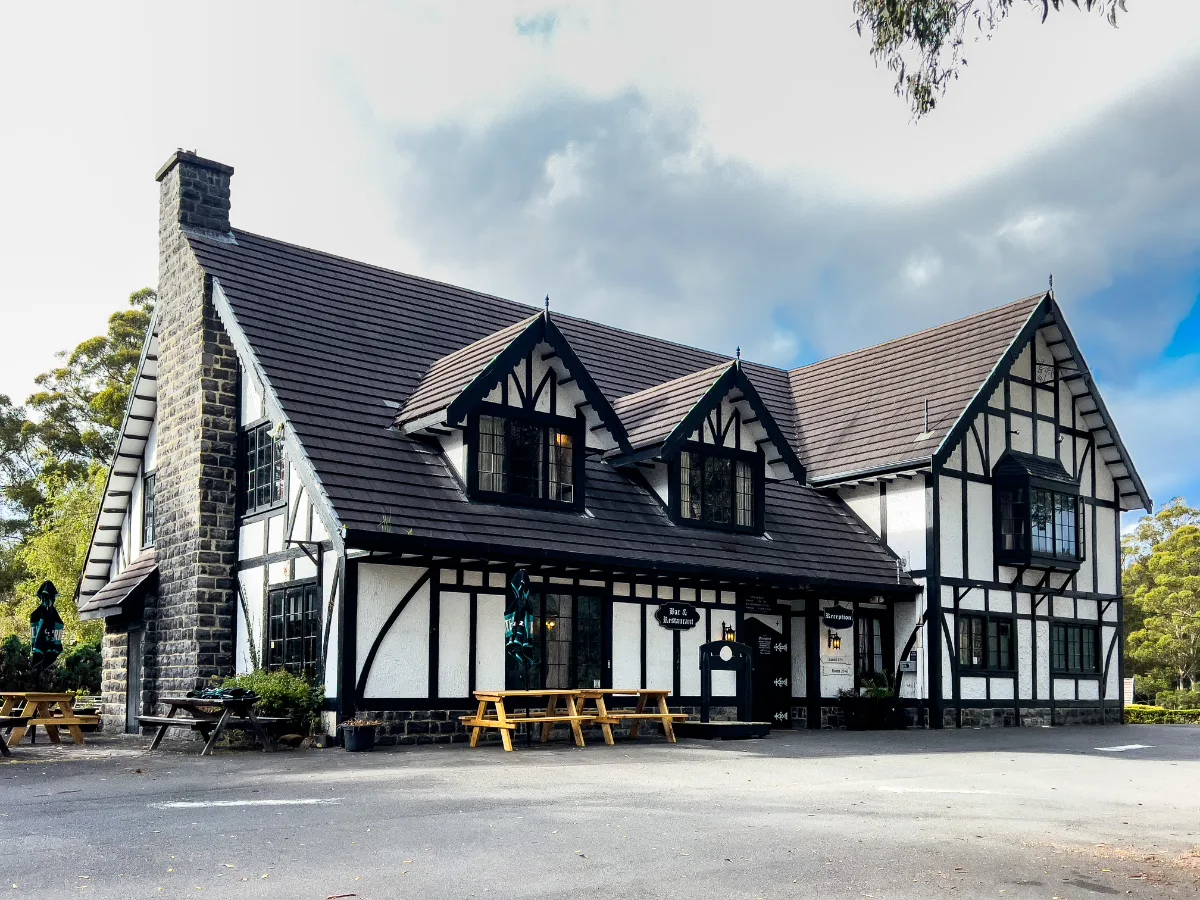
We have finally made it down to Port Arthur, and let us tell you, the air here feels different. It’s a beautiful corner of the world, but there is a weight to the place that stays with you as you walk the grounds. Before we headed into the main historic site, we stopped in at the Fox and Hounds Inn. It’s a proper piece of old England, all white-washed walls and dark timber beams. Lisa was quite taken with the Tudor style of the building, though Steve was mostly interested in the stories about the place being haunted. We didn't see any ghosts, but the creaky floorboards certainly set the mood for the day.
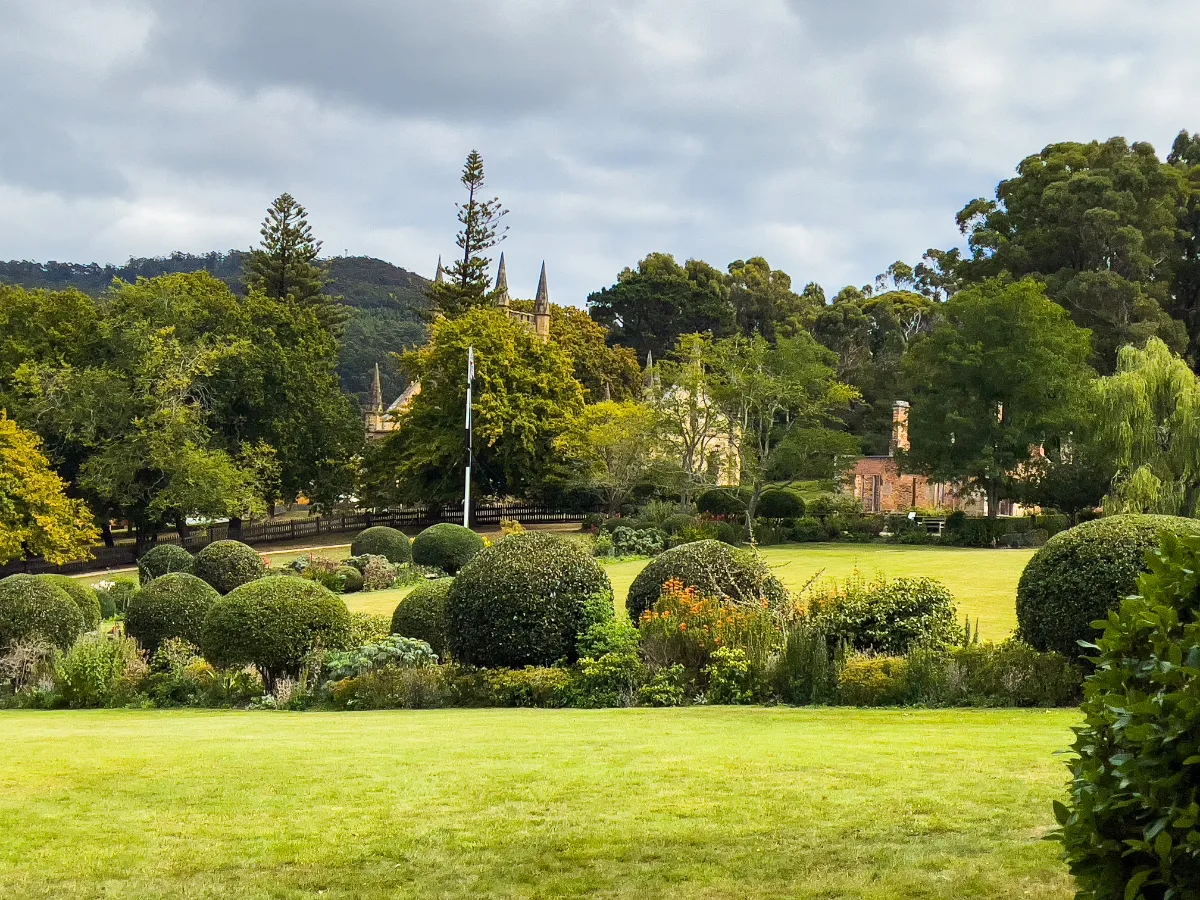
Once we stepped into the Port Arthur Historic Site, the contrast really hit us. It is one of the most picturesque places we’ve seen in Tasmania, which feels a bit strange when you think about why it was built. The gardens are absolutely stunning, with perfectly manicured lawns and these wonderful round, sculpted hedges. Lisa spent a good while admiring the flower beds, while Steve found a nice spot to just sit and take in the scale of the old stone buildings. The grandkids would have had a ball running around these lawns, though we might have struggled to keep up with them!
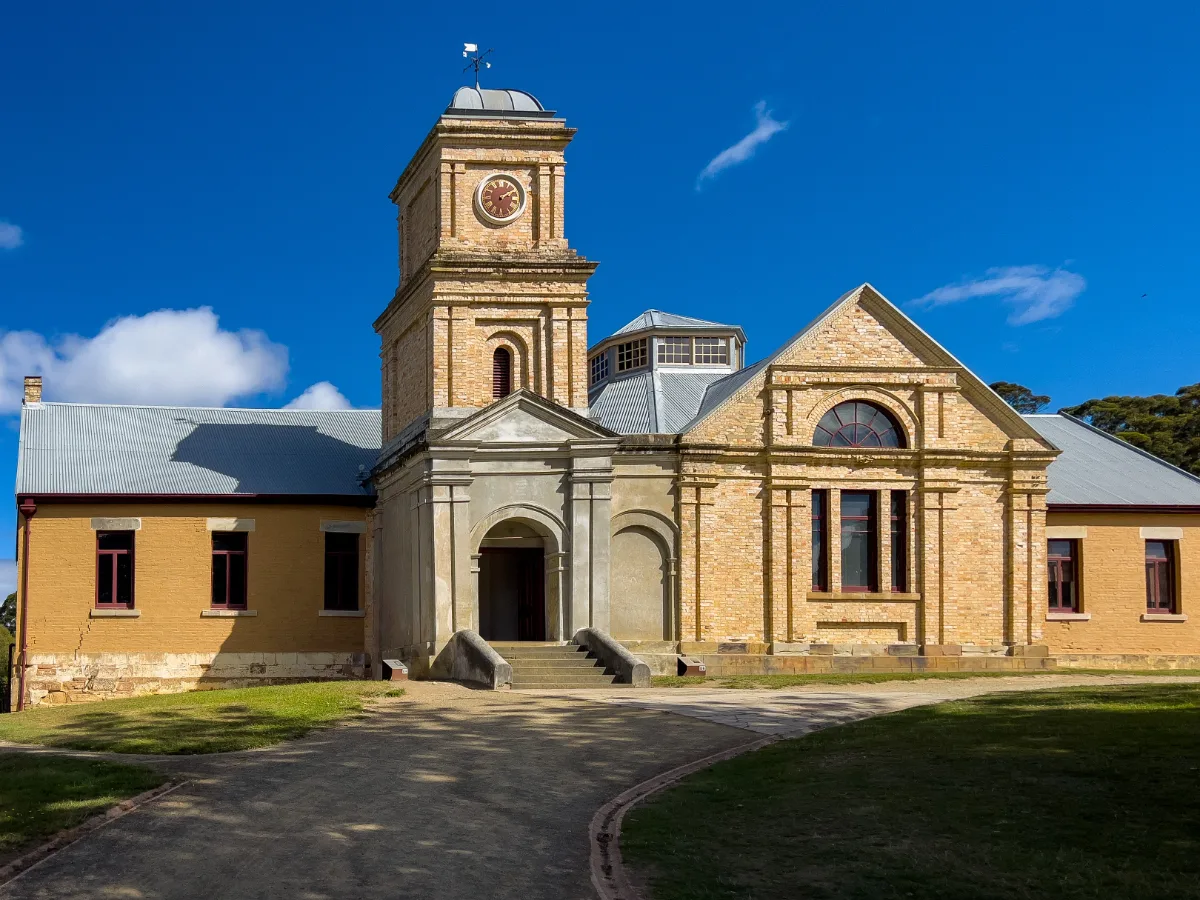
The stonework on the old Law Courts and the clock tower is just magnificent. You can see the precision in every block, and the way the yellow stone glows against the blue sky is something else. It’s hard to imagine that this was once a place of such hardship.
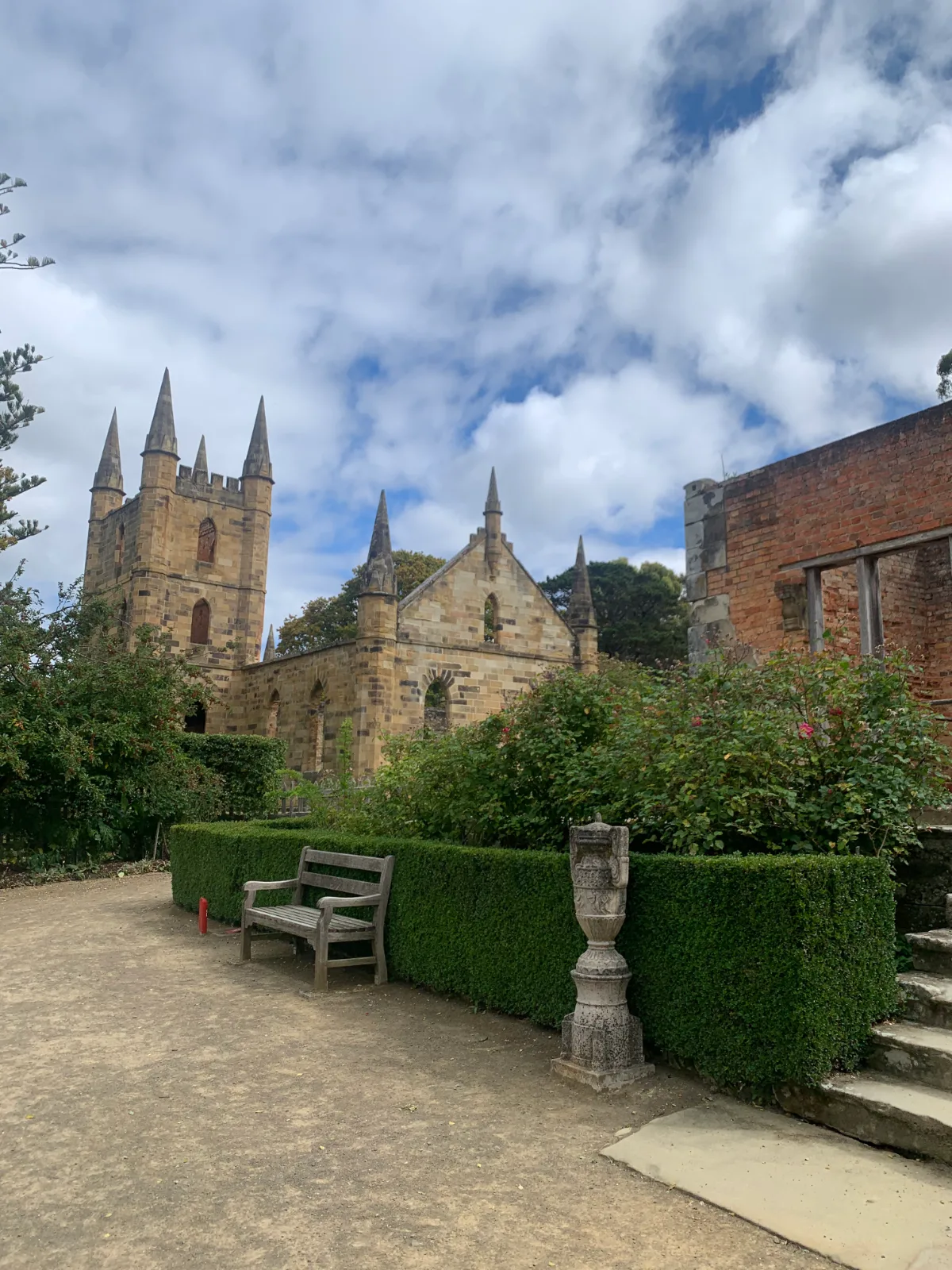
We wandered over to the ruins of the old church. Even without a roof, it’s a powerful place. The spires still reach up towards the clouds, and there are these lovely quiet benches where you can sit and look out through the empty window frames. It’s very peaceful now, surrounded by trees and roses.
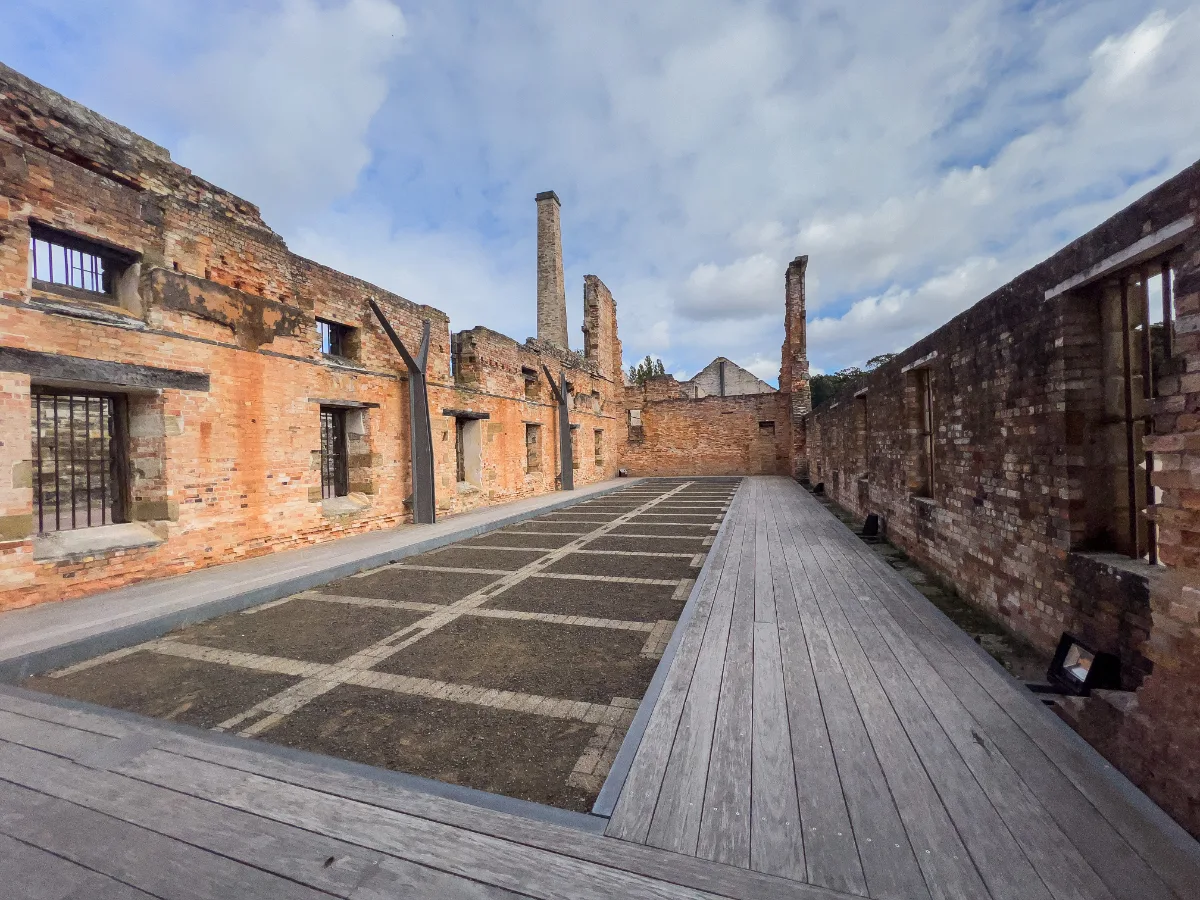
Steve was particularly interested in the way they’ve preserved the main prison buildings. They have built these wooden walkways over the foundations so you can see exactly how the cells were laid out. Looking through the iron bars into those small brick rooms really brings home the reality of what life was like for the men kept here. It’s a sobering thought, seeing those heavy walls and narrow windows.
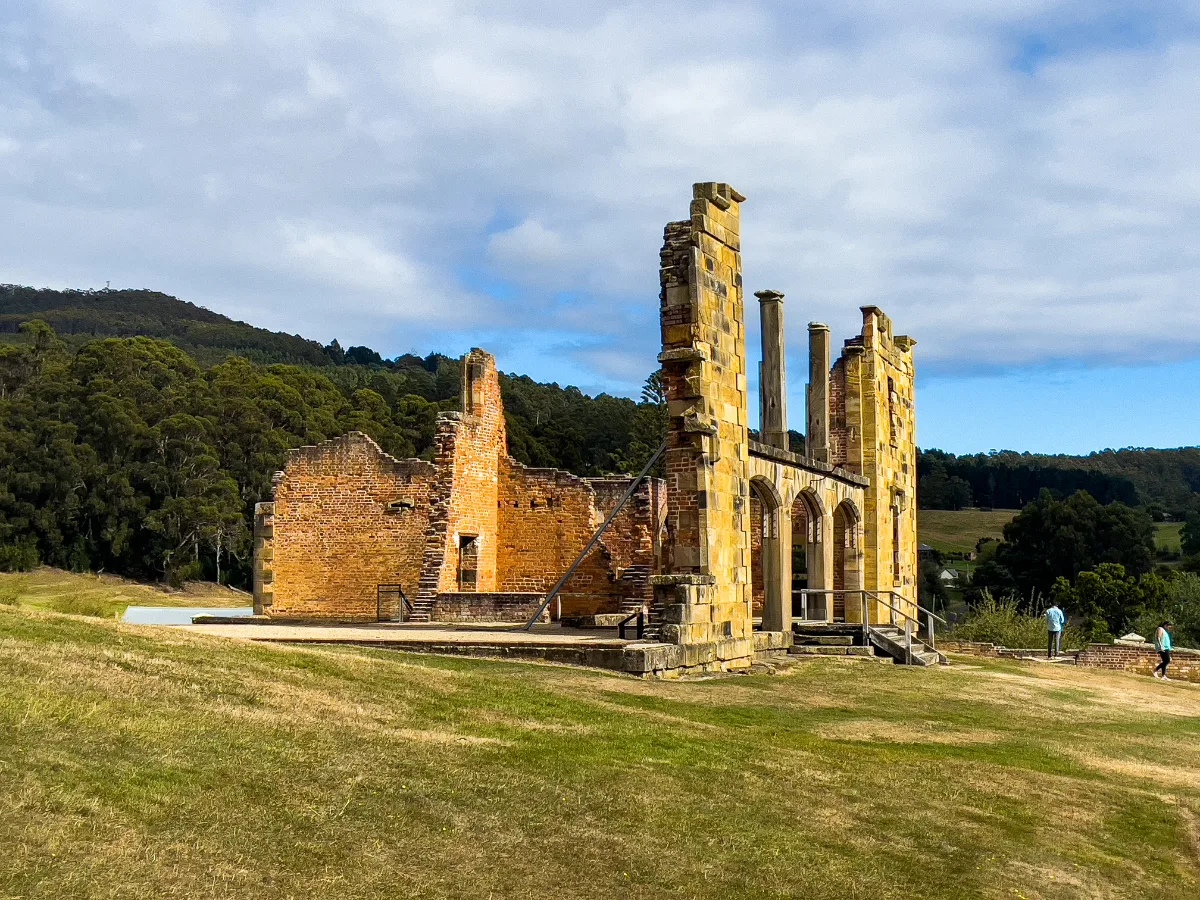
The main barracks and the hospital ruins stand tall on the hill, looking out over the water. You can see the giant chimneys and the empty shells of the rooms where so much history happened. Steve noticed how the thick stone walls have started to crumble in places, but they still look like they could stand for another two hundred years.
From a distance, the scale of the site is even more impressive. You can see the old Penitentiary sitting behind the trees, a massive brick structure that dominates the shoreline. It’s a strange feeling, seeing such a grim building surrounded by such natural beauty.
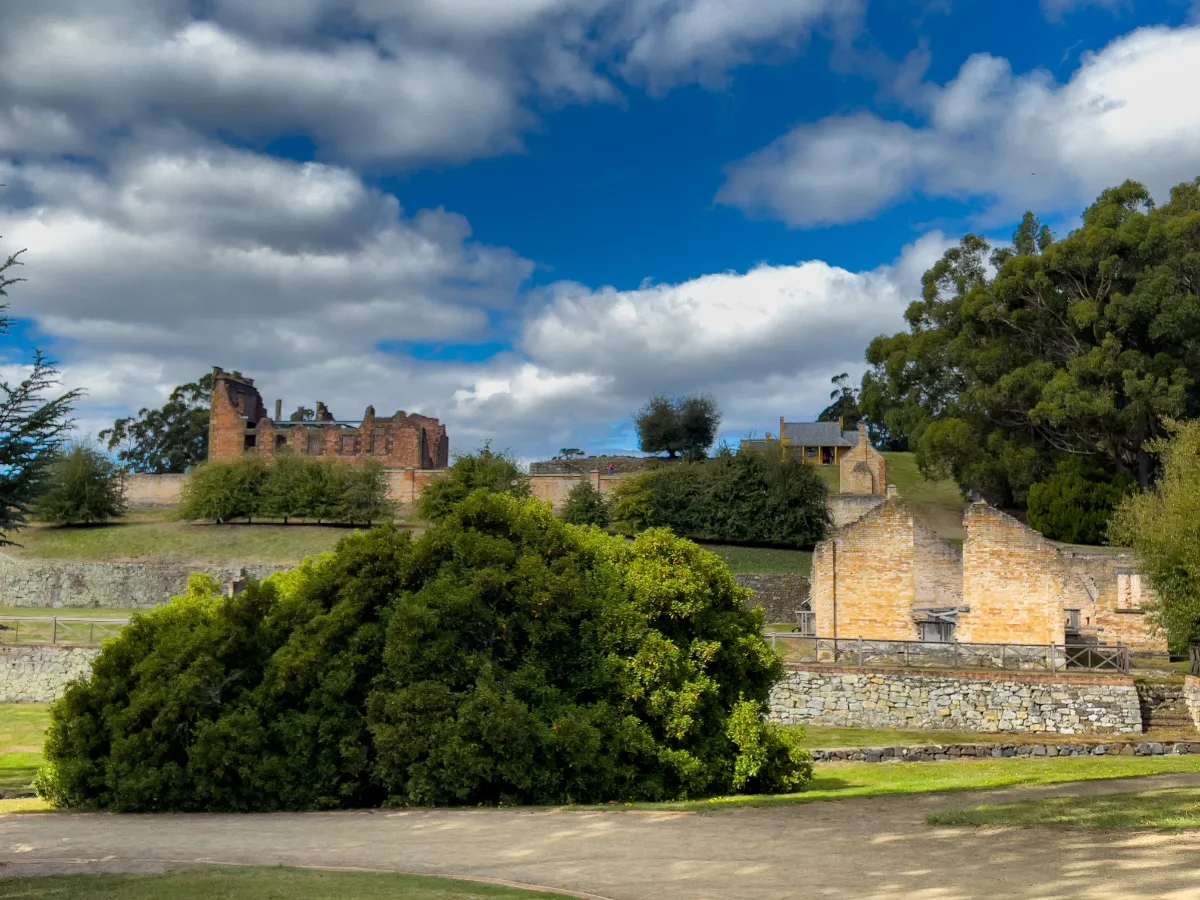
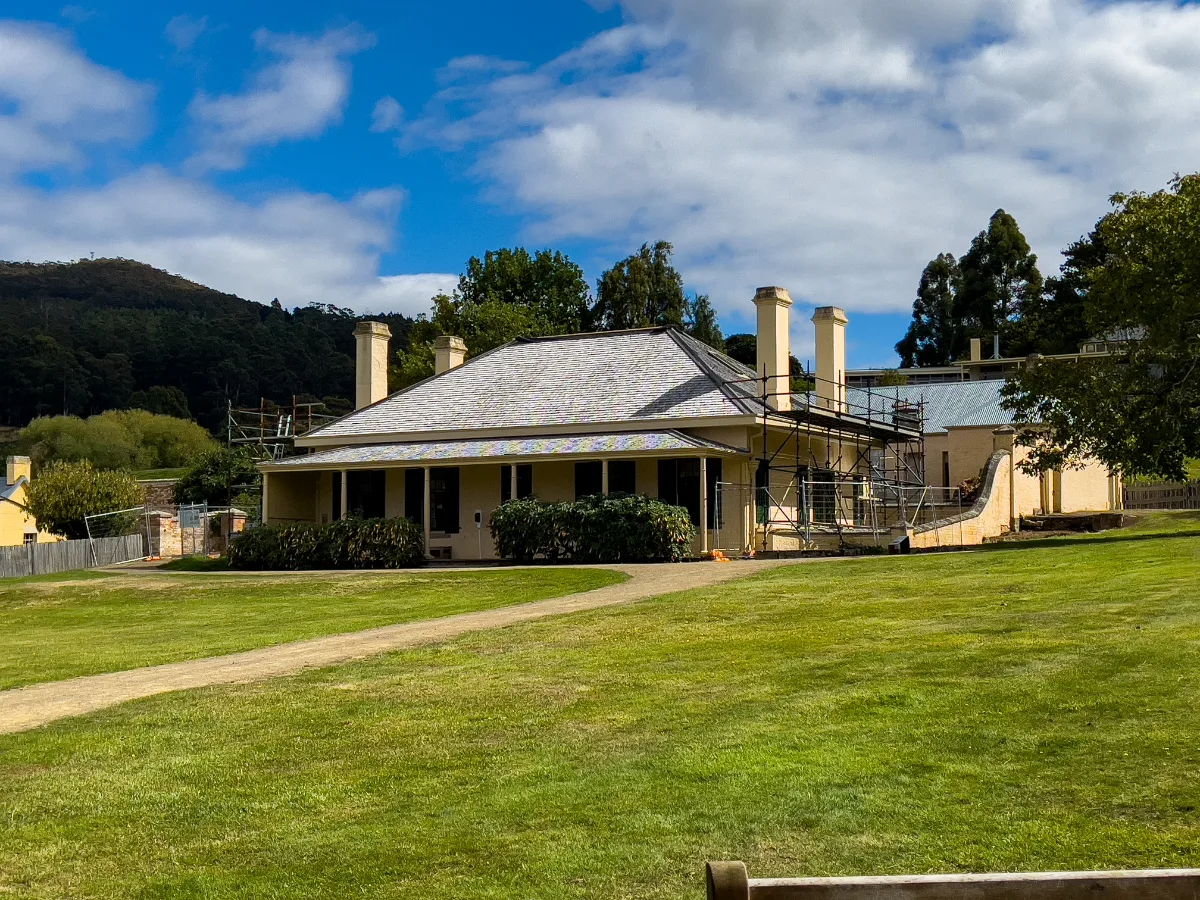
They are still doing a lot of work to keep the place standing, too. We saw one of the old colonial houses near the top of the hill covered in scaffolding. It’s good to see they are taking such care of these old homes; they have such a grand look about them with their wide verandahs and tall chimneys.
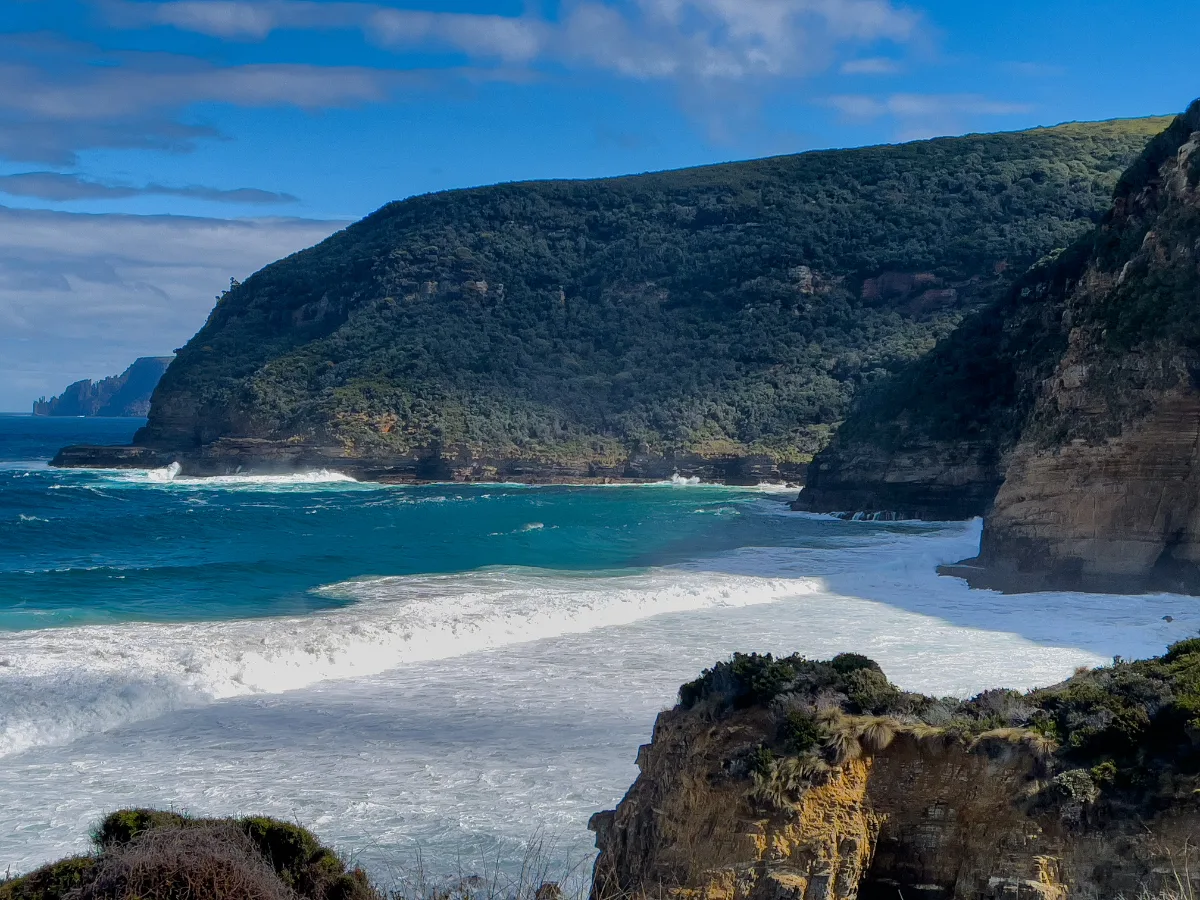
After we had our fill of the ruins, we decided we needed some fresh salt air to clear our heads. We drove a few kilometres out to the Maingon Bay lookout. The coastline here is incredibly rugged. The cliffs are sheer drops into the dark blue water, with thick scrub clinging to the edges.
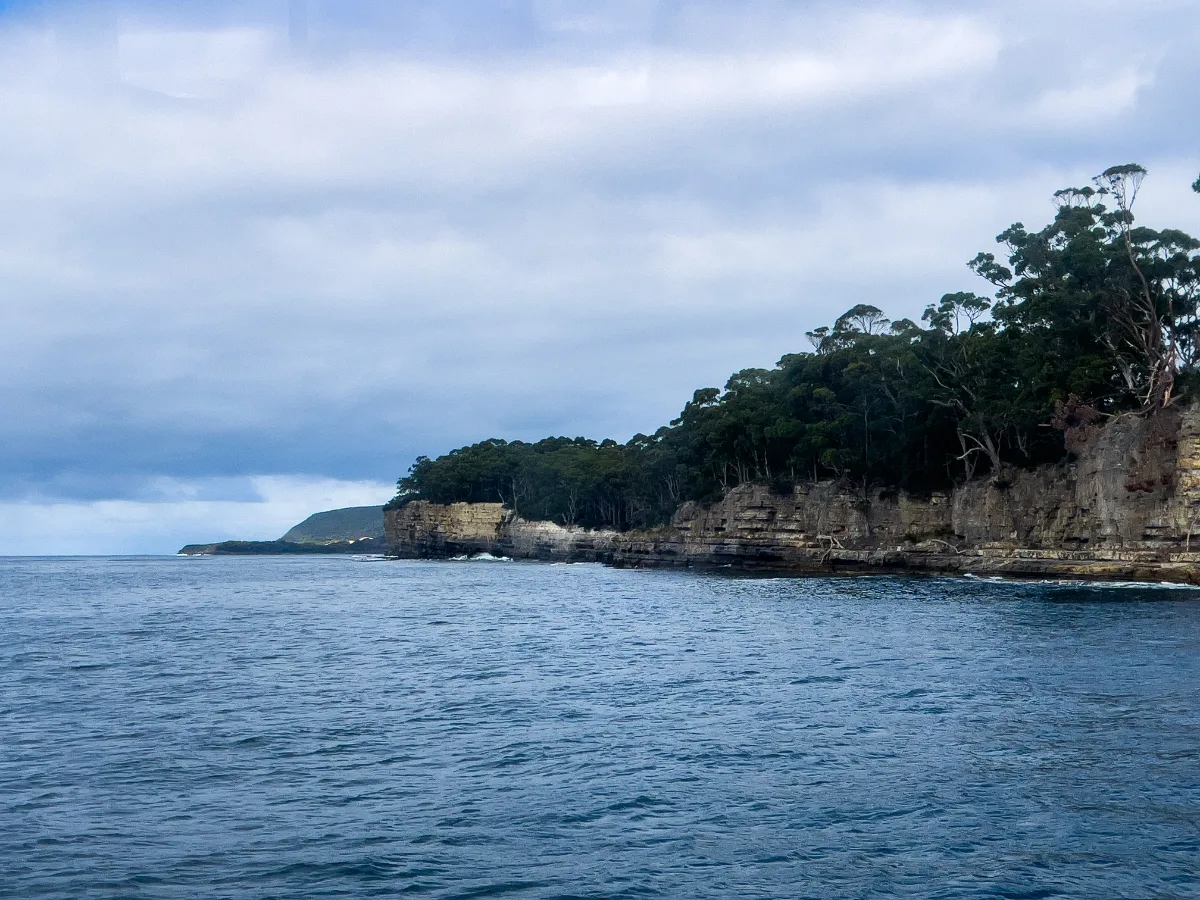
The wind was really whipping up the Southern Ocean when we got to the bay. We stood and watched the massive white waves crashing against the rocks below. It’s a wild, untamed part of Tasmania, and standing there looking out at the foam and the spray, you really feel like you’re at the edge of the world. It was the perfect way to end a day of reflecting on the past.