Being here in Rocky Hills really makes us stop and think about all the places we've seen on this big lap of ours. People often ask us what the most beautiful place we’ve ever visited is, and honestly, the answer is usually just "the next one." Every spot has its own charm, though Lisa still holds a very special torch for those nights we spent camped on the banks of Lake Tinaroo in Yungaburra. Still, this Tasmanian coastline is something else entirely.
We moved on to Triabunna, a place that feels like it’s lived a dozen different lives. Long before the tall ships arrived, the Oyster Bay tribe called this country home for thousands of years. It’s hard to imagine the change they saw when the town was gazetted back in the 1830s. It became a real hub for wool, timber, and coal, and later on, there was a big woodchip mill that caused quite a bit of a local stir over the environment before the town shifted its focus toward the lovely eco-tourism vibe it has today.
Once we had finished setting up camp, we had to tackle the less glamorous side of travel. We spent the morning getting the laundry sorted and refreshing the toilet—the jobs that never take a holiday! Once the chores were out of the way, we headed down to the water. The harbour is the heart of the town now, and it’s the gateway if you’re heading over to Maria Island.
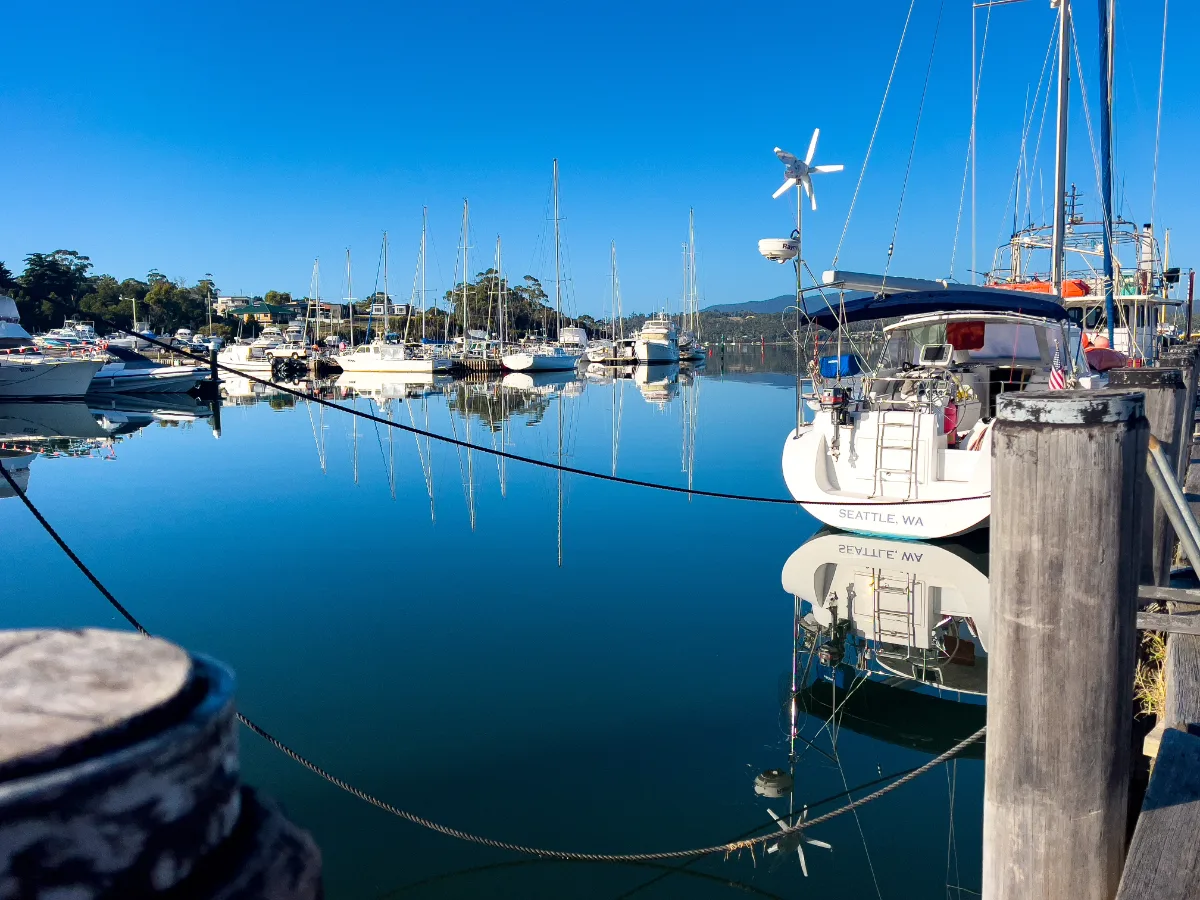
The water in the marina was absolutely still, acting like a perfect blue mirror for the masts of the yachts. We were amazed to see a boat named 'Seattle, WA' moored right there in the thick of it; Steve reckoned that’s a fair hike just for a bit of Tassie scallops! The grandkids would have had a ball counting all the different flags on the back of the boats.
We took an afternoon stroll along the riverbank, which was peaceful until we reached the spot overlooking Dead Island. It’s an aptly named little place where the early settlers used to bury their dead. It gives you a bit of a chill thinking about the history resting there, but the walk itself is just lovely. The town has such a mix of the old and the new.
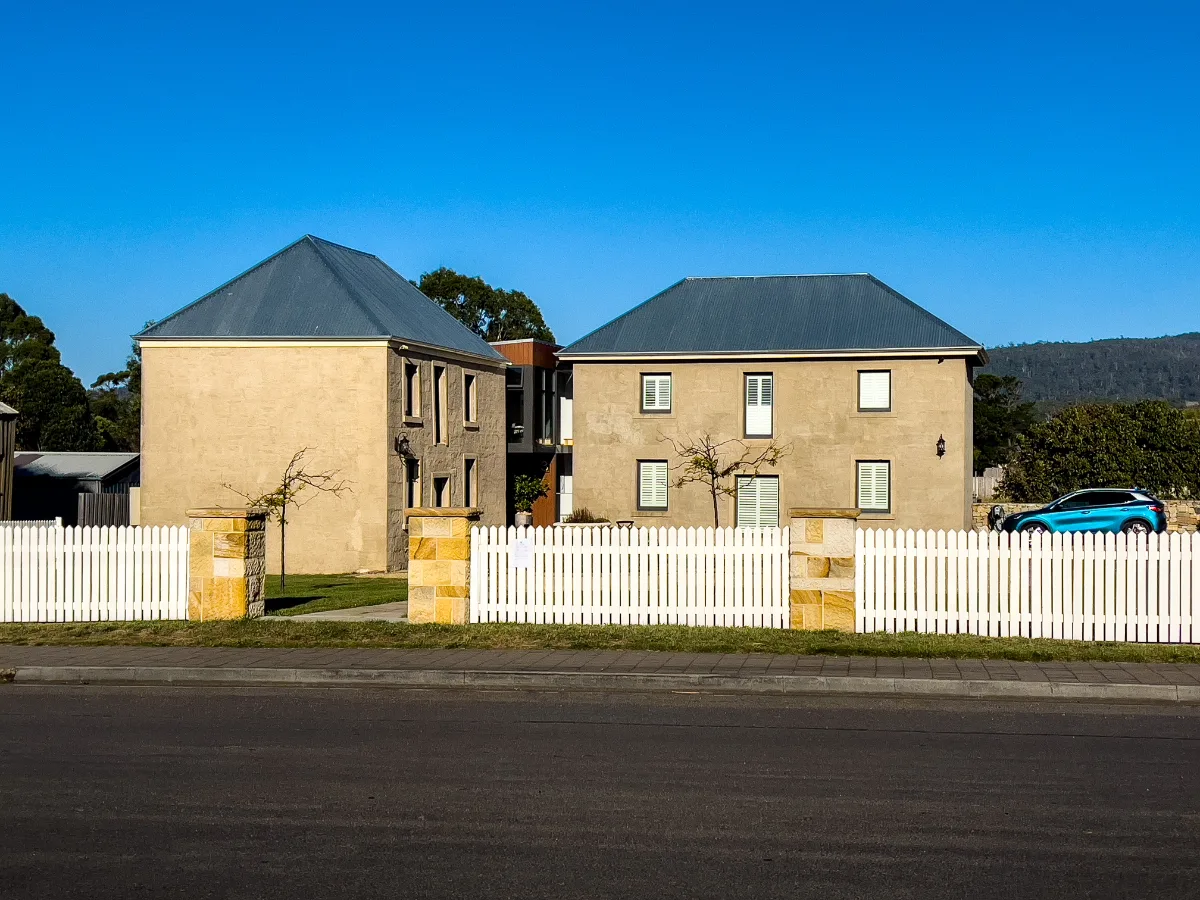
Walking back through the streets, we passed these two-storey sandstone buildings standing proud behind a crisp white picket fence. They have that solid, dependable look to them that you only find in these old port towns. Lisa loved the neatness of the gardens, while Steve was busy admiring how well that old stonework has held up against the coastal weather. It’s a quiet life here now, a far cry from the days of busy timber exports and woodchip controversy, but it suits us just fine.


