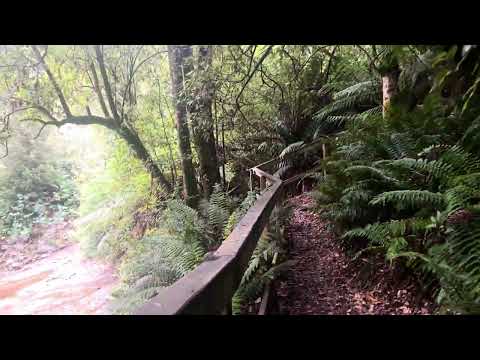
We were near Chudleigh today, deciding to head out for the Westmorland Falls walking track. It felt like a good day for a bit of a stretch after a few days on the move, and we had heard the track offered a good look at the local forest without needing an entire day to complete it.
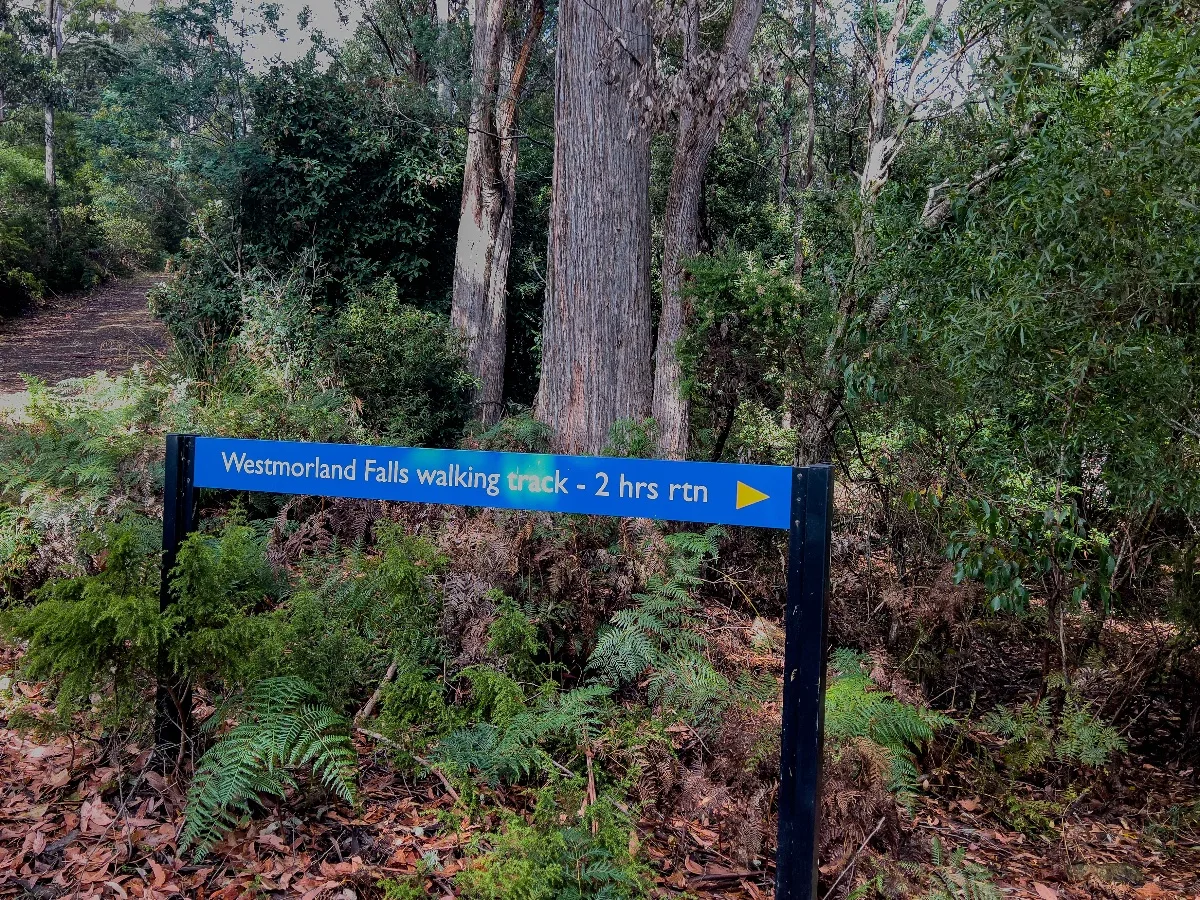
At the trailhead, we found a clear blue sign that set our expectations for the morning. It noted a two-hour return journey, which suited us perfectly. The air was crisp, and the smell of damp earth and eucalypt was heavy around us as we stepped off the cleared area and into the trees.
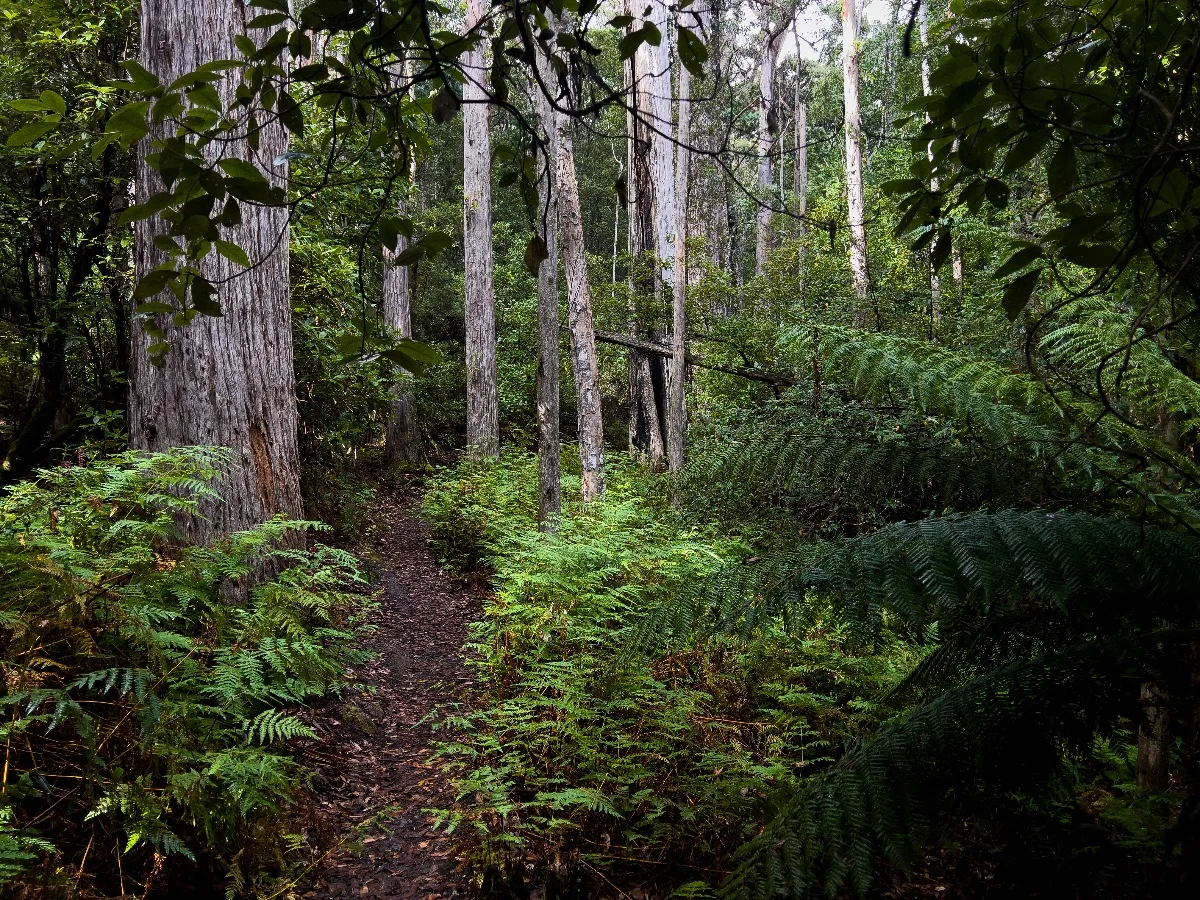
The track is narrow and winds its way through some very tall timber and dense ferns. We found ourselves walking in single file quite a bit, navigating the damp dirt and the occasional tree root. It is the sort of path that requires you to keep an eye on where you are stepping, but we made sure to stop often just to take in the quiet. There is a specific kind of silence in these Tasmanian forests that we don't often get back home in Western Australia.
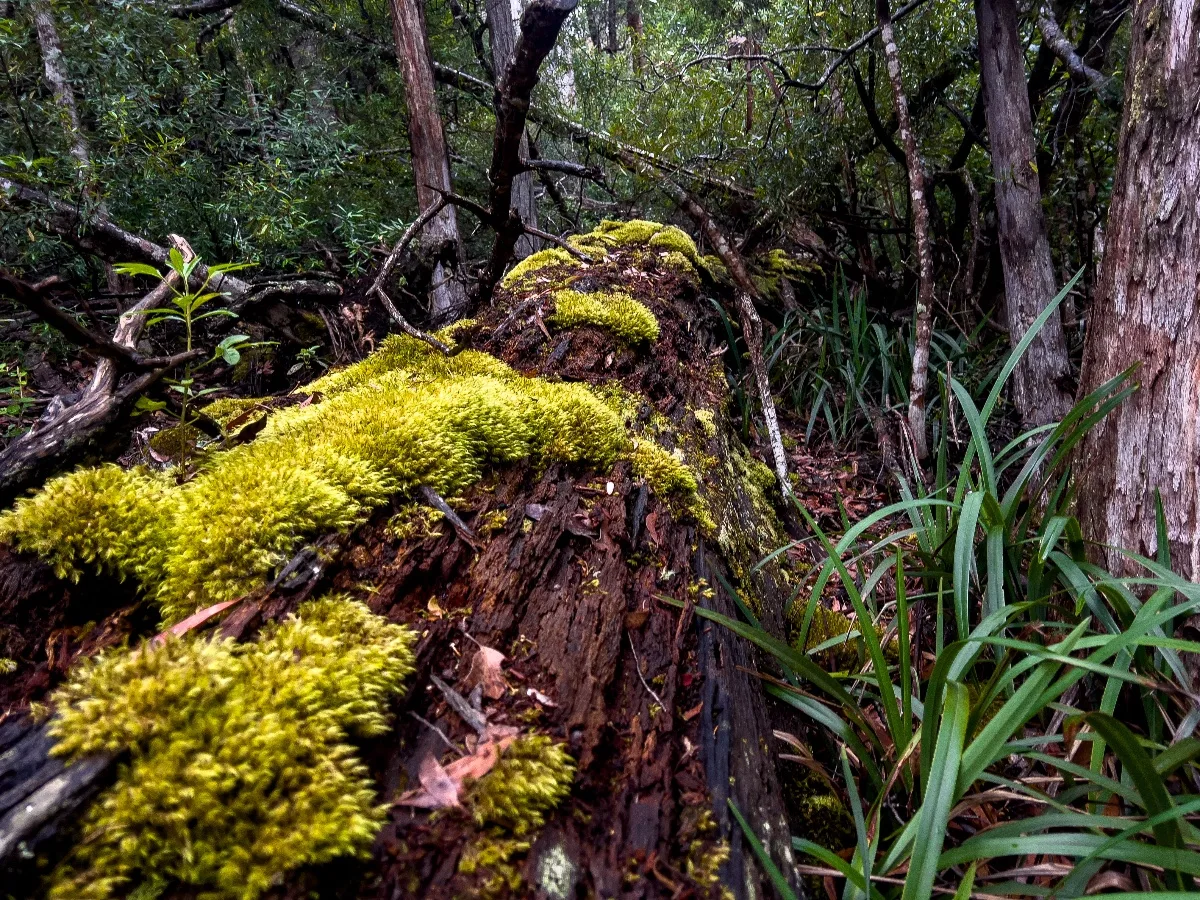
We noticed how much life exists on the forest floor here. It isn't just about the big trees; the decaying logs are just as interesting. One particular fallen tree was almost entirely reclaimed by the forest, covered in a thick, velvety carpet of bright green moss that felt like a cushion to the touch.
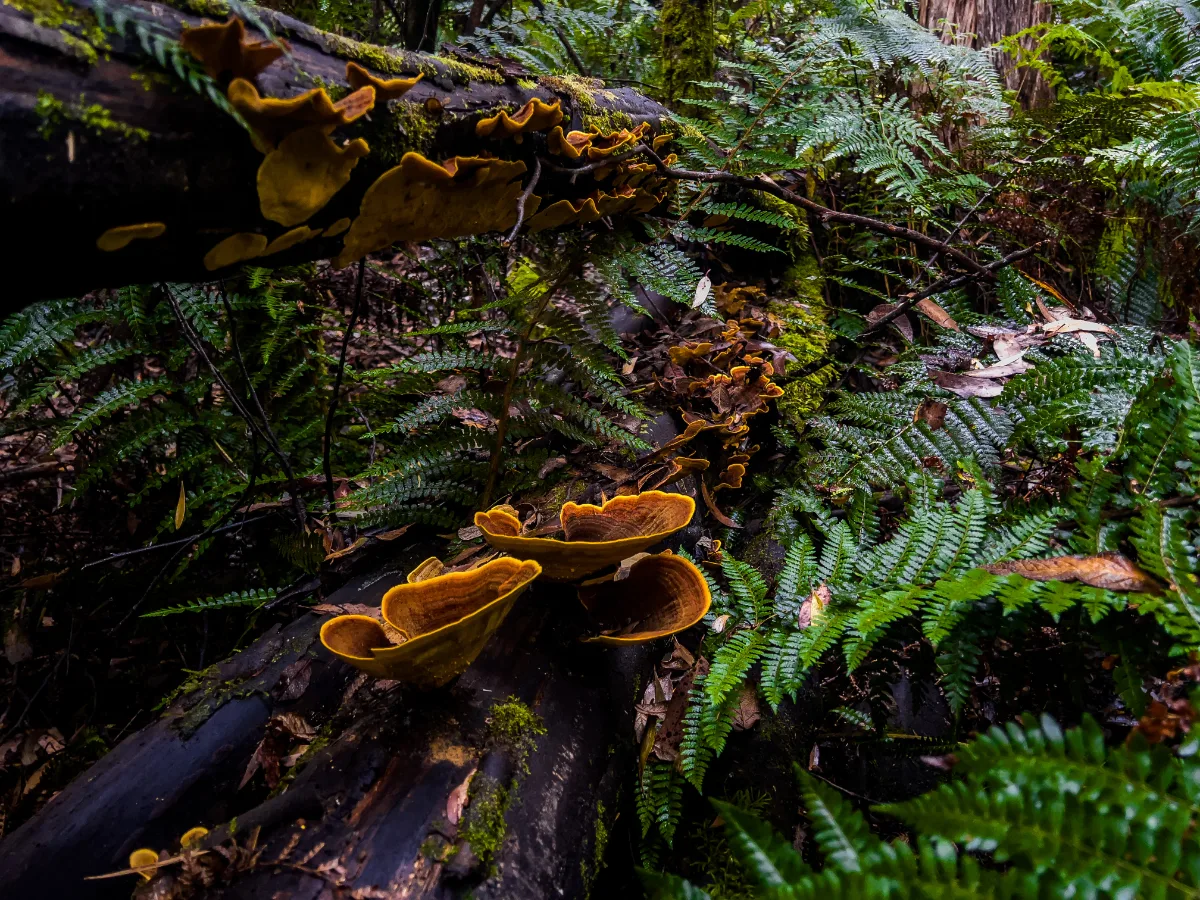
A bit further along, we spotted some of the local fungi. Several logs hosted clusters of vibrant, orange-rimmed shelf fungi. They have a very sturdy, wax-like appearance, clinging to the rotting wood and providing a sharp contrast to the deep greens and browns of the scrub. We spent a fair amount of time leaning over logs to get a better look at the different patterns they formed.
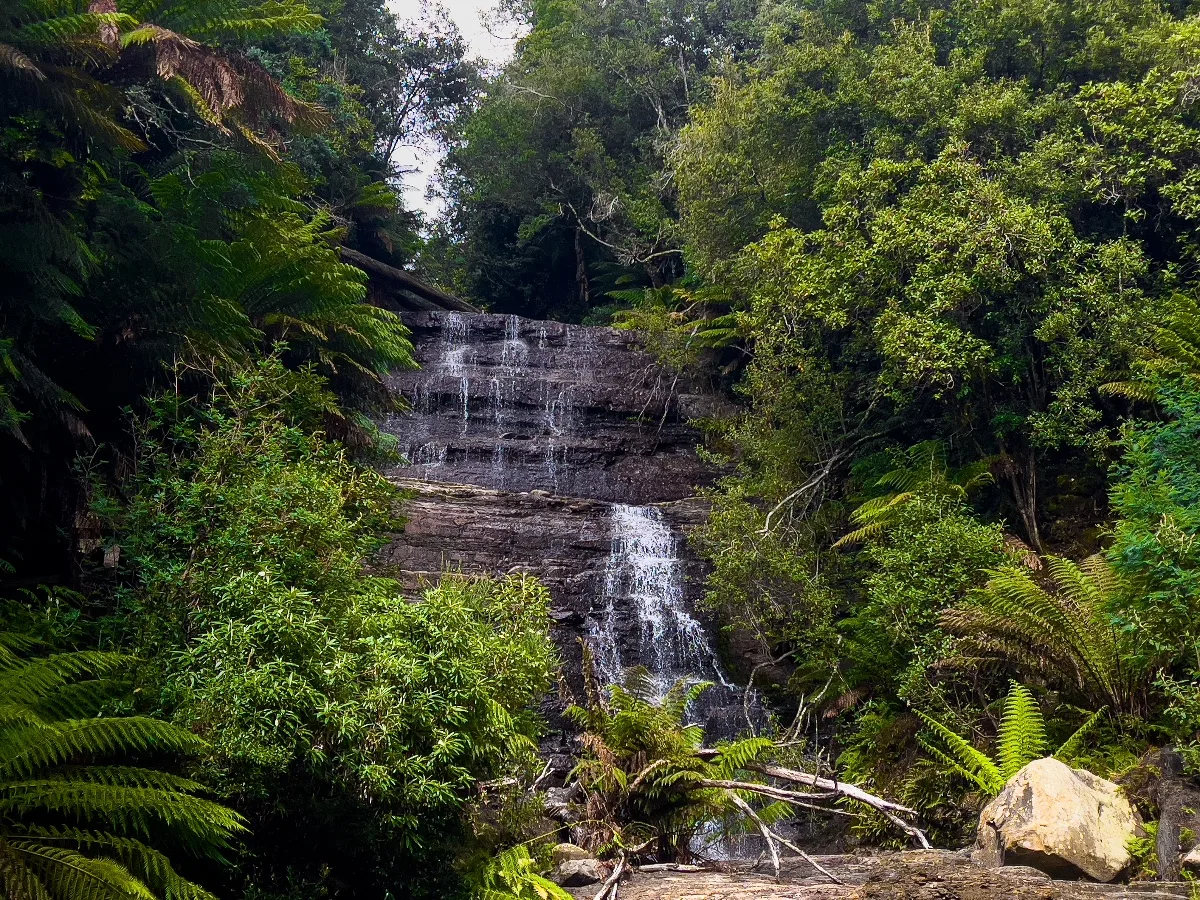
Eventually, the sound of running water grew louder, and we reached the falls. They are quite a sight, not because of a single massive drop, but because of the way the water cascades down a series of dark, stepped rock tiers. The water is clear and cold, tumbling over the ledges into the pool below. We sat there for a while, surrounded by the tall ferns and the steady rhythm of the falls, enjoying the fact that we had the place entirely to ourselves. It was a good reminder of why we enjoy these walks—the reward at the end is worth the effort, and the forest has a way of settling the mind.