We've pulled into Charleville for a couple of days, and right in the heart of town stands something quite extraordinary – a 25-metre water tower that's been transformed into one of the most striking pieces of public art we've come across in our travels.
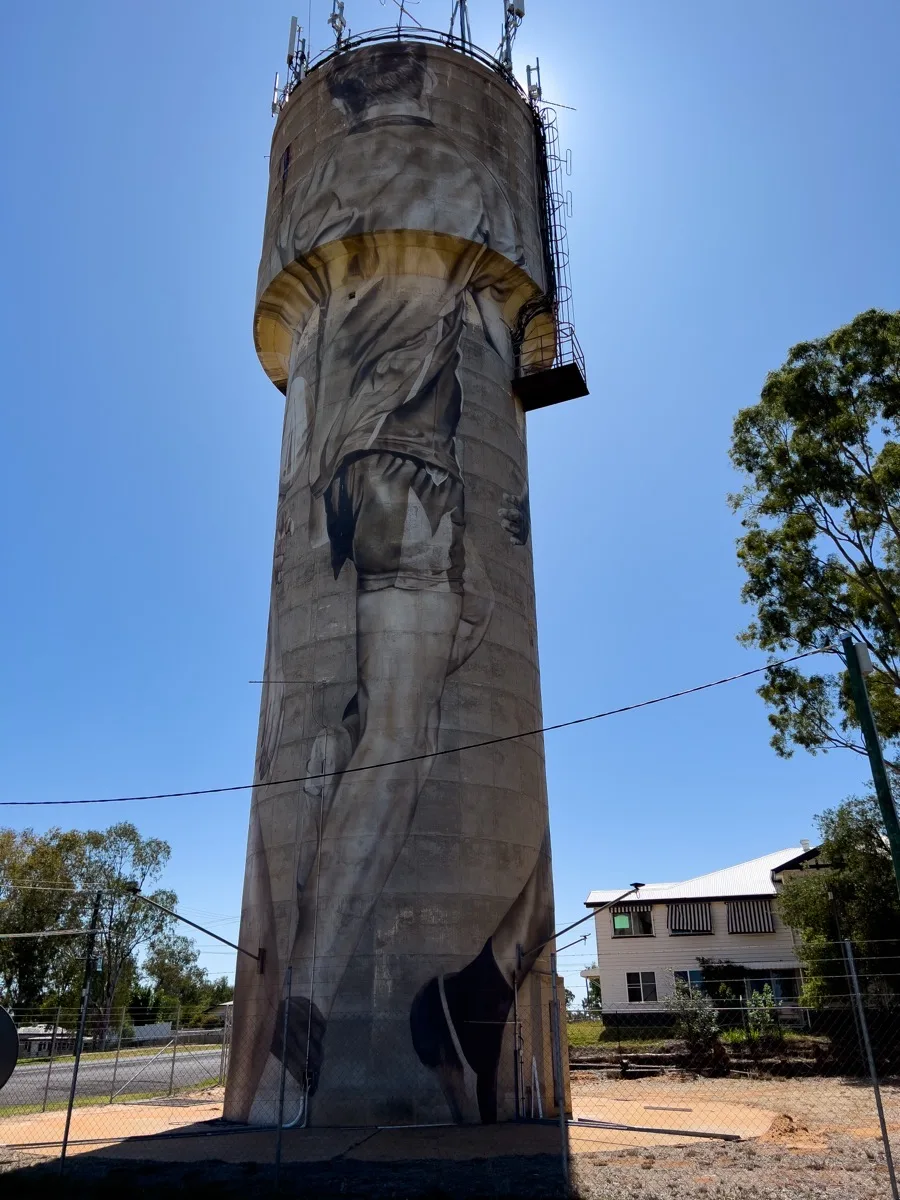
The tower was painted in 2012 by renowned Australian artist Guido van Helten, working with the Charleville community as part of a public art initiative. Van Helten is known for his large-scale photorealistic murals across Australia and internationally, and this work is a prime example of why his reputation is so well-deserved.
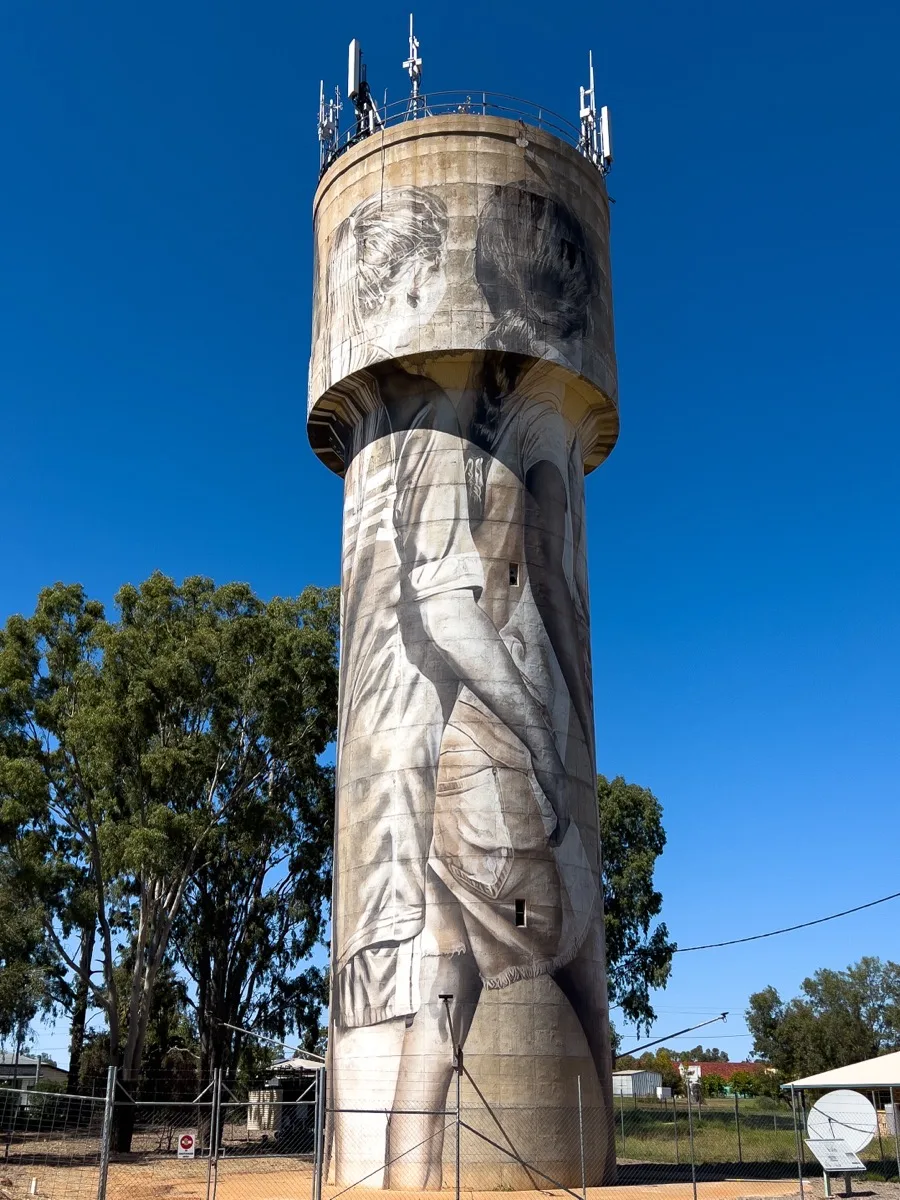
The mural depicts a draped figure wrapped in fabric, painted in monochromatic tones that create an almost three-dimensional effect on the cylindrical concrete surface. It's a technique called trompe-l'oeil – French for 'deceive the eye' – and it certainly does that. The way the light and shadows play across the artwork changes throughout the day, making it worth photographing from multiple angles, which Lisa and I did enthusiastically.
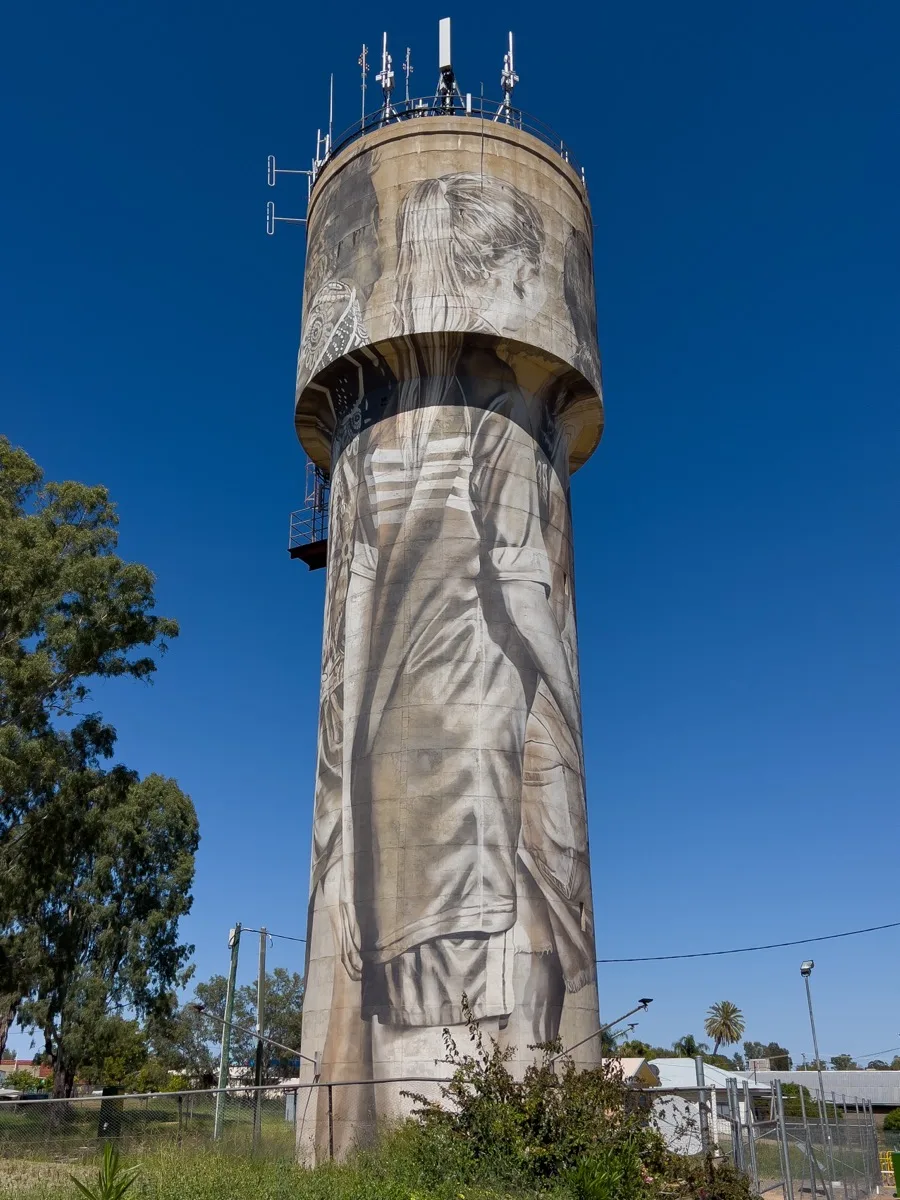
What impressed me most was how van Helten's work has transformed what would otherwise be a purely utilitarian structure into something that makes you stop, look up, and think. The figure appears almost ancient, classical, yet sits here in outback Queensland as naturally as if it's always belonged.
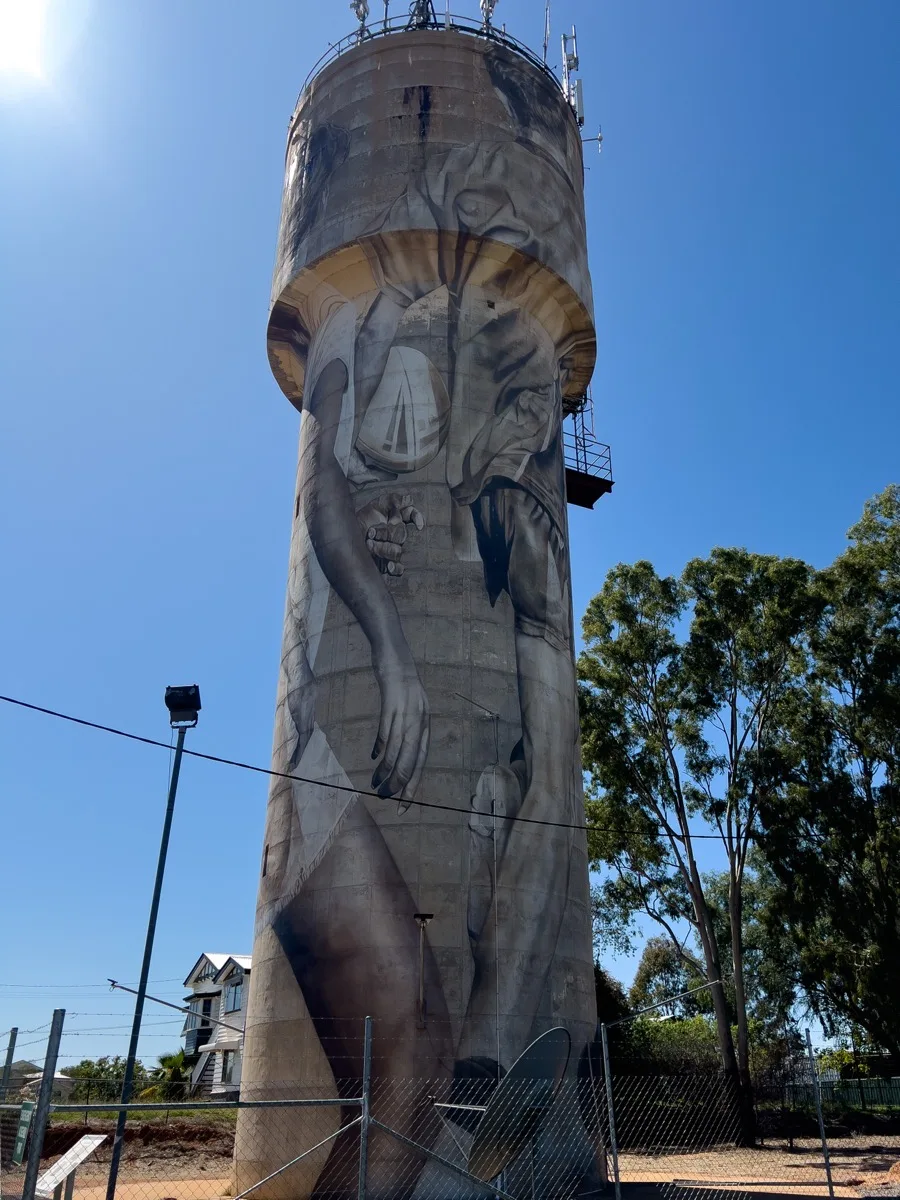
The project was commissioned by the Murweh Shire Council with support from the Regional Arts Development Fund, and it's become one of Charleville's most photographed landmarks. Standing at the base, craning your neck to take in the full scope of the artwork, you get a real sense of the scale and ambition of regional Australia's embrace of public art.
We parked the Ram nearby and just spent time walking around the tower, watching how different angles revealed new aspects of the mural. Other travellers were doing the same, cameras out, heads tilted back. It's these unexpected discoveries – finding world-class art in a country town of 3,000 people – that remind us why we love this travelling life.