As we continued our journey north through central Queensland, the landscape subtly shifted, and the air grew drier. Our route took us through Roma, a town that, despite its unassuming size, proved to be surprisingly rich in history and character.
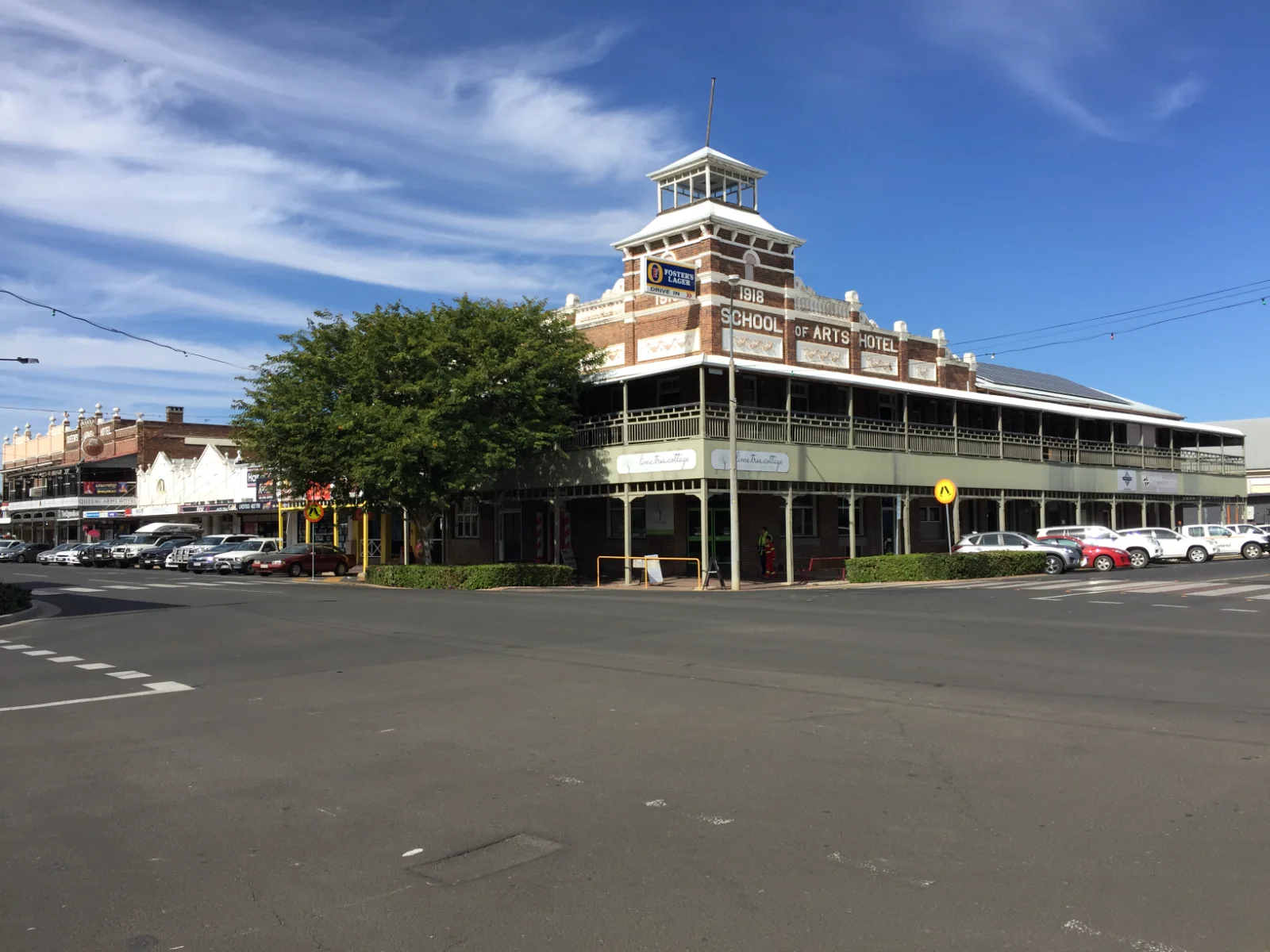
One of the first things that caught our attention in Roma was the abundance of well-preserved historical buildings. The town clearly takes pride in its heritage, and it’s easy to imagine what life must have been like here in the late 19th and early 20th centuries. The Roma School of Arts Hotel is a perfect example, it stands imposingly on the street corner.
Roma’s establishment is steeped in pastoral history. Originally inhabited by the indigenous Mandandanji people, the area was first explored by Europeans in the 1840s. Pastoralists soon followed, establishing vast sheep and cattle stations. The town itself was officially proclaimed in 1862 and named after Lady Roma Bowen, the wife of the then-Queensland Governor, Sir George Bowen.
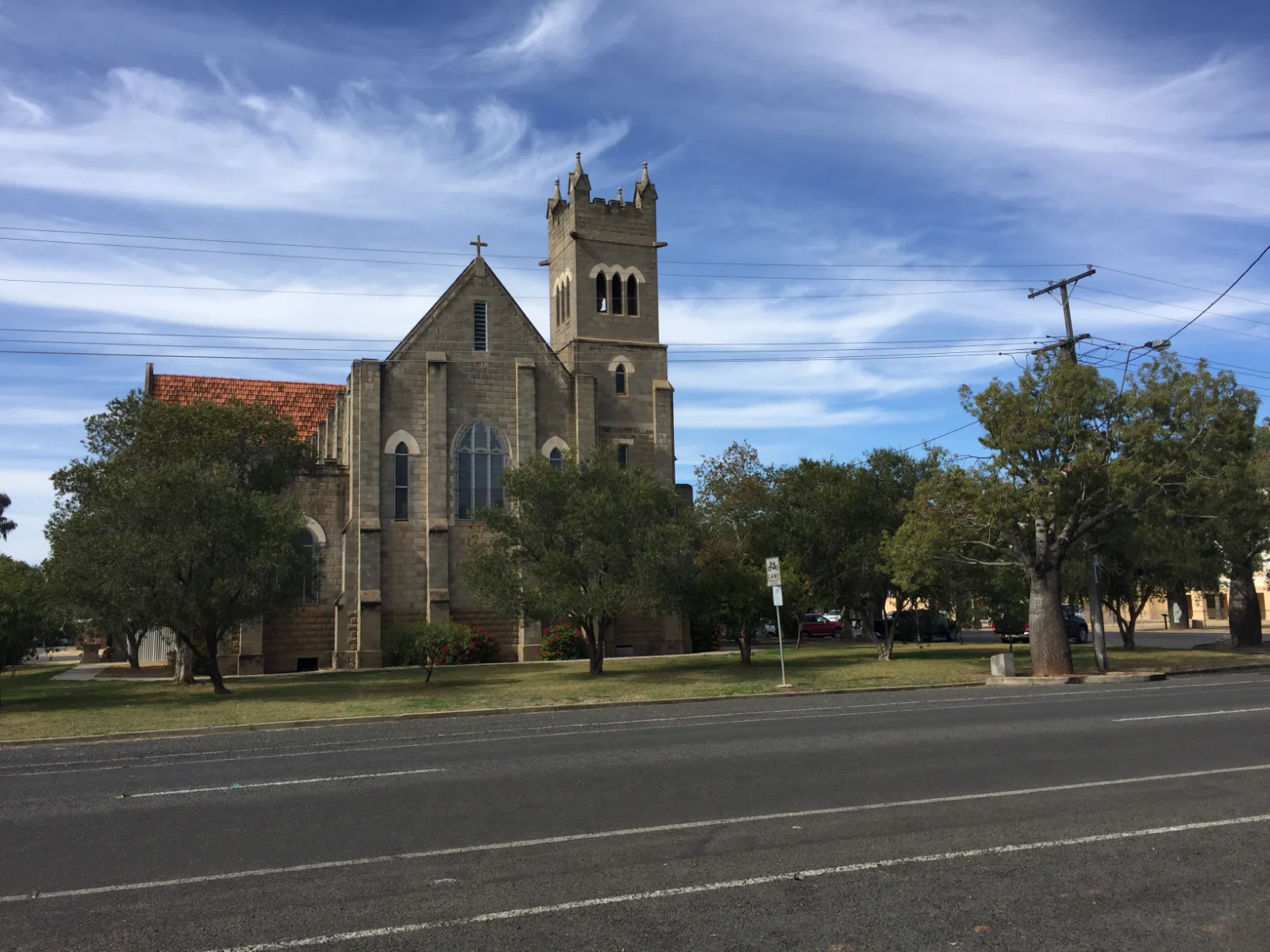
It is worth noting the historic churches and their intricate architecture.
However, Roma isn't just about buildings. The town is also famous for something rather more peculiar: the "Big Rig," a tribute to its history in oil and gas exploration and is a museum with exhibits on the history of the industry in the region. Perhaps we should have looked around a little longer!
But the real star of Roma, for us anyway, was the bottle tree. Roma is home to what is touted as the largest bottle tree (Brachychiton rupestris) in Queensland, possibly even Australia. These trees, with their distinctive swollen trunks, are native to the region and are well adapted to survive in the arid climate. The massive, bulbous trunk stores water, allowing the tree to endure long periods of drought.
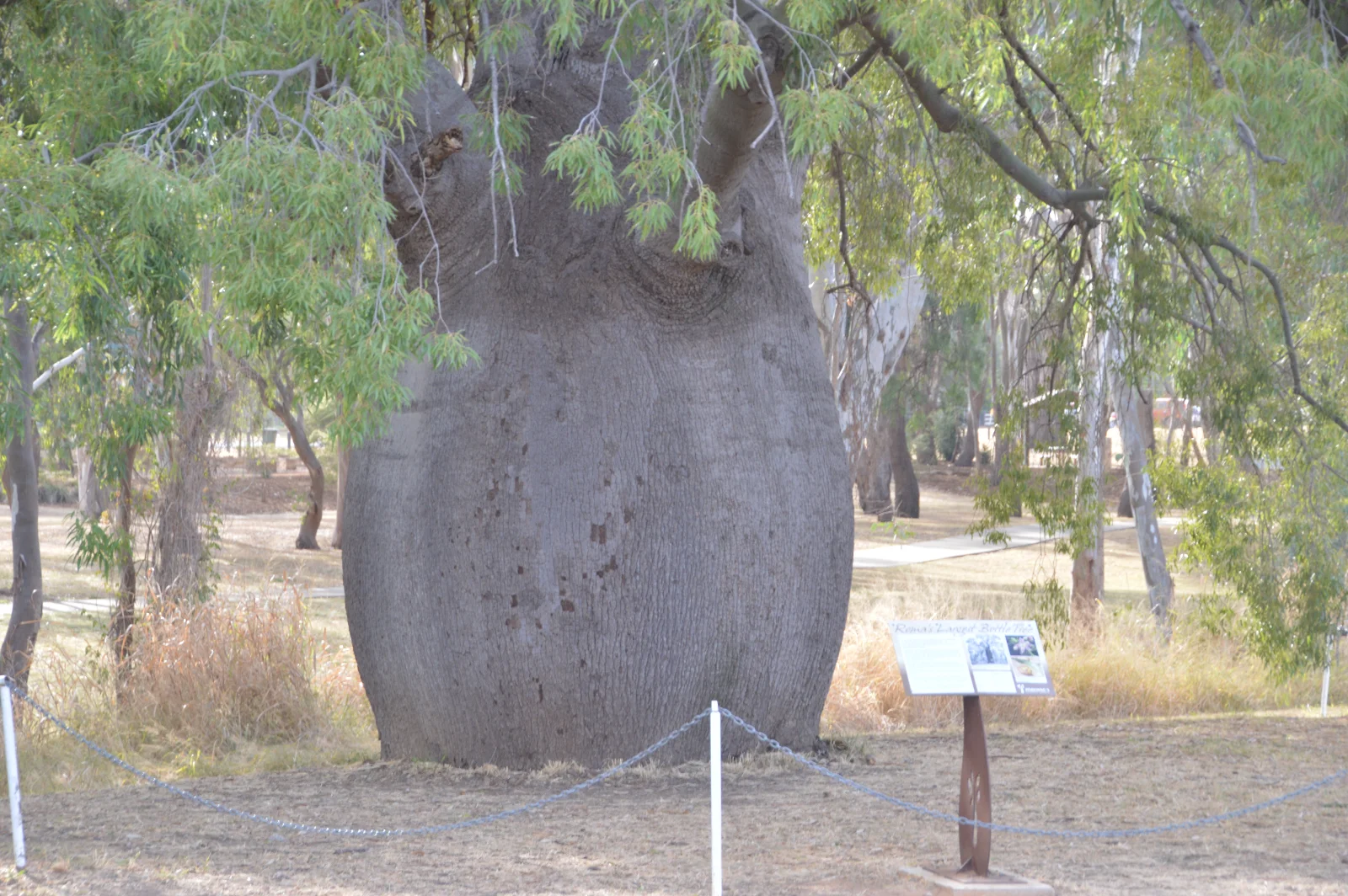
This particular specimen is an absolute behemoth. It's the kind of tree that makes you feel strangely compelled to hug it – which, of course, we refrained from doing. We did, however, spend a good amount of time simply admiring its impressive form. It's a testament to the resilience of nature and a truly remarkable sight.

