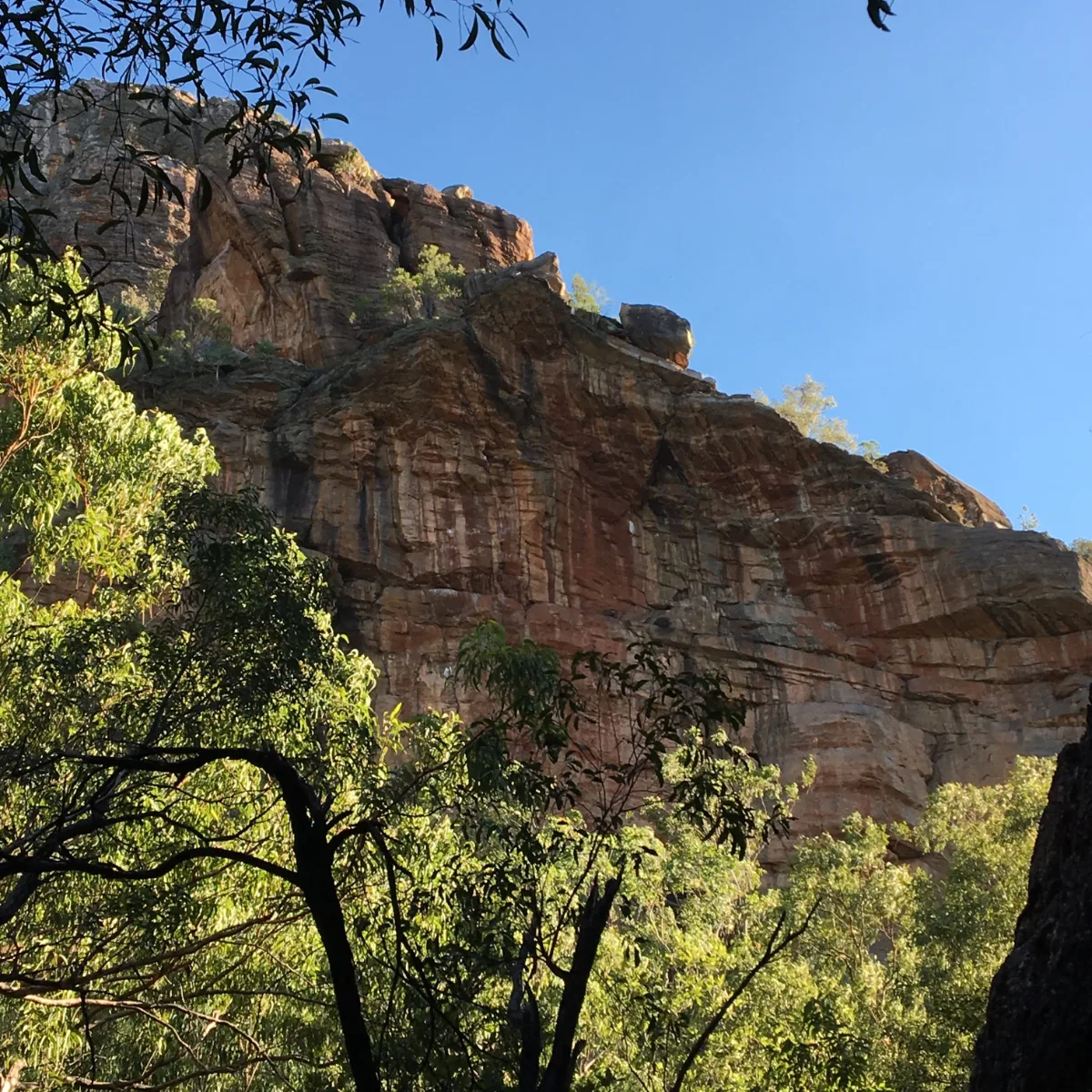
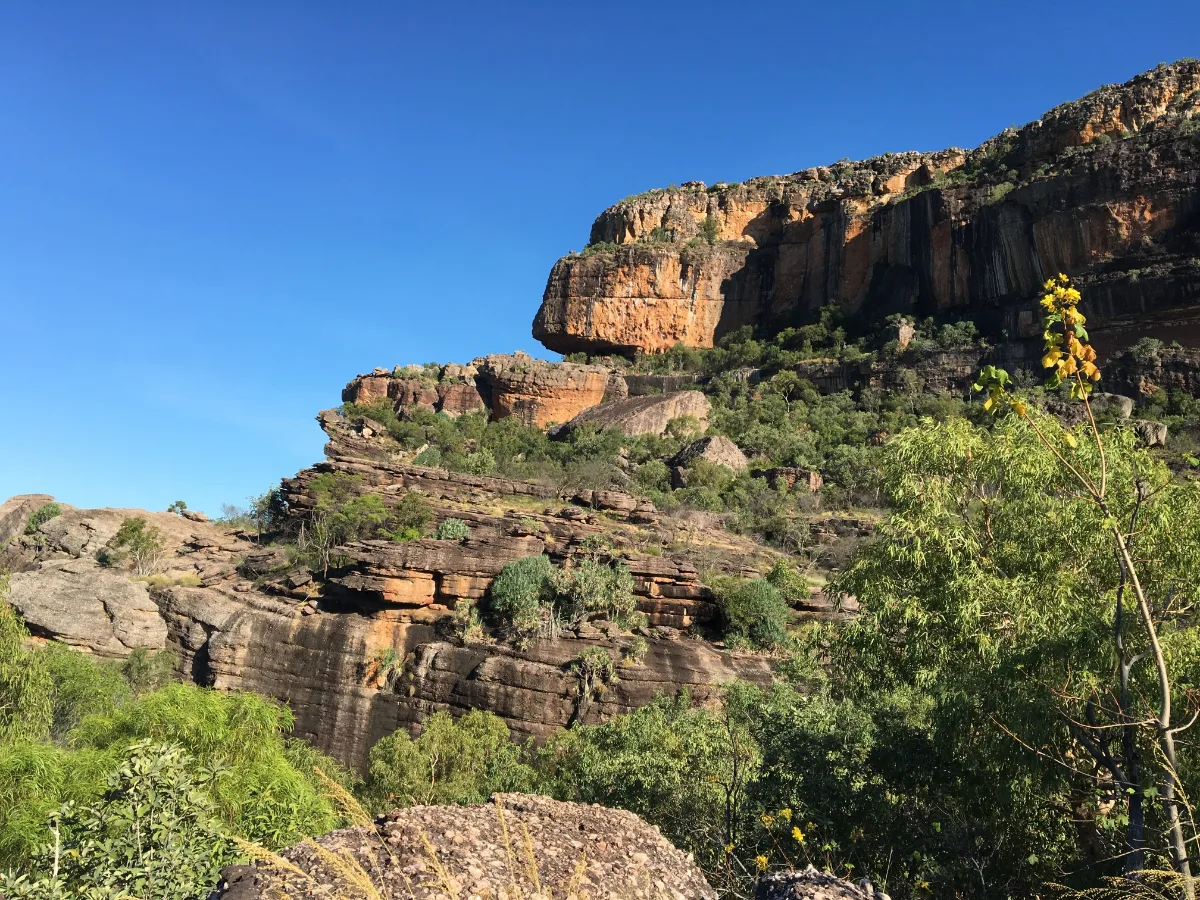
The scale of the sandstone cliffs at Anbangbang is immediately apparent as we approach the shelter. The sheer verticality of the escarpment dominates the horizon, providing a natural fortress that has shielded both people and their stories for thousands of years. The morning air in the Australian Outback is crisp, and the sun highlights the rich ochre hues of the rock.
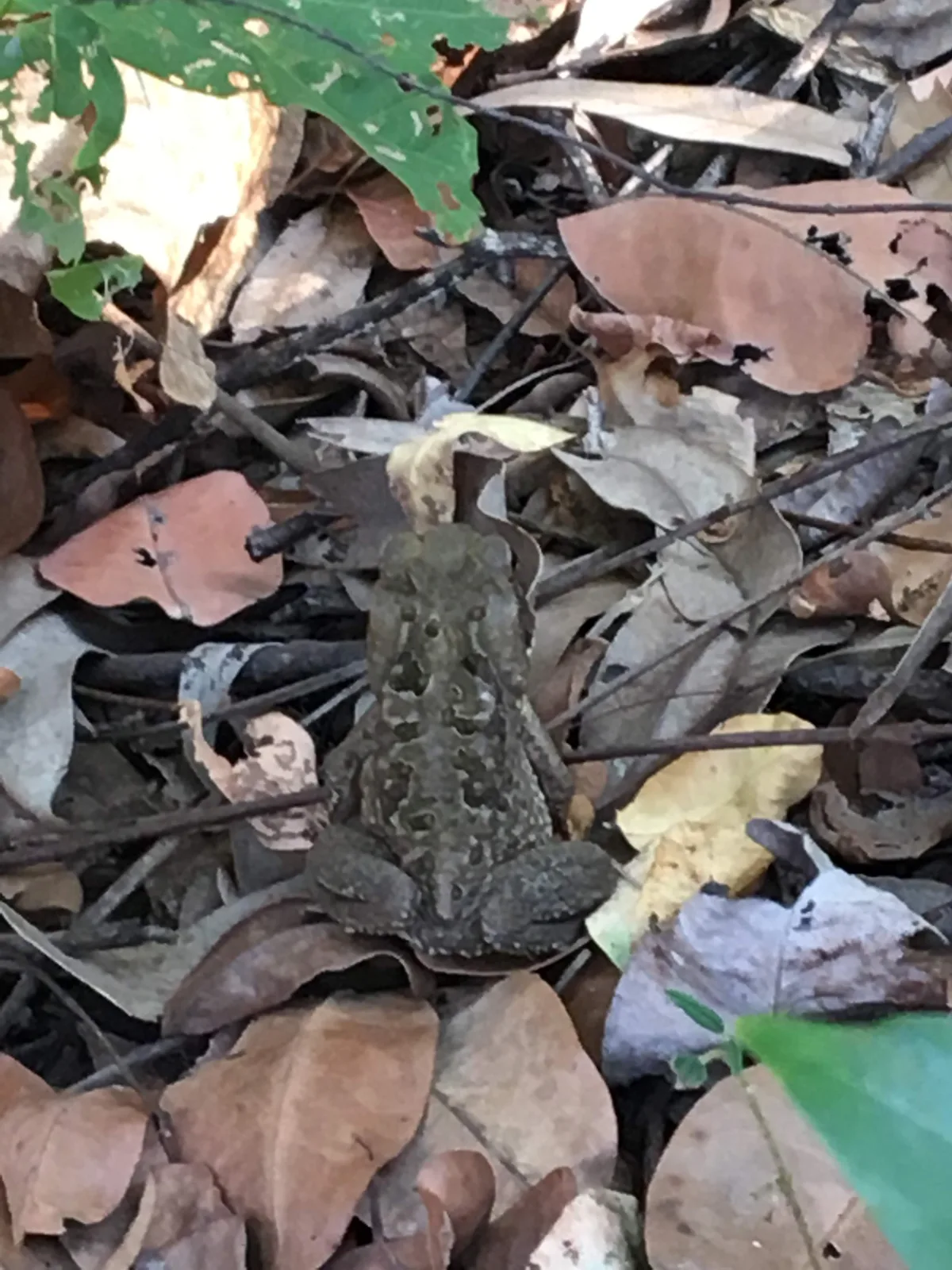
As we walked through the national park, we found ourselves constantly looking down as much as we were looking up. While the geology is impressive, we are always on the lookout for the ever-present cane toad. These invasive pests are unfortunately common in the leaf litter, and we spotted one blending into the dry foliage near the base of the cliffs. It is a sober reminder of the environmental pressures on such a significant site.
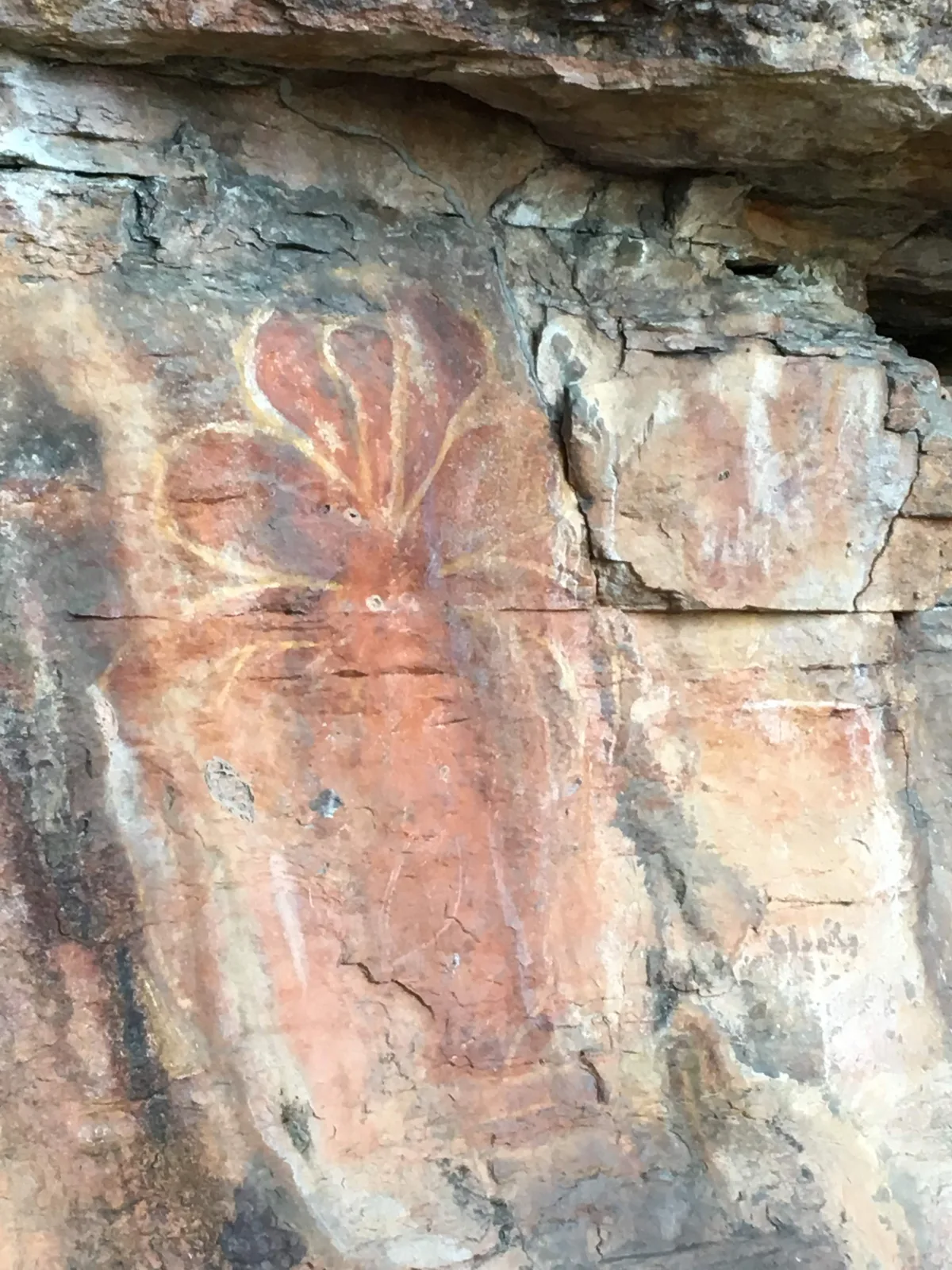
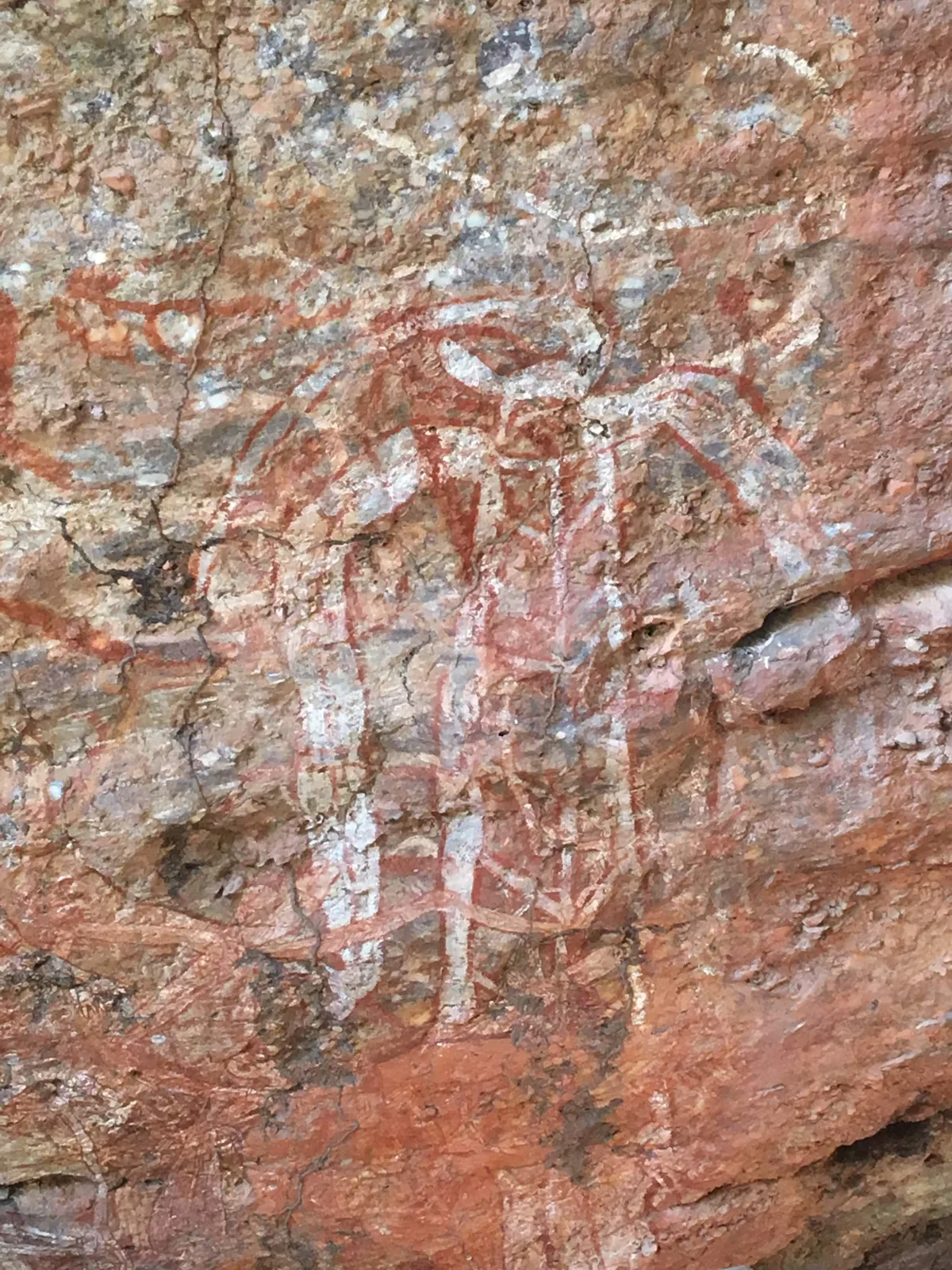
The rock art galleries within the shelter are preserved with remarkable clarity. We stood before the depiction of Namarrgon, the Lightning Man. The painting features the characteristic arcs of lightning connecting his limbs and the stone axes attached to his joints, which he uses to strike the clouds and create thunder. The pigment remains vivid against the textured stone, serving as a permanent record of the cultural landscape.
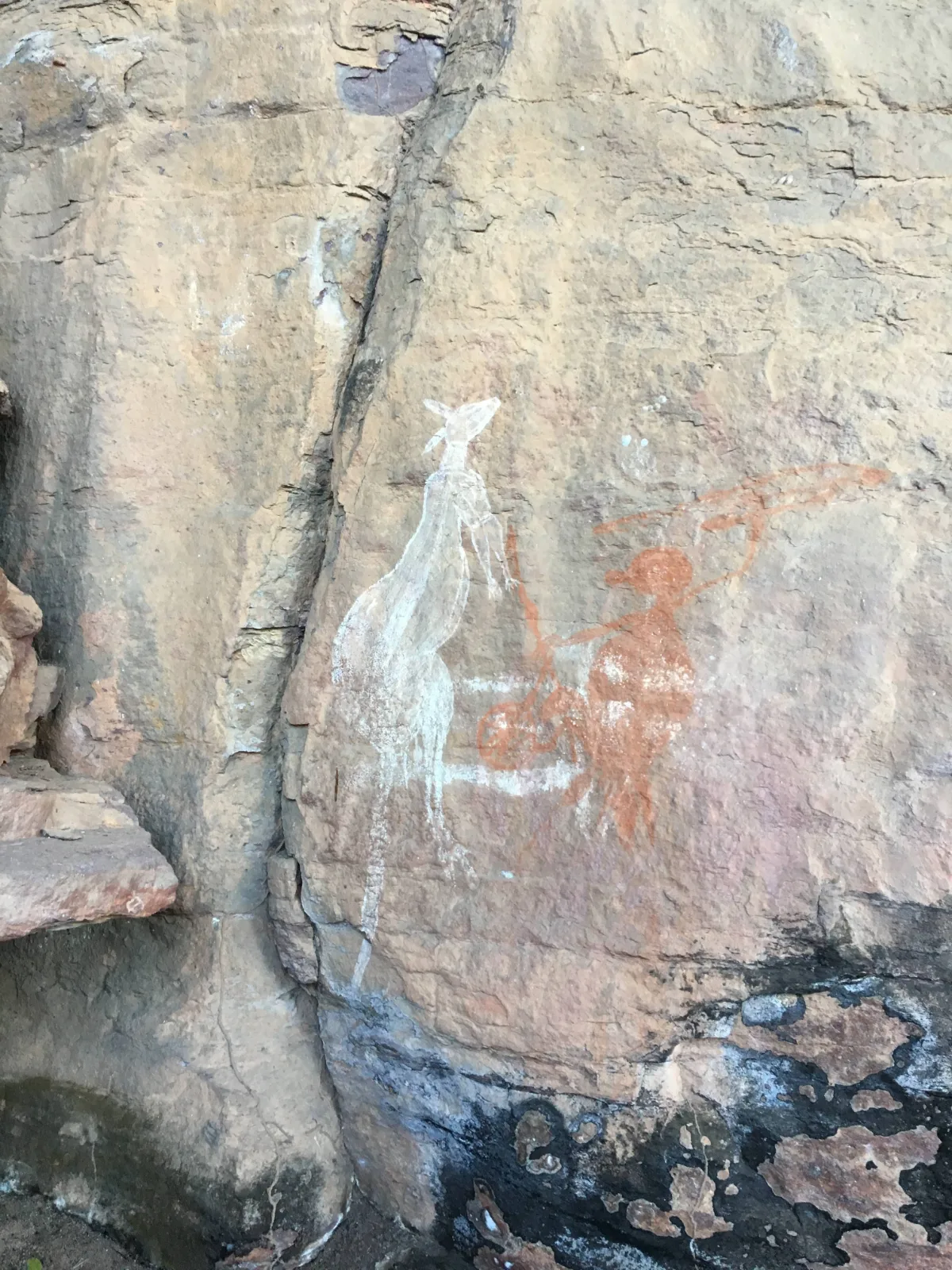
Further along the rock face, we observed a white kangaroo. The figure is painted with distinct, bold lines that make it stand out clearly against the darker, weathered surface of the rock. It is fascinating to see how the natural contours of the stone have been utilized to give the artwork a sense of place and permanence.
The complexity of the designs at Anbangbang is truly remarkable. We spent some time examining the intricate patterns of red and white pigment that overlap in several sections of the gallery. These layered images represent different periods of history and storytelling, creating a dense tapestry of ancestral knowledge that has been maintained over generations.
Before concluding our walk, we took a moment to appreciate the broader view of the escarpment. The massive rocky overhangs provided essential shelter for the people who lived here during the wet seasons, and the physical presence of the cliffs is humbling. The site is a perfect intersection of geological grandeur and human history.
🔒 Unlock the Full Gallery
Trip Gallery


