We were awake and moving by 05:45 this morning in Kununurra. The early hours are the most productive for photography in this part of Western Australia, as the light is soft and the temperature remains at a manageable level. We stepped out to find the landscape draped in the quiet, muted hues of dawn, with the red earth contrasting against the pale sky.
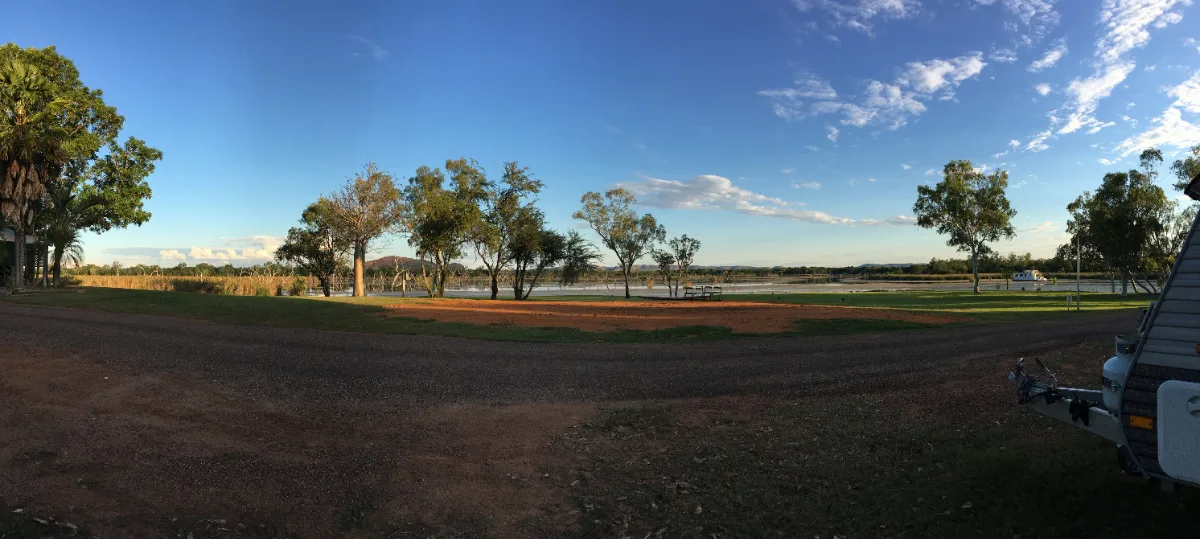
Our focus was the water's edge, where the reflections are at their most clear before the morning breeze disturbs the surface. It did not take long for us to realize we were not the only ones active at this hour. A Johnston crocodile, measuring between two and three metres, was cruising through the shallows. It was a sobering reminder of the local wildlife, especially given that the reptile was positioned only about 100 metres from the van.
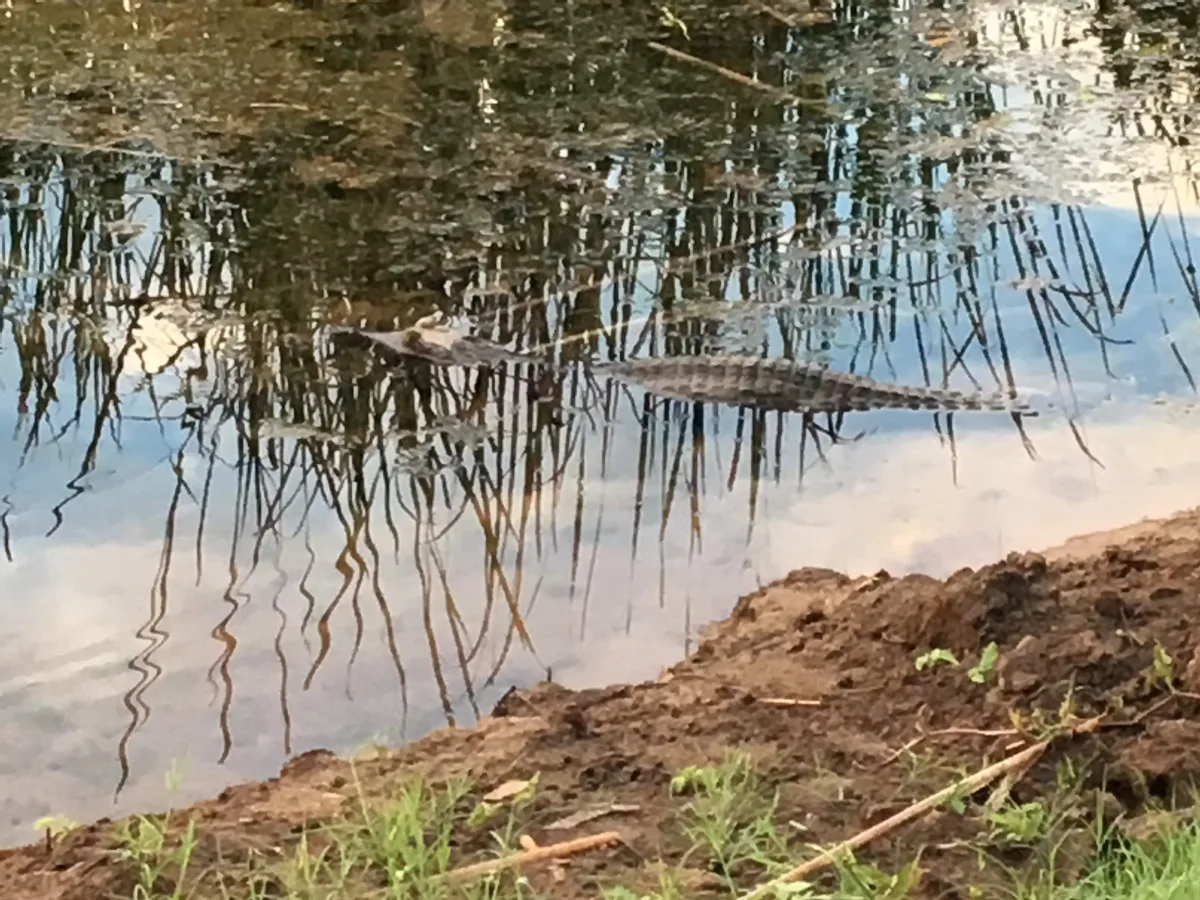
The crocodile moved with a silent efficiency. While these freshwater crocodiles are a standard feature of the waterways around Kununurra, seeing one of that size so close to the bank is always a significant event. We watched as it navigated the reeds, barely making a ripple.
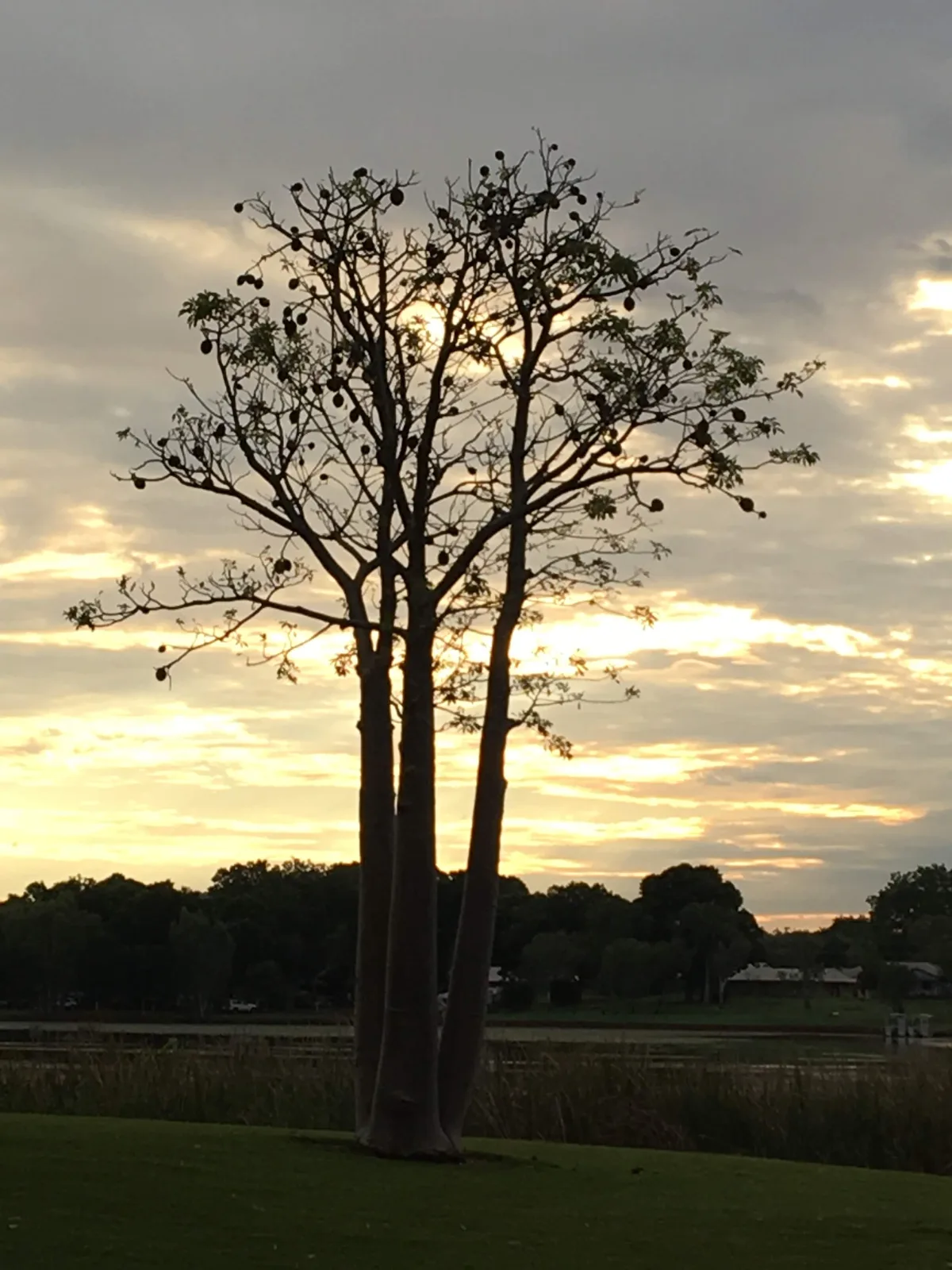
The area around the lagoon is dotted with Boab trees, which provide a striking silhouette against the morning sky. Their swollen trunks and spindly branches are iconic to the Kimberley region, and we made sure to capture their unique forms as the sun began its ascent. The light behind the branches created a stark, beautiful contrast.
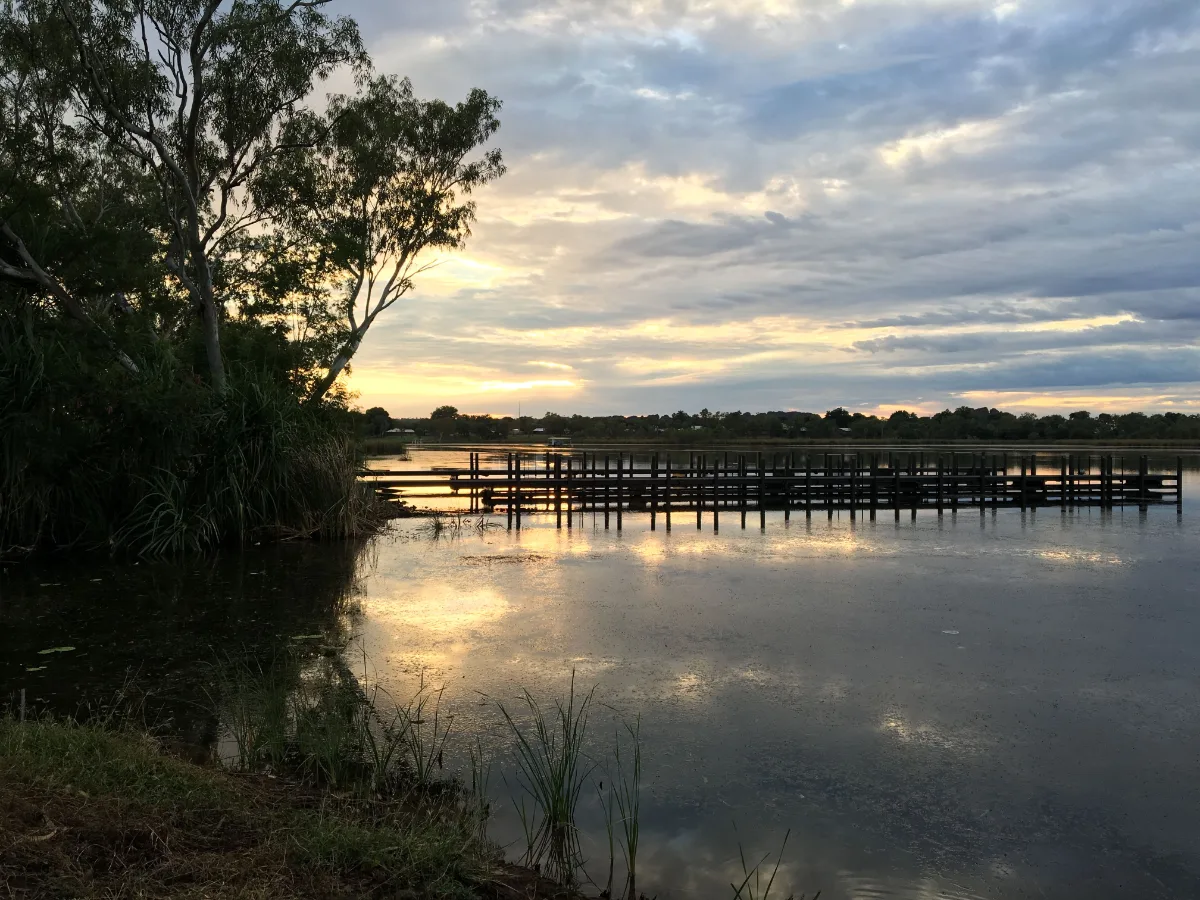
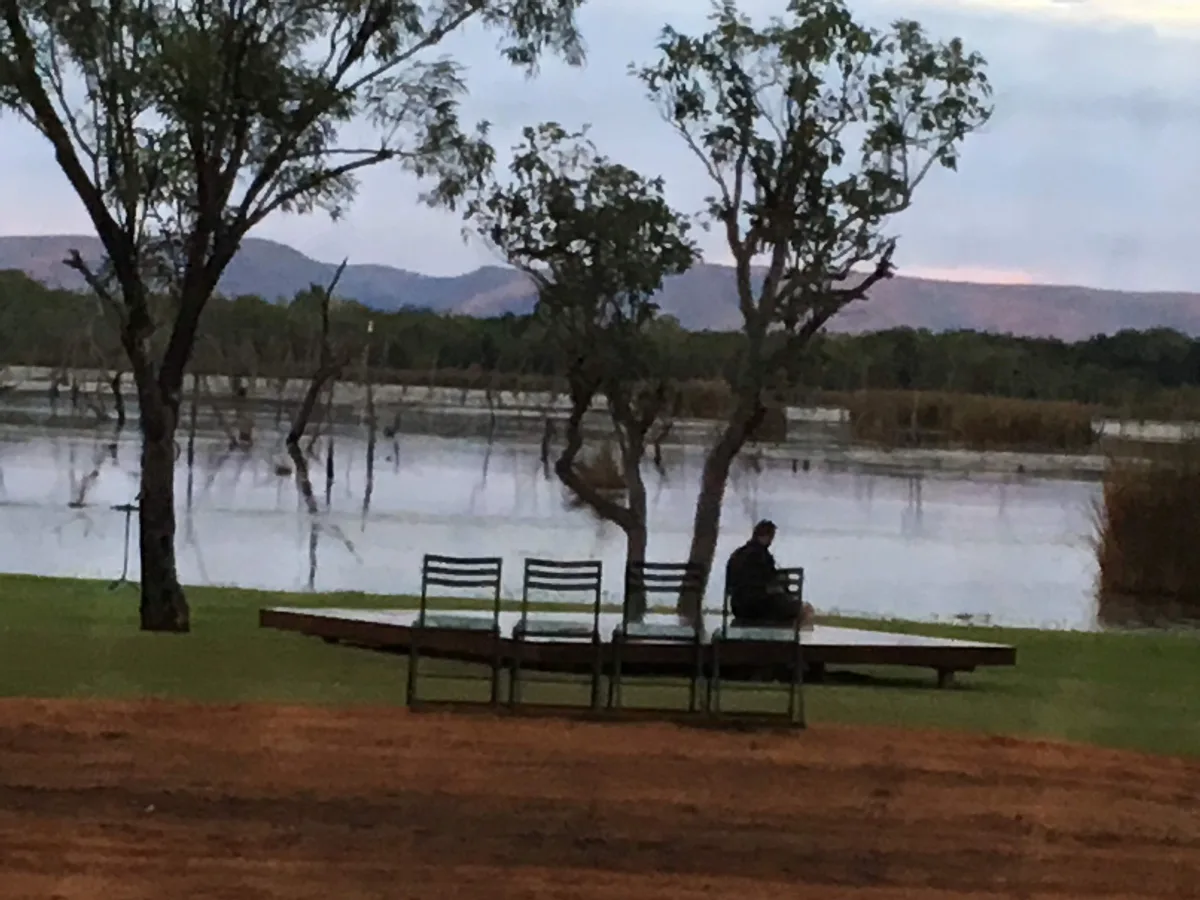
Near the water, a wooden platform with a row of chairs offered a place for reflection. It is a scenic spot to sit and observe the lagoon, provided one maintains a healthy awareness of the water's edge. We preferred to keep moving, documenting the local birdlife that was beginning to congregate on the nearby lawns.
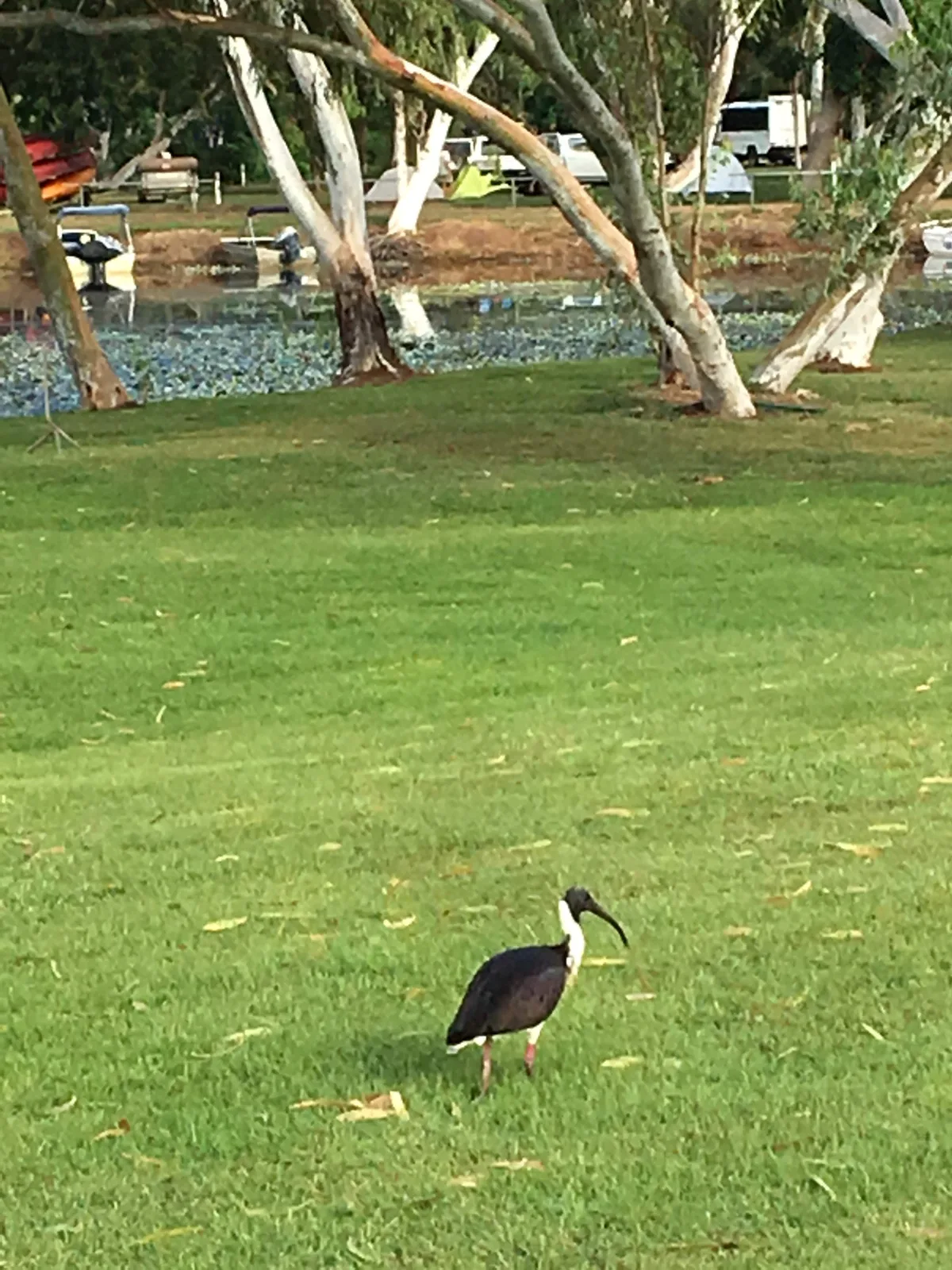
A straw-necked ibis spent the morning patrolling the grass, searching for insects. These birds are a frequent sight across the country, but they look particularly well-suited to the green pockets of vegetation that border the dusty environment of the north.
By mid-morning, the heat became the defining feature of the day. The temperature rose rapidly, and we decided that remaining outdoors was no longer a comfortable option. We retreated inside and kept the air conditioning running for the remainder of the day. While we generally prefer to be out exploring the history and geography of the region, there is no sense in fighting the Western Australian sun when it reaches these levels. It was a quiet afternoon, but after the excitement of the morning crocodile encounter, we felt we had already seen the best of what Kununurra had to offer.
🔒 Unlock the Full Gallery
Trip Gallery


